
T8154

Trypan Blue solution
0.4%, liquid, sterile-filtered, suitable for cell culture
Synonym(s):
Blue cell viability dye
Select a Size
About This Item
sterility
sterile-filtered
Quality Level
form
liquid
storage condition
dry at room temperature
concentration
0.4%
technique(s)
cell culture | mammalian: suitable, tissue processing: suitable
application(s)
cell analysis
shipped in
ambient
storage temp.
room temp
SMILES string
[Na+].[Na+].[Na+].[Na+].Cc1cc(ccc1N=Nc2c(O)c3c(N)cc(cc3cc2S([O-])(=O)=O)S([O-])(=O)=O)-c4ccc(N=Nc5c(O)c6c(N)cc(cc6cc5S([O-])(=O)=O)S([O-])(=O)=O)c(C)c4
InChI
1S/C34H28N6O14S4.4Na/c1-15-7-17(3-5-25(15)37-39-31-27(57(49,50)51)11-19-9-21(55(43,44)45)13-23(35)29(19)33(31)41)18-4-6-26(16(2)8-18)38-40-32-28(58(52,53)54)12-20-10-22(56(46,47)48)14-24(36)30(20)34(32)42;;;;/h3-14,41-42H,35-36H2,1-2H3,(H,43,44,45)(H,46,47,48)(H,49,50,51)(H,52,53,54);;;;/q;4*+1/p-4
InChI key
GLNADSQYFUSGOU-UHFFFAOYSA-J
General description
Trypan Blue (TB), an anionic hydrophilic azo dye, crosses only the cell membranes of dead cells, thereby staining dead tissues/cells blue. It is used in quantitative microscopy for a dye exclusion staining technique to differentiate between live and dead mammalian cells.
Application
- in cell viability assay to count viable and dead cells
- in rescue assay to count viable cells
- in trypan blue exclusion counting method to determine proliferation curve
- as the saline control and in the preparation of lipopolysaccharide (LPS) solution to confirm the success of LPS infusion
- in trypan blue dye exclusion test to determine gastric epithelial cells (GEC) viability
- to count GEC cells using a hemocytometer
Preparation Note
Still not finding the right product?
Explore all of our products under Trypan Blue solution
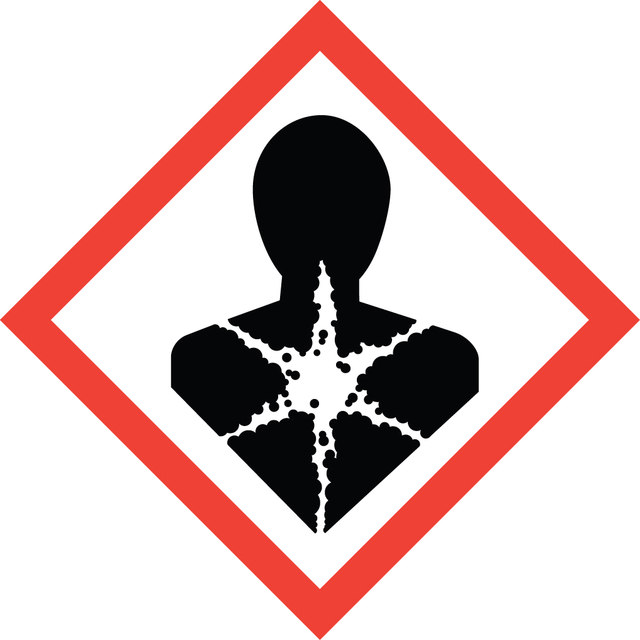
signalword
Danger
hcodes
Hazard Classifications
Carc. 1B
Storage Class
6.1D - Non-combustible acute toxic Cat.3 / toxic hazardous materials or hazardous materials causing chronic effects
flash_point_f
Not applicable
flash_point_c
Not applicable
ppe
Eyeshields, Gloves, type ABEK (EN14387) respirator filter
Choose from one of the most recent versions:
Already Own This Product?
Find documentation for the products that you have recently purchased in the Document Library.
Protocols
Learn how to cultivate similar-sized iPSC-derived colon organoids using Millicell® Microwell plates and perform a forskolin-induced swelling assay.
Trypsin is commonly used for dissociating adherent cells from surfaces. A wide variety of trypsin solutions are available to meet your specific cell line requirements.
Cell culture protocol for passaging and splitting adherent cell lines using trypsin EDTA. Free ECACC handbook download.
Articles
Cell based assays for cell proliferation (BrdU, MTT, WST1), cell viability and cytotoxicity experiments for applications in cancer, neuroscience and stem cell research.
Cell counting protocol using a hemocytometer for monitoring cell viability. Discover other cell counting tools such as the Scepter™ 3.0 Cell Counter.
Lung organoids are valuable 3D models for human lung development and respiratory diseases. The 3dGRO™ differentiation protocol generates organoids from human iPSCs in 4 steps.
Related Content
Three-dimensional (3D) printing of biological tissue is rapidly becoming an integral part of tissue engineering.
Global Trade Item Number
| SKU | GTIN |
|---|---|
| T8154-100ML | 04061838260109 |
| T8154-20ML | 04061838260116 |