
F0507

Formic acid

reagent grade, ≥95%
조직 및 계약 가격을 보려면 로그인를 클릭합니다.
크기 선택
보기 변경
제품정보 (DICE 배송 시 비용 별도)
Linear Formula:
HCOOH
CAS 번호:
Molecular Weight:
46.03
UNSPSC Code:
12352106
NACRES:
NA.21
PubChem Substance ID:
EC Number:
200-579-1
Beilstein/REAXYS Number:
1209246
MDL number:
Assay:
≥95%
Form:
liquid
Grade:
reagent grade
grade
reagent grade
Quality Level
vapor density
1.6 (vs air)
vapor pressure
44.8 mmHg ( 20 °C)
assay
≥95%
form
liquid
autoignition temp.
1004 °F
contains
<2.5% water as stabilizer
expl. lim.
57 %
greener alternative product characteristics
Catalysis
Learn more about the Principles of Green Chemistry.
sustainability
Greener Alternative Product
impurities
≤1% acetic acid
refractive index
n20/D 1.370 (lit.)
pH
2.2 (20 °C, 2.2 g/L)
bp
100-101 °C (lit.)
mp
8.2-8.4 °C (lit.)
solubility
water: miscible
density
1.22 g/mL at 25 °C (lit.)
greener alternative category
storage temp.
room temp
SMILES string
OC=O
InChI
1S/CH2O2/c2-1-3/h1H,(H,2,3)
InChI key
BDAGIHXWWSANSR-UHFFFAOYSA-N
General description
We are committed to bringing you Greener Alternative Products, which adhere to one or more of The 12 Principles of Greener Chemistry. This product has been enhanced for catalysis. Click here for more information.
Formic acid (HCOOH, FA) is the simplest carboxylic acid that is mostly found in insect bites and stings. It is widely utilized as a hydrogen storage molecule due to its low toxicity, recyclability, ease of usage, and liquid state in ambient conditions.
Application
- Electrochemical CO(2) Reduction on Metallic and Oxidized Tin: This study uses grand-canonical density functional theory (DFT) and in situ attenuated total reflectance surface-enhanced infrared absorption spectroscopy (ATR-SEIRA) to investigate electrochemical carbon dioxide reduction on tin surfaces, where formic acid could play a role in understanding reaction mechanisms (Whittaker et al., 2024).
- Simultaneous Measurement of COVID-19 Treatment Drugs: This research demonstrates the use of UPLC-MS/MS for the simultaneous measurement of COVID-19 treatment drugs in rat plasma, indicating the importance of formic acid in preparing samples or as a mobile phase additive for better chromatographic separation (Zhou et al., 2024).
- Metabolite Profiling of Liquiritin: The study involves metabolite profiling using ultra-high-performance liquid chromatography-tandem mass spectrometry (UHPLC-MS/MS), where formic acid is likely utilized in sample preparation or chromatographic processes (Chen et al., 2024).
- Analysis of Cocaine and Its Metabolites: This article explores solid-phase extraction followed by UHPLC-ESI-MS/MS analysis of cocaine metabolites, a method that often incorporates formic acid to enhance the ionization of analytes (Makhdoom et al., 2024).
- Determination of Antimicrobial Compounds in Pigs: This research uses UHPLC-MS/MS for the simultaneous determination of various antimicrobial compounds, demonstrating formic acid′s role in sample processing and chromatographic separation (Nowacka-Kozak et al., 2024).
Formic acid is used as a reducing agent in the:
Additionally, it is used as a hydrogen donor during the transformation of the furanose form into the pyranose form of glucose and in the catalytic transfer hydrogenation reaction.
- synthesis of graphene from graphene oxide.
- catalytic reduction of chromium (Cr(VI) to Cr(III)) by colloidal palladium.
Additionally, it is used as a hydrogen donor during the transformation of the furanose form into the pyranose form of glucose and in the catalytic transfer hydrogenation reaction.
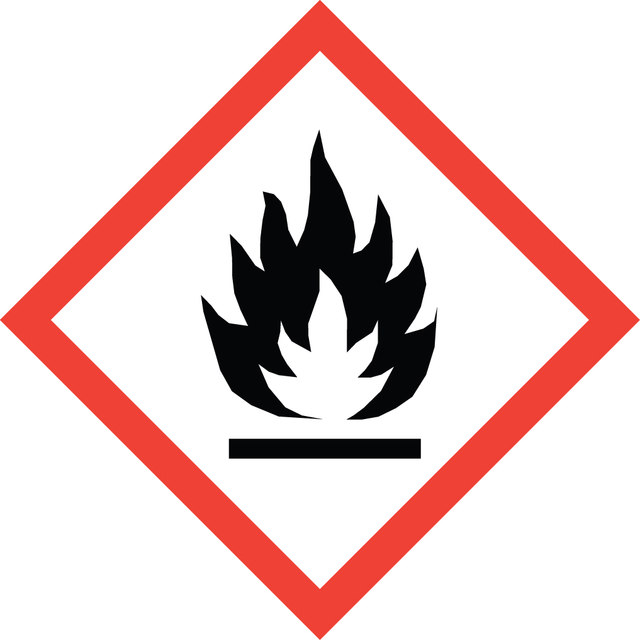
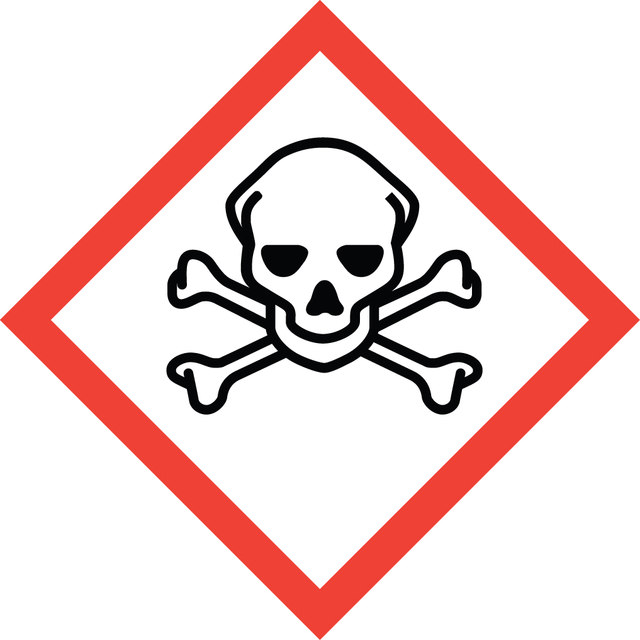

signalword
Danger
hcodes
Hazard Classifications
Acute Tox. 3 Inhalation - Acute Tox. 4 Oral - Eye Dam. 1 - Flam. Liq. 3 - Skin Corr. 1A
supp_hazards
저장 등급
3 - Flammable liquids
flash_point_f
113.0 °F - closed cup - (own results)
flash_point_c
45 °C - closed cup - (own results)
문서
LC-MS/MS-based determination of 19 sulfonamides, 13 quinolones, and 3 tetracycline drug residues in pork meat samples using Supel™ Swift HLB for extraction.
Tissue distribution, effects of cooking and parameters affecting the extraction of azaspiracids from mussels, Mytilus edulis, prior to analysis by liquid chromatography coupled to mass spectrometry.
Hess P et al.
Toxicon, 46, 62-62 (2005)
Protocol for the induction of arthritis in C57BL/6 mice.
Inglis JJ et al.
Nature Protocols, 612-612 (2008)
Separation and Detection of Phosphorylated and Nonphosphorylated BvgA, a Bordetella pertussis Response Regulator, in vivo and in vitro.
Chen Q et al.
Bio-protocol, 3 (2013)
국제 무역 품목 번호
| SKU | GTIN |
|---|---|
| F0507-100ML | 04061837760686 |
| F0507-1L | 04061837760693 |
| F0507-4L | 04061833611241 |
| F0507-4X100ML | 04061833611258 |
| F0507-500ML | 04061837760709 |