
248614

Ammonium persulfate
ACS reagent, ≥98.0%
동의어(들):
AP, APS, Ammonium peroxodisulfate, Ammonium peroxydisulfate, PER
조직 및 계약 가격을 보려면 로그인를 클릭합니다.
크기 선택
보기 변경
제품정보 (DICE 배송 시 비용 별도)
Linear Formula:
(NH4)2S2O8
CAS 번호:
Molecular Weight:
228.20
NACRES:
NA.21
PubChem Substance ID:
UNSPSC Code:
12352300
EC Number:
231-786-5
MDL number:
eCl@ss:
38030421
Assay:
≥98.0%
Grade:
ACS reagent
Form:
chunks or granules, powder or crystals
grade
ACS reagent
Quality Level
vapor density
7.9 (vs air)
assay
≥98.0%
form
chunks or granules, powder or crystals
reaction suitability
reagent type: oxidant
impurities
≤0.005% insolubles, ≤0.04 meq/g Titr. acid
ign. residue
≤0.05%
pH
1-2 (25 °C, 228 g/L)
anion traces
Cl- and ClO4-: ≤0.001%
cation traces
Fe: ≤0.001%, Mn: ≤0.5 ppm, heavy metals (as Pb): ≤0.005%
SMILES string
N.N.OS(=O)(=O)OOS(O)(=O)=O
InChI
1S/2H3N.H2O8S2/c;;1-9(2,3)7-8-10(4,5)6/h2*1H3;(H,1,2,3)(H,4,5,6)
InChI key
ROOXNKNUYICQNP-UHFFFAOYSA-N
General description
Ammonium persulfateis a readily available oxidizing agent for various chemicaltransformations, and it is also usedas a bleaching agent in the chemical industry.
Application
Ammonium persulfate can be used as an oxidizing reagent for the solvent-free oxidation of:
- Primary and secondary alcohols to corresponding carbonyl compounds in an aqueous medium.
- Thiols to disulfides.
Catalyst for acrylamide gel polymerization.
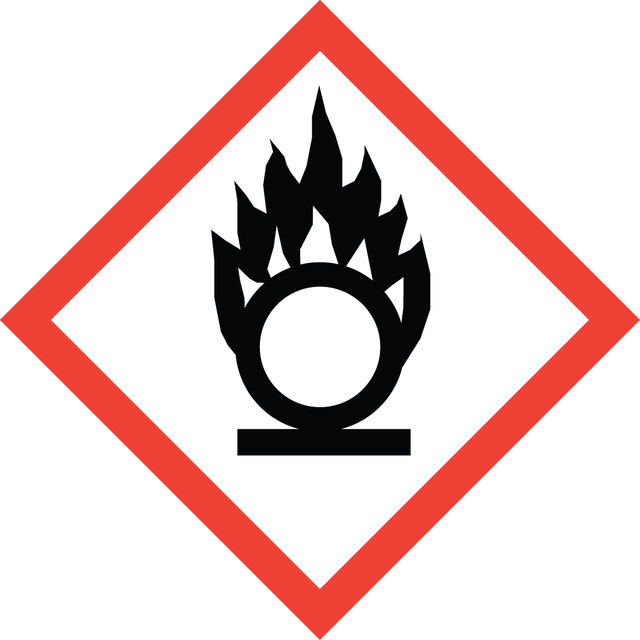
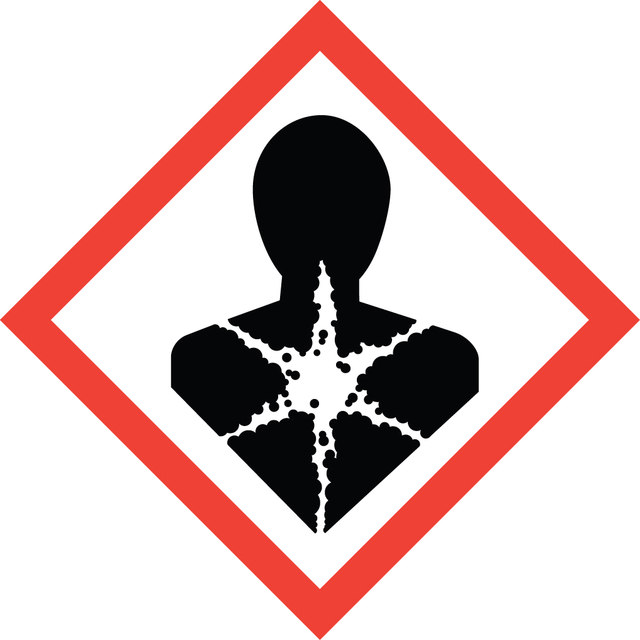
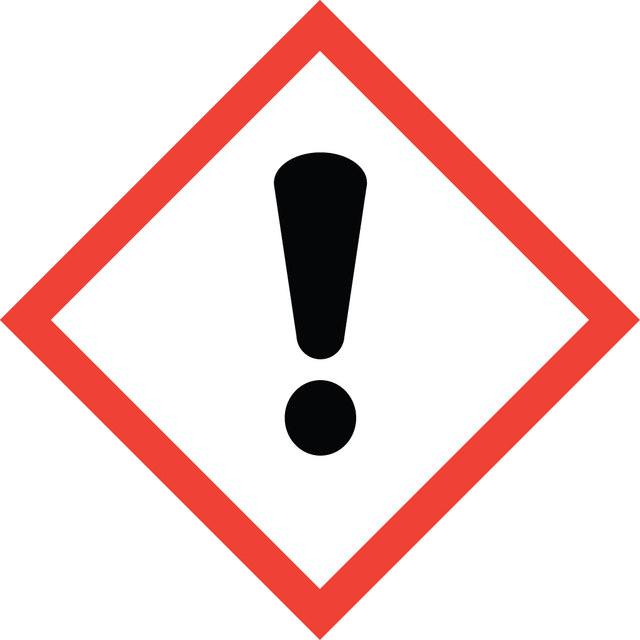
signalword
Danger
Hazard Classifications
Acute Tox. 4 Oral - Eye Irrit. 2 - Ox. Sol. 3 - Resp. Sens. 1 - Skin Irrit. 2 - Skin Sens. 1 - STOT SE 3
target_organs
Respiratory system
저장 등급
5.1B - Oxidizing hazardous materials
wgk
WGK 1
flash_point_f
Not applicable
flash_point_c
Not applicable
William H Thiel et al.
Methods in molecular biology (Clifton, N.J.), 1218, 187-199 (2014-10-17)
After a decade of work to address cellular uptake, the principal obstacle to RNAi-based therapeutics, there is now well-deserved, renewed optimism about RNAi-based drugs. Phase I and II studies have shown safe, strong, and durable-gene knockdown (80-90%, lasting for a
Solid state deoximation with ammonium persulfate-silica gel: Regeneration of carbonyl compounds using microwaves.
Varma RS and Meshram HM.
Tetrahedron Letters, 38(31), 5427-5428 (1997)
S Pino et al.
Clinical chemistry, 42(2), 239-243 (1996-02-01)
The chloric acid method is most commonly used to obtain accurate and reproducible measurements of iodine and remove interfering substances. Unfortunately chloric acid is a potential hazard, requiring an explosion-proof hood, among other precautions. We have developed a simple, convenient
국제 무역 품목 번호
| SKU | GTIN |
|---|---|
| 248614-500G | 04061837769016 |
| 248614-100G | 04061837768996 |
| 248614-2.5KG | 04061825928241 |
| 248614-4X2.5KG | 04061837769009 |
| 248614-5G | 04061825928258 |