
766917

Lithium bis(trimethylsilyl)amide solution
1.5 M in THF
동의어(들):
Hexamethyldisilazane lithium salt
조직 및 계약 가격을 보려면 로그인를 클릭합니다.
크기 선택
보기 변경
제품정보 (DICE 배송 시 비용 별도)
Linear Formula:
[(CH3)3Si]2NLi
CAS 번호:
Molecular Weight:
167.33
UNSPSC Code:
12352111
NACRES:
NA.22
PubChem Substance ID:
MDL number:
Beilstein/REAXYS Number:
3567910
Concentration:
1.5 M in THF
Form:
liquid
form
liquid
Quality Level
concentration
1.5 M in THF
density
0.893 g/mL at 25 °C
SMILES string
[Li]N([Si](C)(C)C)[Si](C)(C)C
InChI
1S/C6H18NSi2.Li/c1-8(2,3)7-9(4,5)6;/h1-6H3;/q-1;+1
InChI key
YNESATAKKCNGOF-UHFFFAOYSA-N
General description
Lithium bis(trimethylsilyl)amide is commonly used in organic synthesis as a non-nucleophilic strong Bronsted base. It is soluble in most nonpolar solvents such as aromatic hydrocarbons, hexanes, and THF.
Application
Lithium bis(trimethylsilyl)amide can be used as a reagent:
- In the deprotonation and nucleophilic difluoromethylation reactions.
- 3-methoxy substituted dihydropyrrole derivatives by reacting with aldehydes and lithiated methoxyallene via in situ formations of N-trimethylsilylated imines.
- In Darzens condensation and directed aldol condensation reactions.
- To synthesize poly(N-octyl-p-benzamide)s by chain-growth polycondensation of 4-octylaminobenzoic acid methyl ester.
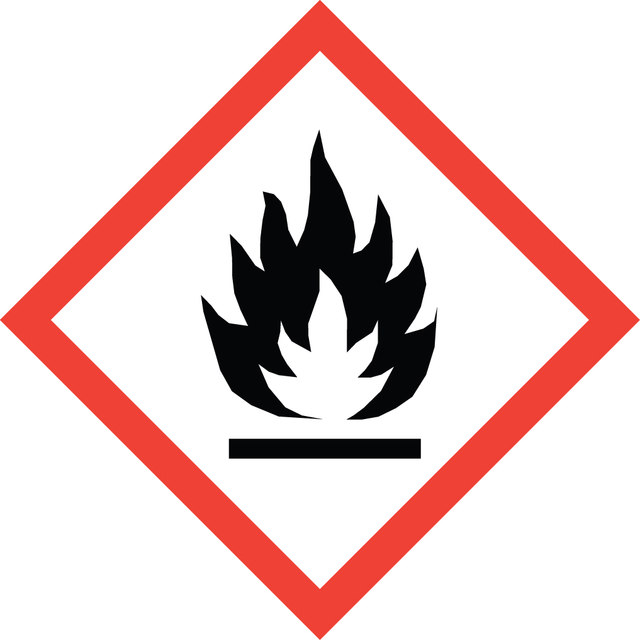



signalword
Danger
Hazard Classifications
Carc. 2 - Eye Dam. 1 - Flam. Liq. 2 - Self-heat. 1 - Skin Corr. 1B - STOT SE 3
target_organs
Central nervous system, Respiratory system
supp_hazards
저장 등급
4.2 - Pyrophoric and self-heating hazardous materials
wgk
WGK 2
flash_point_f
31.3 °F - closed cup
flash_point_c
-0.4 °C - closed cup
Nan Li et al.
Lab on a chip, 8(12), 2105-2112 (2008-11-22)
High-density live cell array serves as a valuable tool for the development of high-throughput immunophenotyping systems and cell-based biosensors. In this paper, we have, for the first time, demonstrated a simple fabrication process to form the hexamethyldisilazane (HMDS) and poly(ethylene
Tatsuya Nitabaru et al.
Journal of the American Chemical Society, 131(38), 13860-13869 (2009-09-10)
Full details of an anti-selective catalytic asymmetric nitroaldol reaction promoted by a heterobimetallic catalyst comprised of Nd(5)O(O(i)Pr)(13), an amide-based ligand, and NaHMDS (sodium hexamethyldisilazide) are described. A systematic synthesis and evaluation of amide-based ligands led to the identification of optimum
Juliana Tsz Yan Lee et al.
Scanning, 34(1), 12-25 (2012-04-26)
Common dehydration methods of cells on biomaterials for scanning electron microscopy (SEM) include air drying, hexamethyldisilazane (HMDS) or tetramethysilane (TMS) treatment and critical point drying (CPD). On the other side, freeze-drying has been widely employed in dehydrating biological samples and
국제 무역 품목 번호
| SKU | GTIN |
|---|---|
| 766917-800ML | 04061837675478 |
| 766917-100ML | 04061832923703 |