콘텐츠로 건너뛰기
Merck

757136

Lithium bis(oxalato)borate

greener alternative

동의어(들):

LiBOB, Lithium bis(ethanedioato)borate, Lithium bis(oxalate)borate

조직 및 계약 가격을 보려면 로그인를 클릭합니다.

크기 선택

보기 변경

제품정보 (DICE 배송 시 비용 별도)

Linear Formula:
LiB(C2O4)2
CAS 번호:
Molecular Weight:
193.79
NACRES:
NA.23
PubChem Substance ID:
UNSPSC Code:
26111700
MDL number:
기술 서비스
도움이 필요하신가요? 저희 숙련된 과학자 팀이 도와드리겠습니다.
도움 문의


form

powder or crystals

Quality Level

greener alternative product characteristics

Design for Energy Efficiency
Learn more about the Principles of Green Chemistry.

sustainability

Greener Alternative Product

mp

>300 °C (lit.)

application(s)

battery manufacturing

greener alternative category

SMILES string

[Li+].O=C1O[B-]2(OC1=O)OC(=O)C(=O)O2

InChI

1S/C4BO8.Li/c6-1-2(7)11-5(10-1)12-3(8)4(9)13-5;/q-1;+1

InChI key

NVQAYVUCVASGDK-UHFFFAOYSA-N

General description

We are committed to bringing you Greener Alternative Products, which adhere to one or more of The 12 Principles of Greener Chemistry. This product has been enhanced for energy efficiency. Find details here.
Lithium bis(oxalato)borate (LiBOB) is a class of electrolytic materials that can be used in the fabrication of lithium-ion batteries. Lithium-ion batteries consist of anode, cathode, and electrolyte with a charge-discharge cycle. These materials enable the formation of greener and sustainable batteries for electrical energy storage.

Application

LiBOB is a novel boron based Li salt electrolyte material for Li ion batteries. It is environmentally friendly with good film forming property and high thermal stability and is compatible with a variety of anodes and metal oxide cathode.
LiBOB is a thermally stable electrolyte that can be used to protect graphite-based anode materials in lithium-ion batteries. It shows good electrochemical performance with a discharge capacity retention of ~ 83%.


pictograms

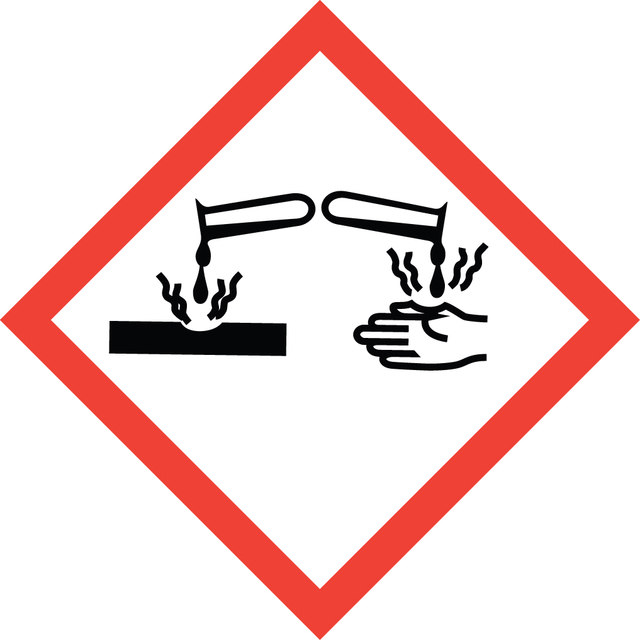
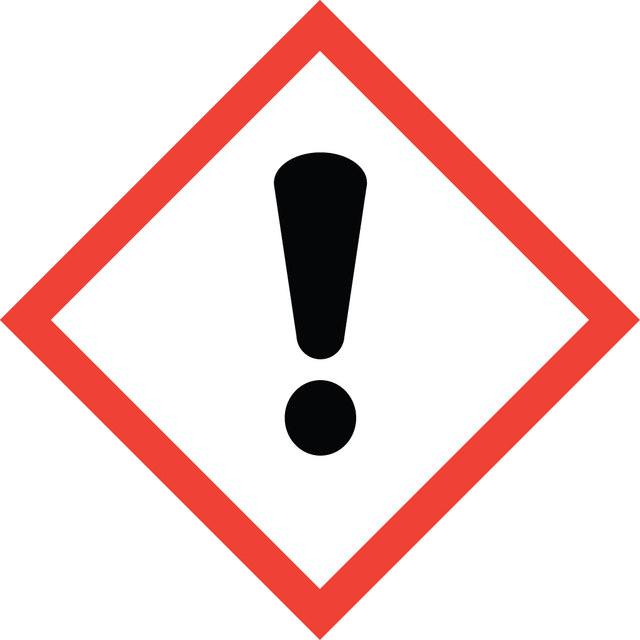
CorrosionExclamation mark

signalword

Danger

Hazard Classifications

Acute Tox. 4 Oral - Eye Dam. 1 - Skin Sens. 1A

저장 등급

13 - Non Combustible Solids

wgk

WGK 1


가장 최신 버전 중 하나를 선택하세요:

시험 성적서(COA)

Lot/Batch Number

It looks like we've run into a problem, but you can still download Certificates of Analysis from our 문서 section.

도움이 필요하시면 연락하세요. 고객 지원 부서

이 제품을 이미 가지고 계십니까?

문서 라이브러리에서 최근에 구매한 제품에 대한 문서를 찾아보세요.

문서 라이브러리 방문


문서

Solid oxide fuel cells and electrolyzers show potential for chemical-to-electrical energy conversion, despite early development stages.

Ionic liquid electrolytes explored for rechargeable batteries' advancement; future IL development discussed.

Due to the adverse impact of the continued use of fossil fuels on the earth’s environment and climate, researchers have been asked to develop new approaches for producing power using renewable sources like wind and solar energy

모든 기사 보기

Shoichi Matsuda et al.
Scientific reports, 9(1), 6211-6211 (2019-04-19)
Data-driven material discovery has recently become popular in the field of next-generation secondary batteries. However, it is important to obtain large, high quality data sets to apply data-driven methods such as evolutionary algorithms or Bayesian optimization. Combinatorial high-throughput techniques are
Jenny Strehlau et al.
Analytical and bioanalytical chemistry, 409(26), 6123-6131 (2017-08-05)
A novel method based on liquid-liquid extraction with subsequent gas chromatography separation and mass spectrometric detection (GC-MS) for the quantification of organic carbonates in cell culture materials is presented. Method parameters including the choice of extraction solvent, of extraction method
Wengao Zhao et al.
ChemSusChem, 11(13), 2211-2220 (2018-05-03)
The long-term cycling performance, rate capability, and voltage stability of lithium (Li) metal batteries with LiNi0.76 Mn0.14 Co0.10 O2 (NMC76) cathodes is greatly enhanced by lithium bis(oxalato)borate (LiBOB) additive in the LiPF6 -based electrolyte. With 2 % LiBOB in the electrolyte


국제 무역 품목 번호

SKUGTIN
757136-25G04061838351906