Skip to Content
MilliporeSigma

496189

Chloroform

biotech. grade, ≥99.8%, contains 0.5-1.0% ethanol as stabilizer

Synonym(s):

Methylidyne trichloride, Trichloromethane

Sign In to View Organizational & Contract Pricing.

Select a Size

Change View

About This Item

Empirical Formula (Hill Notation):
CHCl3
CAS Number:
Molecular Weight:
119.38
UNSPSC Code:
12191502
NACRES:
NA.04
PubChem Substance ID:
MDL number:
Beilstein/REAXYS Number:
1731042
Assay:
≥99.8%
Grade:
biotech. grade
Bp:
60.5-61.5 °C (lit.)
Vapor pressure:
160 mmHg ( 20 °C)
Technical Service
Need help? Our team of experienced scientists is here for you.
Let Us Assist


grade

biotech. grade

Quality Level

vapor density

4.1 (vs air)

vapor pressure

160 mmHg ( 20 °C)

assay

≥99.8%

contains

0.5-1.0% ethanol as stabilizer

impurities

<0.01% water

evapn. residue

<0.0003%

color

APHA: ≤10

refractive index

n20/D 1.445 (lit.)

pH

5.2-6.4

bp

60.5-61.5 °C (lit.)

mp

−63 °C (lit.)

density

1.48 g/mL at 25 °C, 1.492 g/mL at 25 °C (lit.)

cation traces

Pb: ≤0.05 ppm

SMILES string

ClC(Cl)Cl

InChI

1S/CHCl3/c2-1(3)4/h1H

InChI key

HEDRZPFGACZZDS-UHFFFAOYSA-N

General description

Our biotech solvents offer exceptional quality for reliable RNA extraction, ensuring optimal laboratory performance. With low water content and minimal residue, give clean UV spectra to minimize contamination.
  • High-Quality Biotech Solvents: Designed for optimal laboratory performance with low water content and minimal residues.
  • Ideal for RNA Extraction: Essential for genetic testing and research applications like PCR.
  • Ensures Integrity of Genetic Material: Promotes reliable and reproducible results.
  • Industry Compliant: Suitable for both academic and commercial laboratories, enhancing research efficiency.

Chloroform is a colorless, volatile chlorinated organic solvent whose vapors have a narcotic effect. It is susceptible to degradation with time, which can be suppressed by adding ethanol as a stabilizer. Since ethanol is added in higher concentration it leads to increase in polarity which may have a potential influence on some of the applications. Low water content, minimal residue and clean UV spectra are the special characteristics of this biotech grade solvent. It can be utilized for biotechnological processes like protein sequencing, peptide and oligonucleotide synthesis. Reports suggest that chloroform stabilized with ethanol reduces chances on creating artifacts during the chromatographic separation after extraction of anthracyclines from biological matrices.

Application

Chloroform may be used in the following processes:
  • Synthesis of colloidal hydrophobic CdSe core nanocrystals (quantum dots).
  • Preparing phospholipid solutions.
  • As a solvent in the photolysis reaction of ruthenium complexes.
  • Solvent for recrystallization.
  • Reference compound to detect the presence of chloroform in Tobacco smokes.
  • Extractant in solvent extraction process.


Still not finding the right product?

Explore all of our products under Chloroform
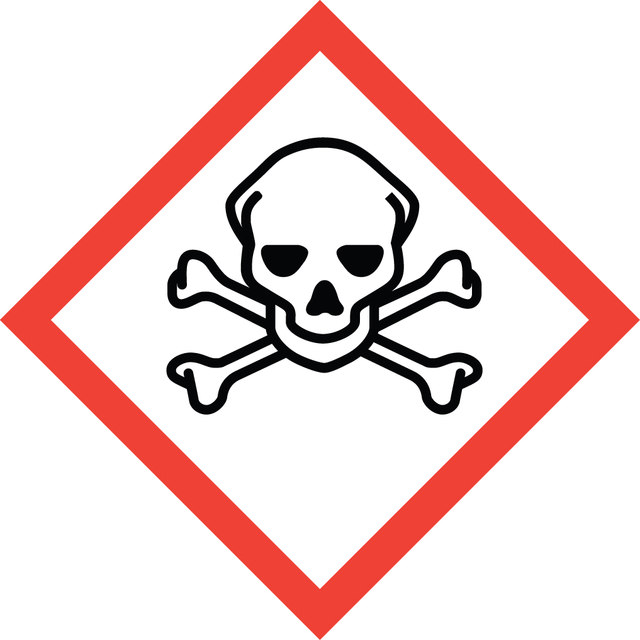

pictograms

Skull and crossbonesHealth hazard

signalword

Danger

Hazard Classifications

Acute Tox. 3 Inhalation - Acute Tox. 4 Oral - Carc. 2 - Eye Irrit. 2 - Repr. 2 - Skin Irrit. 2 - STOT RE 1 Oral - STOT SE 3

target_organs

Central nervous system, Liver,Kidney

Storage Class

6.1D - Non-combustible acute toxic Cat.3 / toxic hazardous materials or hazardous materials causing chronic effects

wgk

WGK 3

flash_point_f

does not flash

flash_point_c

does not flash


Choose from one of the most recent versions:

Certificates of Analysis (COA)

Lot/Batch Number

It looks like we've run into a problem, but you can still download Certificates of Analysis from our Documents section.

If you need assistance, please contact Customer Support

Already Own This Product?

Find documentation for the products that you have recently purchased in the Document Library.

Visit the Document Library


Traces of phosgene in chloroform: Consequences for extraction of anthracyclines.
Maudens KE, et al.
Journal of Chromatography. B, Biomedical Applications, 848(2), 384-390 (2007)
Kinetics and Mechanism of the Photooxidation of Bis (bipyridine) dichlororuthenium (II) and the Photoreduction of Bis (bipyridine) dichlororuthenium (III) in Chloroform.
Sathiyabalan S and Hoggard PE.
Inorganic Chemistry, 34(18), 4562-4571 (1995)
The affinity of two antimicrobial peptides derived from bovine milk proteins for model lipid membranes.
Barzyk W, et al.
Colloids and Surfaces. A, Physicochemical and Engineering Aspects, 343(1), 104-110 (2009)


Global Trade Item Number

SKUGTIN
496189-2L04061832416120
496189-1L04061832416113