
410241

Sodium perchlorate
ACS reagent, ≥98.0%
Synonym(s):
Hyperchloric acid sodium salt
Sign In to View Organizational & Contract Pricing.
Select a Size
Change View
About This Item
Linear Formula:
NaClO4
CAS Number:
Molecular Weight:
122.44
NACRES:
NA.21
PubChem Substance ID:
UNSPSC Code:
12352302
EC Number:
231-511-9
MDL number:
Assay:
≥98.0%
Grade:
ACS reagent
Form:
powder or chunks
Solubility:
water: soluble 2096 g/L at 20 °C
grade
ACS reagent
Quality Level
assay
≥98.0%
form
powder or chunks
reaction suitability
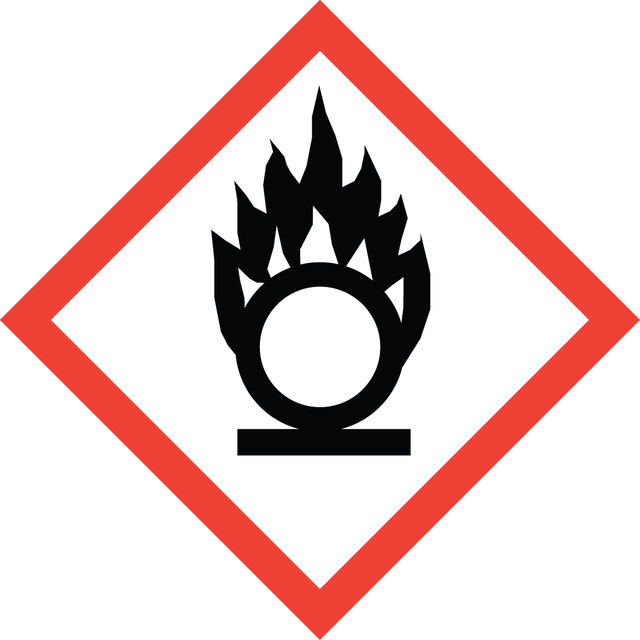
reagent type: oxidant
impurities
≤0.005% insolubles
pH
6.0-8.0 (25 °C, 5%)
mp
468 °C (lit.)
solubility
water: soluble 2096 g/L at 20 °C
anion traces
chloride (Cl-): ≤0.003%, sulfate (SO42-): ≤0.002%
cation traces
Ca: ≤0.02%, Fe: ≤5 ppm, K: ≤0.05%, heavy metals: ≤5 ppm (by ICP)
SMILES string
[Na+].[O-]Cl(=O)(=O)=O
InChI
1S/ClHO4.Na/c2-1(3,4)5;/h(H,2,3,4,5);/q;+1/p-1
InChI key
BAZAXWOYCMUHIX-UHFFFAOYSA-M
General description
Sodium perchlorate is a water soluble perchlorate salt. It is prepared by electrolyzing aqueous sodium chlorate solution. It is a strong oxidizing agent. On impregnating porous silicon with sodium perchlorate it forms an explosive composite which has been investigated.
Application
- Silica-Poly(Vinyl Alcohol) Composite Aerogel: A Promising Electrolyte for Solid-State Sodium Batteries.: This research highlights the use of sodium perchlorate in developing silica-poly(vinyl alcohol) composite aerogels, serving as an innovative electrolyte for solid-state sodium batteries. This study showcases the potential for advancements in energy storage technologies, emphasizing the role of sodium perchlorate in enhancing battery performance and safety (Vareda JP et al., 2024).
- A sodium ion conducting gel polymer electrolyte with counterbalance between 1-ethyl-3-methylimidazolium tetrafluoroborate and tetra ethylene glycol dimethyl ether for electrochemical applications.: This research demonstrates the use of sodium perchlorate in developing a gel polymer electrolyte for sodium-ion batteries, providing a balance between conductivity and stability, crucial for the next generation of energy storage systems (Patel M et al., 2024).
- Bendable quasi-solid-state aqueous sodium-ion batteries operated at -30 °C.: Utilizing sodium perchlorate, this study develops flexible and low-temperature operable sodium-ion batteries, offering significant advancements in portable and wearable electronic devices, highlighting the adaptability and efficiency of sodium perchlorate in extreme conditions (Gui Q et al., 2024).
Still not finding the right product?
Explore all of our products under Sodium perchlorate

signalword
Danger
hcodes
Hazard Classifications
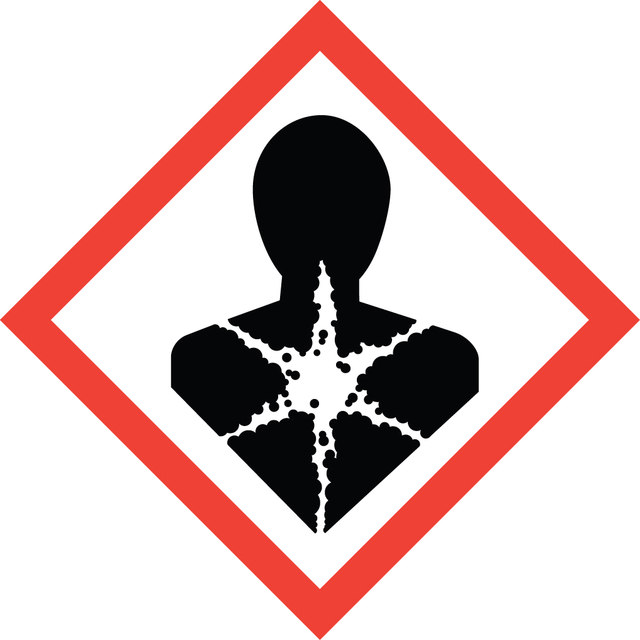
Acute Tox. 4 Oral - Eye Irrit. 2 - Ox. Sol. 1 - STOT RE 2
target_organs
Thyroid
Storage Class
5.1A - Strongly oxidizing hazardous materials
wgk
WGK 1
Choose from one of the most recent versions:
Already Own This Product?
Find documentation for the products that you have recently purchased in the Document Library.
Santaji Nalwade et al.
Scientia pharmaceutica, 79(1), 69-84 (2011-05-28)
A simple, precise and rapid stability-indicating ultra-performance liquid chromatography (UPLC) method is developed for the simultaneous quantitative determination of Telmisartan, Amlodipine besylate and Hydrochlorothiazide from their innovative poly pill combination drug product in the presence of degradation products. It involves
Changyong Zhang et al.
Water research, 145, 220-230 (2018-08-25)
Ammonia nitrogen removal from wastewaters has gained much attention in recent decades as a result of the environmental problems associated with discharge of excessive amounts of this critical nutrient including eutrophication of receiving waters, generation of offensive odours as a
Thermal analysis of the exothermic reaction between galvanic porous silicon and sodium perchlorate.
Becker CR, et al.
ACS Applied Materials & Interfaces, 2(11), 2998-3003 (2010)
Global Trade Item Number
| SKU | GTIN |
|---|---|
| 410241-100G | 04061835347070 |
| 410241-12KG | 04061833636886 |
| 410241-2.5KG | 04061837769153 |
| 410241-500G | 04061835347087 |