Skip to Content
MilliporeSigma

320110

Acetone

ACS reagent, ≥99.5%

Sign In to View Organizational & Contract Pricing.

Select a Size

Change View

About This Item

Linear Formula:
CH3COCH3
CAS Number:
Molecular Weight:
58.08
UNSPSC Code:
12352115
NACRES:
NA.21
PubChem Substance ID:
EC Number:
200-662-2
Beilstein/REAXYS Number:
635680
MDL number:
Assay:
≥99.5%
Grade:
ACS reagent
Bp:
56 °C/760 mmHg (lit.)
Vapor pressure:
184 mmHg ( 20 °C)
Technical Service
Need help? Our team of experienced scientists is here for you.
Let Us Assist


grade

ACS reagent

Quality Level

agency

suitable for EPA 1613

vapor density

2 (vs air)

vapor pressure

184 mmHg ( 20 °C)

assay

≥99.5%

form

liquid

expl. lim.

13.2 %

dilution

(for analytical testing)

impurities

≤0.0003 meq/g Titr. acid, ≤0.0006 meq/g Titr. base, ≤0.002% aldehyde as formaldehyde, ≤0.05% isopropanol, ≤0.05% methanol, ≤0.5% water

evapn. residue

≤0.001%

color

APHA: ≤10

refractive index

n20/D 1.359 (lit.)

pH

5-6 (20 °C, 395 g/L)

bp

56 °C/760 mmHg (lit.)

mp

−94 °C (lit.)

density

0.791 g/mL at 25 °C (lit.)

format

neat

SMILES string

CC(C)=O

InChI

1S/C3H6O/c1-3(2)4/h1-2H3

InChI key

CSCPPACGZOOCGX-UHFFFAOYSA-N

General description

Acetone is a polar, aprotic organic solvent. It is a colorless and highly volatile liquid. It is commonly used in organic syntheses as solvent and/or building block, in pharmaceutical and personal care industries. This grade meets ACS requirements, making it ideal for a wide range of analytical applications.
Our premium ACS solvents are ideal for routine chemical synthesis, drying, purification, and critical labware cleaning. They meet or exceed the rigorous standards of the American Chemical Society (ACS), ensuring high-quality results for your research needs.

Premium ACS Solvents: Our solvents meet or exceed the stringent standards set by the American Chemical Society, ensuring high quality and reliability for your laboratory applications.

Replicable and Publishable Results: Designed for consistency, our solvents deliver results that can be reliably reproduced, making them ideal for research that requires publication.

Versatile Applications: Suitable for routine chemical synthesis, drying, purification, and critical labware cleaning, our solvents cater to a wide range of research needs in the laboratory.

Application

  • Used as solvent and/or building block in organic syntheses, such as SN2 reactions and Jones oxidation
  • Mobile phase in Thin layer chromatography (TLC)
  • Used as solvent in chemical molecules delivery systems in pharmaceutical and cosmetic industries
  • Cleaning proposes
Acetone′s luminesence intensity is dependent upon the solution components . The absorption of UV light by acetone, results in its photolysis and the production of radials .

Features and Benefits

ACS solvents meet or exceed the high standards of the American Chemical Society (ACS) ,with test specifications that are specialized to every compound. According to the American Chemical Society, ACS reagent grade implies that it is a substance of sufficient purity to be used in most chemical analyses or reactions


Still not finding the right product?

Explore all of our products under Acetone
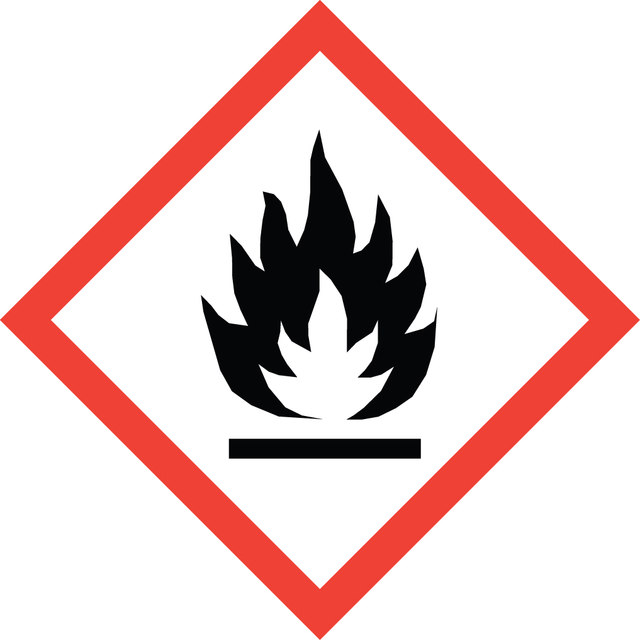

pictograms

FlameExclamation mark

signalword

Danger

Hazard Classifications

Eye Irrit. 2 - Flam. Liq. 2 - STOT SE 3

target_organs

Central nervous system

supp_hazards

Storage Class

3 - Flammable liquids

wgk

WGK 1

flash_point_f

1.4 °F - closed cup

flash_point_c

-17.0 °C - closed cup


Choose from one of the most recent versions:

Certificates of Analysis (COA)

Lot/Batch Number

It looks like we've run into a problem, but you can still download Certificates of Analysis from our Documents section.

If you need assistance, please contact Customer Support

Already Own This Product?

Find documentation for the products that you have recently purchased in the Document Library.

Visit the Document Library


Related Content

This page is intended to make it easier to find the consumables you need based on the analytical method you’re using. Methods included on this page come from the EPA, Standard Methods and ASTM.


Anna Hultberg et al.
PloS one, 6(4), e17665-e17665 (2011-04-13)
For efficient prevention of viral infections and cross protection, simultaneous targeting of multiple viral epitopes is a powerful strategy. Llama heavy chain antibody fragments (VHH) against the trimeric envelope proteins of Respiratory Syncytial Virus (Fusion protein), Rabies virus (Glycoprotein) and
Oleksiy Krupin et al.
Optics express, 21(1), 698-709 (2013-02-08)
Straight long-range surface plasmon waveguides are demonstrated as biosensors for the detection of cells, proteins and changes in the bulk refractive index of solutions. The sensors consist of 5 μm wide 22 nm thick Au stripes embedded in polymer (CYTOP™)
Juan A López-Ráez et al.
Plant science : an international journal of experimental plant biology, 230, 59-69 (2014-12-07)
Apocarotenoids are a class of compounds that play important roles in nature. In recent years, a prominent role for these compounds in arbuscular mycorrhizal (AM) symbiosis has been shown. They are derived from carotenoids by the action of the carotenoid


Global Trade Item Number

SKUGTIN
320110-4X4L04061826695609
320110-1L04061826695586
320110-200L-LS04061838161482
320110-4L04061826695593