
Sign In to View Organizational & Contract Pricing.
Select a Size
Change View
About This Item
Empirical Formula (Hill Notation):
C14H8O4
CAS Number:
Molecular Weight:
240.21
EC Number:
204-173-5
UNSPSC Code:
41116107
NACRES:
NA.24
Beilstein/REAXYS Number:
2054727
MDL number:
grade
primary reference standard
product line
phyproof® Reference Substance
assay
≥90.0% (HPLC)
manufacturer/tradename
PhytoLab
application(s)
food and beverages
format
neat
SMILES string
Oc1cccc2C(=O)c3cccc(O)c3C(=O)c12
InChI
1S/C14H8O4/c15-9-5-1-3-7-11(9)14(18)12-8(13(7)17)4-2-6-10(12)16/h1-6,15-16H
InChI key
QBPFLULOKWLNNW-UHFFFAOYSA-N
Gene Information
human ... RXRA(6256)
General description
This substance is a primary reference substance with assigned absolute purity (considering chromatographic purity, water, residual solvents, inorganic impurities). The exact value can be found on the certificate. Produced by PhytoLab GmbH & Co. KG
Legal Information
phyproof is a registered trademark of PhytoLab GmbH & Co. KG
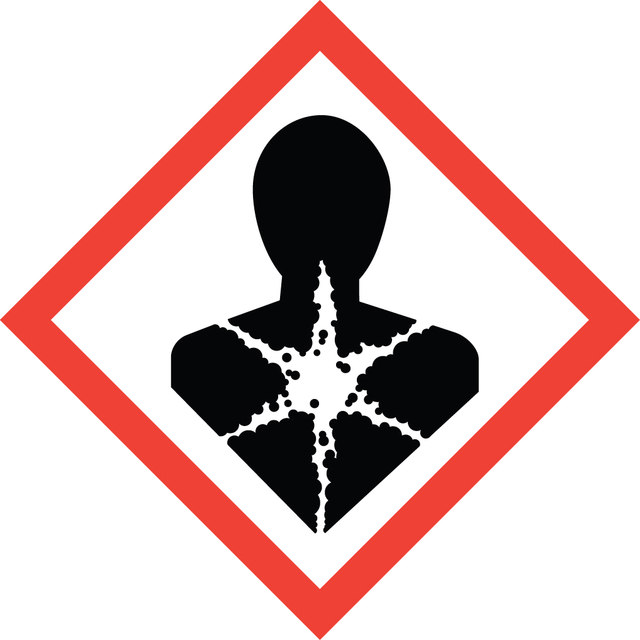

signalword
Warning
hcodes
Hazard Classifications
Carc. 2 - Eye Irrit. 2 - Skin Irrit. 2 - STOT SE 3
target_organs
Respiratory system
Storage Class
11 - Combustible Solids
wgk
WGK 1
flash_point_f
No data available
flash_point_c
No data available
Choose from one of the most recent versions:
Already Own This Product?
Find documentation for the products that you have recently purchased in the Document Library.
P Rochowski et al.
International journal of pharmaceutics, 580, 119233-119233 (2020-03-21)
The paper demonstrates the potential of photoacoustics for the identification of the mechanisms underlying drug transport through tissue-mimicking systems. Photoacoustic experiments were performed for a model transdermal delivery system, consisting of drug dithranol (in pharmaceutical form) and dodecanol-collodion (DDC) membrane.