
Sign In to View Organizational & Contract Pricing.
Select a Size
Change View
About This Item
Empirical Formula (Hill Notation):
C20H21NO4 · HCl
CAS Number:
Molecular Weight:
375.85
UNSPSC Code:
41116107
NACRES:
NA.24
PubChem Substance ID:
MDL number:
Beilstein/REAXYS Number:
3921435
grade
pharmaceutical primary standard
API family
papaverine
manufacturer/tradename
EDQM
application(s)
pharmaceutical (small molecule)
format
neat
SMILES string
COC1=C(OC)C=C(C(CC2=CC(OC)=C(OC)C=C2)=NC=C3)C3=C1.Cl
InChI
1S/C20H21NO4.ClH/c1-22-17-6-5-13(10-18(17)23-2)9-16-15-12-20(25-4)19(24-3)11-14(15)7-8-21-16;/h5-8,10-12H,9H2,1-4H3;1H
InChI key
UOTMYNBWXDUBNX-UHFFFAOYSA-N
General description
This product is provided as delivered and specified by the issuing Pharmacopoeia. All information provided in support of this product, including SDS and any product information leaflets have been developed and issued under the Authority of the Issuing Pharmacopoeia. For further information and support please go to the website of the issuing Pharmacopoeia.
Application
Papaverine hydrochloride EP Reference standard, intended for use in laboratory tests only as specifically prescribed in the European Pharmacopoeia.
Biochem/physiol Actions
Smooth muscle relaxant and cerebral vasodilator; phosphodiesterase inhibitor.
Packaging
The product is delivered as supplied by the issuing Pharmacopoeia. For the current unit quantity, please visit the EDQM reference substance catalogue.
Other Notes
Sales restrictions may apply.
Still not finding the right product?
Explore all of our products under Papaverine hydrochloride
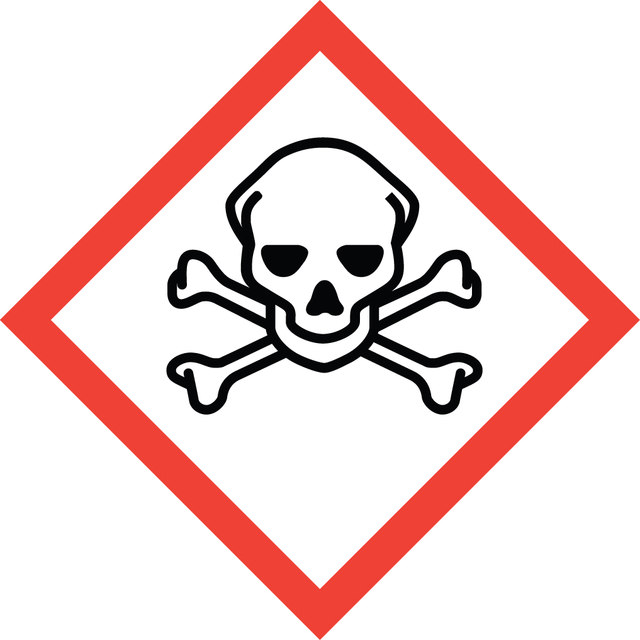
signalword
Danger
hcodes
Hazard Classifications
Acute Tox. 3 Oral
Storage Class
6.1C - Combustible acute toxic Cat.3 / toxic compounds or compounds which causing chronic effects
wgk
WGK 1
flash_point_f
Not applicable
flash_point_c
Not applicable
Choose from one of the most recent versions:
Already Own This Product?
Find documentation for the products that you have recently purchased in the Document Library.
Bojidarka Ivanov et al.
Natural product communications, 7(5), 581-586 (2012-07-18)
The electronic structures, optical properties and molecular structures of a series of isoquinoline alkaloids resulting in the formation of papaverine, through a proposed biosynthetic pathway via S(+)-reticuline were elucidated. The mechanism of papaverine synthesis was studied by electronic absorption, diffuse
J M Mathis et al.
Neuroradiology, 39(2), 90-98 (1997-02-01)
Intra-arterial infusion of papaverine hydrochloride for subarachnoid hemorrhage-induced cerebral vasospasm has become an adjunctive endovascular therapy along with cerebral angioplasty. Our knowledge concerning the mechanism of action, method of administration and potential side effects of this therapeutic alternative are reviewed.
Isabel Desgagné-Penix et al.
The Plant journal : for cell and molecular biology, 72(2), 331-344 (2012-06-26)
Papaverine, a major benzylisoquinoline alkaloid in opium poppy (Papaver somniferum), is used as a vasodilator and antispasmodic. Conversion of the initial intermediate (S)-norcoclaurine to papaverine involves 3'-hydroxylation, four O-methylations and dehydrogenation. However, our understanding of papaverine biosynthesis remains controversial more
Global Trade Item Number
| SKU | GTIN |
|---|---|
| P0270000 | 04061834290926 |