
755745

2,2′-Azobis(2-methylpropionitrile)
recrystallized from methanol, 99%
Synonym(s):
α,α′-Azoisobutyronitrile, AIBN, Azobisisobutyronitrile, Free radical initiator
Sign In to View Organizational & Contract Pricing.
Select a Size
Change View
About This Item
Linear Formula:
(CH3)2C(CN)N=NC(CH3)2CN
CAS Number:
Molecular Weight:
164.21
UNSPSC Code:
12162002
NACRES:
NA.23
PubChem Substance ID:
EC Number:
201-132-3
Beilstein/REAXYS Number:
1708400
MDL number:
Quality Level
assay
99%
form
crystals
mp
102-104 °C (dec.) (lit.), 103-107 °C
storage temp.
−20°C
SMILES string
CC(C)(\N=N\C(C)(C)C#N)C#N
InChI
1S/C8H12N4/c1-7(2,5-9)11-12-8(3,4)6-10/h1-4H3/b12-11+
InChI key
OZAIFHULBGXAKX-VAWYXSNFSA-N
General description
This AIBN was recrystallized and is ready for use as a polymerization initiator.
Application
- Porous Acid-Base Hybrid Polymers for Enhanced NH3 Uptake: This study discusses the use of 2,2′-Azobis(2-methylpropionitrile) in the synthesis of acid-base hybrid polymers, highlighting its role in enhancing ammonia uptake through cooperative hydrogen bonds (X Luo, Y Liu, et al., 2023).
- Extraction of Fluoroquinolones from Milk: The development of molecularly imprinted polymers using 2,2′-Azobis(2-methylpropionitrile) as an initiator for the extraction of antibiotics from milk showcases its application in food safety and pharmaceutical analysis (E Megias-Pérez, et al., 2023).
- Thermo-responsive Copolymer Visible Light Catalyst: Highlighting the use of 2,2′-Azobis(2-methylpropionitrile) in the synthesis of thermo-responsive copolymers, this study explores its applications in catalysis and material science, particularly in photoreactive polymers (S Wu, et al., 2024).
Still not finding the right product?
Explore all of our products under 2,2′-Azobis(2-methylpropionitrile)
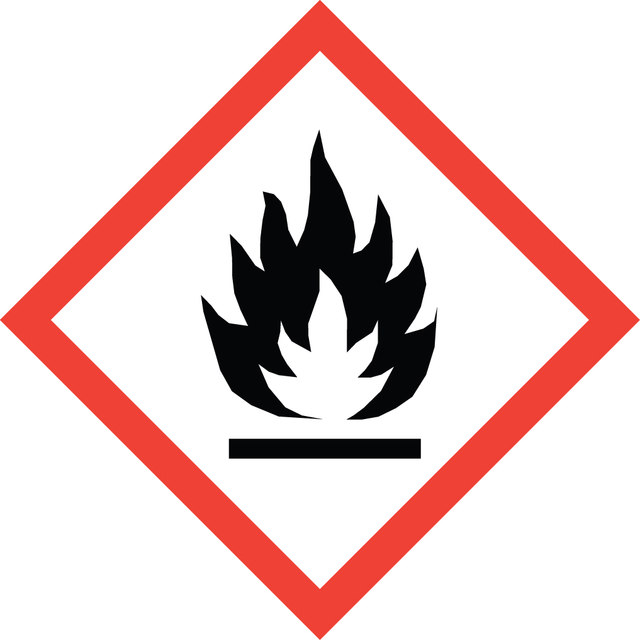

signalword
Danger
hcodes
Hazard Classifications
Acute Tox. 4 Inhalation - Acute Tox. 4 Oral - Aquatic Chronic 3 - Self-react. C
supp_hazards
Storage Class
4.1A - Other explosive hazardous materials
wgk
WGK 2
flash_point_f
122.0 °F
flash_point_c
50 °C
Choose from one of the most recent versions:
Already Own This Product?
Find documentation for the products that you have recently purchased in the Document Library.
Stana Kovačević et al.
Polymers, 11(5) (2019-05-30)
The objective of this research was to verify the feasibility of the use of newly synthesized biopolymer materials for sizing cotton yarns based on the basic principles of chemical modification. Research included acid hydrolysis of potato starch up to controlled
Lianghui Liu et al.
Organic letters, 14(22), 5692-5695 (2012-10-31)
In the presence of a catalytic amount of radical initiator AIBN, primary amines are oxidatively coupled to imines and tertiary amines are cyanated to α-aminonitriles. These "metal-free" aerobic oxidative coupling reactions may find applications in a wide range of "green"
Bor-Shiunn Lee et al.
Journal of endodontics, 37(2), 246-249 (2011-01-18)
We have developed new urethane acrylate-based root canal sealers using polycarbonate (PC) as polyol and 2,2-azobis(2-methyl)butyronitrile (AMBN) as a thermal initiator. The purpose of this study was to compare the properties among a group of seven sealers: (1) polybutyleneadipate (PBA)
Global Trade Item Number
| SKU | GTIN |
|---|---|
| 755745-1G | 04061826281123 |