Skip to Content
MilliporeSigma

440914

2,2′-Azobis(2-methylpropionamidine) dihydrochloride

powder or granules, 97%

Synonym(s):

α,α′-Azodiisobutyramidine dihydrochloride, AAPH

Sign In to View Organizational & Contract Pricing.

Select a Size

Change View

About This Item

Linear Formula:
[=NC(CH3)2C(=NH)NH2]2·2HCl
CAS Number:
Molecular Weight:
271.19
UNSPSC Code:
12162002
NACRES:
NA.23
PubChem Substance ID:
EC Number:
221-070-0
Beilstein/REAXYS Number:
3718854
MDL number:
Technical Service
Need help? Our team of experienced scientists is here for you.
Let Us Assist


Quality Level

assay

97%

form

powder or granules

t1/2

10 hr(56 °C)

mp

175-177 °C (lit.)

solubility

acetone, dioxane, methanol, ethanol, DMSO and water: soluble

SMILES string

Cl.Cl.CC(C)(\N=N\C(C)(C)C(N)=N)C(N)=N

InChI

1S/C8H18N6.2ClH/c1-7(2,5(9)10)13-14-8(3,4)6(11)12;;/h1-4H3,(H3,9,10)(H3,11,12);2*1H/b14-13+;;

InChI key

LXEKPEMOWBOYRF-QDBORUFSSA-N

Application

Free radical initiator.
Polymerization initiator for acrylic, vinyl and allyl monomers.

Features and Benefits
Undergoes first order decomposition to a cationic radical. Decomposes on exposure to UV. Compatible with cationic surfactants. Decomposition rate is pH dependent


signalword

Danger

Hazard Classifications

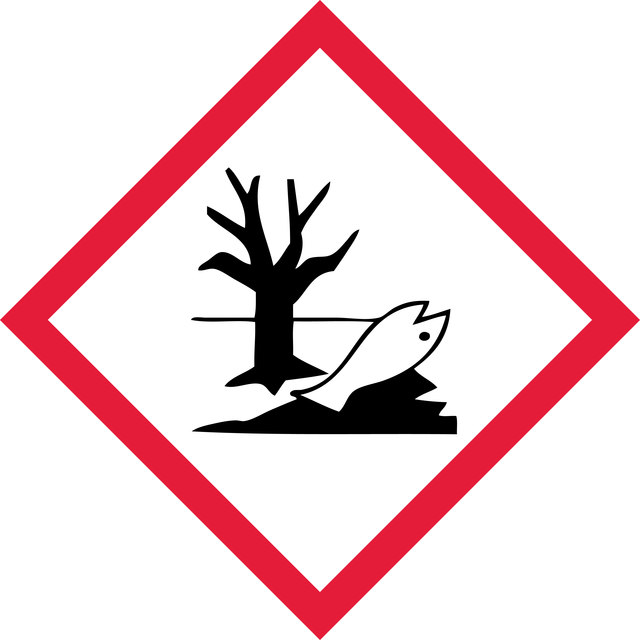
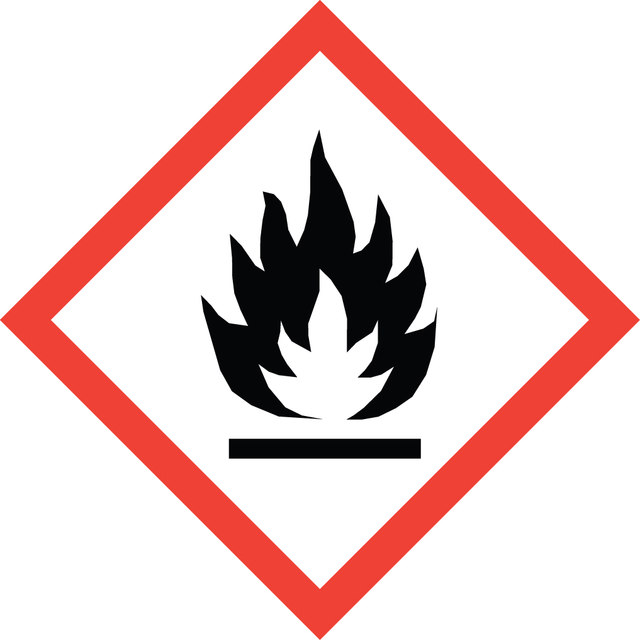
Acute Tox. 4 Oral - Aquatic Acute 1 - Aquatic Chronic 1 - Eye Irrit. 2 - Self-heat. 1 - Skin Sens. 1

Storage Class

4.2 - Pyrophoric and self-heating hazardous materials

wgk

WGK 1

flash_point_f

Not applicable

flash_point_c

Not applicable


Choose from one of the most recent versions:

Certificates of Analysis (COA)

Lot/Batch Number

Don't see the Right Version?

If you require a particular version, you can look up a specific certificate by the Lot or Batch number.

Already Own This Product?

Find documentation for the products that you have recently purchased in the Document Library.

Visit the Document Library


Protocols

Polymeric spheres serve as crystal templates. Synthesis methods yield large quantities.

We present an article about RAFT, or Reversible Addition/Fragmentation Chain Transfer, which is a form of living radical polymerization.

Polymerization via ATRP procedures demonstrated by Prof. Dave Haddleton's research group at the University of Warwick.

View All Protocols

Articles

Micro review of reversible addition/fragmentation chain transfer (RAFT) polymerization.


Olivier Mozziconacci et al.
Chemical research in toxicology, 25(9), 1842-1861 (2012-06-21)
Glutathione thiyl radicals (GS(•)) were generated in H(2)O and D(2)O by either exposure of GSH to AAPH, photoirradiation of GSH in the presence of acetone, or photoirradiation of GSSG. Detailed interpretation of the fragmentation pathways of deuterated GSH and GSH
Rong-Rong He et al.
PloS one, 8(3), e57732-e57732 (2013-03-08)
It is now well established that the developing embryo is very sensitive to oxidative stress, which is a contributing factor to pregnancy-related disorders. However, little is known about the effects of reactive oxygen species (ROS) on the embryonic cardiovascular system
A Nakajima et al.
Analytical and bioanalytical chemistry, 403(7), 1961-1970 (2012-05-01)
The characteristics of the spin-trapping reaction in the oxygen radical absorbance capacity (ORAC)-electron spin resonance (ESR) assay were examined, focusing on the kind of spin traps. 2,2-Azobis(2-amidinopropane) dihydrochloride (AAPH) was used as a free radical initiator. The spin adducts of


Global Trade Item Number

SKUGTIN
440914-25G04061835515516
440914-100G04061835563098