Skip to Content
MilliporeSigma

218472

Tetramethyl orthosilicate

98%

Synonym(s):

Tetramethoxysilane

Sign In to View Organizational & Contract Pricing.

Select a Size

Change View

About This Item

Linear Formula:
Si(OCH3)4
CAS Number:
Molecular Weight:
152.22
UNSPSC Code:
12352103
NACRES:
NA.23
PubChem Substance ID:
EC Number:
211-656-4
Beilstein/REAXYS Number:
1699658
MDL number:
Technical Service
Need help? Our team of experienced scientists is here for you.
Let Us Assist


vapor density

5.25 (vs air)

vapor pressure

13 hPa ( 20 °C)

assay

98%

form

liquid

refractive index

n20/D 1.368 (lit.)

bp

121-122 °C (lit.)

mp

−4 °C (lit.)

density

1.023 g/mL at 25 °C (lit.)

SMILES string

CO[Si](OC)(OC)OC

InChI

1S/C4H12O4Si/c1-5-9(6-2,7-3)8-4/h1-4H3

InChI key

LFQCEHFDDXELDD-UHFFFAOYSA-N

General description

Tetramethyl orthosilicate (TMOS), also known as the methyl ester of orthosilicic acid, is a colorless liquid with low viscosity and is considered the most industrially significant among the tetraalkyl silicates. It is characterized by its excellent hydrolyzing and polymerizing properties, making it highly valuable in various chemical and material synthesis processes. It is insoluble in water.

Application

Tetramethyl orthosilicate is used as a silica source
  • In the synthesis of water-stable CsPbBr@SiO perovskite nanocrystals, forming a protective siloxane network that enhances their stability for bioimaging applications
  • In the surface modification of magnetic nanoparticles to form a silica coating, enhancing their surface area and enabling efficient drug loading for targeted delivery applications.
  • To form a protective SiO matrix around CsPbBr quantum dots, enabling self-enhanced electrochemiluminescence for advanced optoelectronic applications
Used in the sol-gel synthesis of chromium-doped silicates and in the formation of hexagonal mesoporous silica layers.


Still not finding the right product?

Explore all of our products under Tetramethyl orthosilicate

signalword

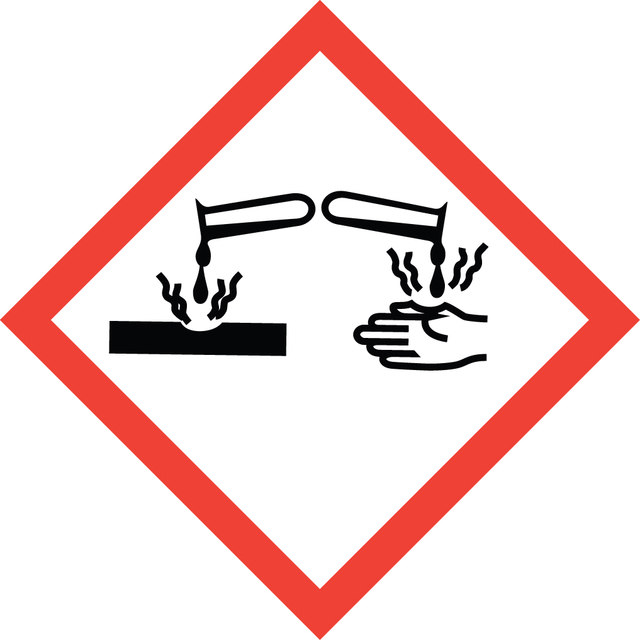
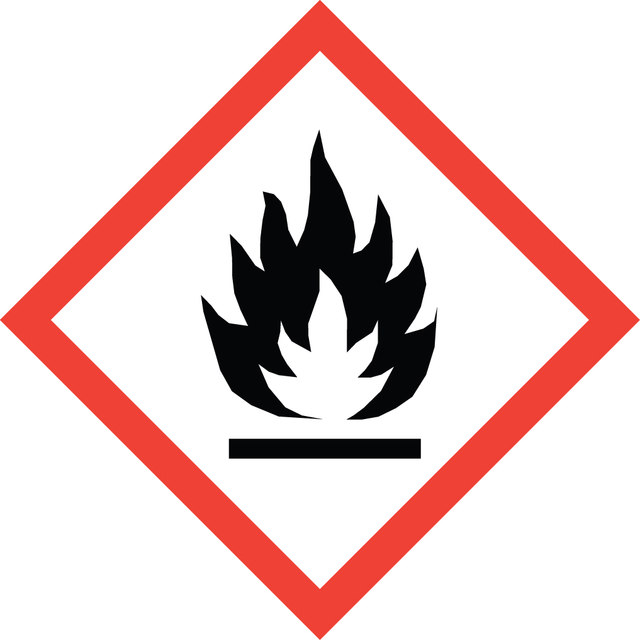
Danger

Hazard Classifications

Acute Tox. 1 Inhalation - Eye Dam. 1 - Flam. Liq. 3 - Skin Irrit. 2

Storage Class

3 - Flammable liquids

wgk

WGK 1

flash_point_f

78.8 °F - closed cup

flash_point_c

26 °C - closed cup

ppe

Eyeshields, Faceshields, Gloves, type ABEK (EN14387) respirator filter


Choose from one of the most recent versions:

Certificates of Analysis (COA)

Lot/Batch Number

Don't see the Right Version?

If you require a particular version, you can look up a specific certificate by the Lot or Batch number.

Already Own This Product?

Find documentation for the products that you have recently purchased in the Document Library.

Visit the Document Library


Articles

Silica's versatility spans various industries, including biomedical applications.

The properties of many devices are limited by the intrinsic properties of the materials that compose them.

Synthesis of Melting Gels Using Mono-Substituted and Di-Substituted Alkoxysiloxanes


Yun Tian et al.
Electrophoresis, 29(4), 960-970 (2008-01-24)
A novel calix[4] open-chain crown ether (p-tert-butylcalix[4]arene-1,3-bis(allyloxyethy) ether)-modified, organic-inorganic hybrid silica-based monolithic column possessing vinyl ligands for CEC is described. The monolithic silica matrix containing a vinyl functionality was synthesized by in situ cocondensation of tetramethoxysilane (TMOS) and vinyltrimethoxysilane (VTMS)
Yonghao Xiu et al.
Journal of colloid and interface science, 326(2), 465-470 (2008-07-29)
A method for the preparation of inorganic superhydrophobic silica coatings using sol-gel processing with tetramethoxysilane and isobutyltrimethoxysilane as precursors is described. Incorporation of isobutyltrimethoxysilane into silica layers resulted in the existence of hydrophobic isobutyl surface groups, thereby generating surface hydrophobicity.
Josef Planeta et al.
Journal of chromatography. A, 1217(36), 5737-5740 (2010-08-03)
The temperature effects during the sol-gel process and ageing of the silica-based monolith on the structure and separation efficiency of the capillary columns (100microm i.d., 150mm) for HPLC separations were studied. The tested columns were synthesized from a mixture of


Global Trade Item Number

SKUGTIN
218472-500G04061838775511
218472-100G04061838775504