Skip to Content
MilliporeSigma

19671

4-tert-Butylcatechol

≥99.0%

Synonym(s):

4-(1,1-Dimethylethyl)benzene-1,2-diol, 4-tert-Butylcatechin, 4-tert-Butylpyrocatechol, 4-TBC, p-tert-Butylcatechol

Sign In to View Organizational & Contract Pricing.

Select a Size

Change View

About This Item

Linear Formula:
(CH3)3CC6H3-1,2-(OH)2
CAS Number:
Molecular Weight:
166.22
UNSPSC Code:
12352100
NACRES:
NA.22
PubChem Substance ID:
EC Number:
202-653-9
Beilstein/REAXYS Number:
2043335
MDL number:
Assay:
≥99.0%
Form:
powder
Technical Service
Need help? Our team of experienced scientists is here for you.
Let Us Assist


Quality Level

assay

≥99.0%

form

powder

bp

285 °C (lit.)

mp

52-55 °C (lit.), 56-58 °C

solubility

methanol: soluble 1 g/10 mL, clear, colorless

SMILES string

CC(C)(C)c1ccc(O)c(O)c1

InChI

1S/C10H14O2/c1-10(2,3)7-4-5-8(11)9(12)6-7/h4-6,11-12H,1-3H3

InChI key

XESZUVZBAMCAEJ-UHFFFAOYSA-N

General description

4-tert-Butylcatechol,in the presence of O2 catalyzed by tyrosinase, yields 4-tert-butyl-o-benzoquinone. Electrochemical oxidation of 4-tert-Butylcatechol in the presence of 4-hydroxycoumarin as nucleophile has been studied using cyclic voltammetry and controlled-potential coulometry. It undergoes electrochemical trimerization via anodic oxidation and mechanism of trimerization has been studied using cyclic voltammetry and controlled-potential coulometry.

Application

  • Antioxidant source for radical reactions: Research identified 4-tert-Butylcatechol as a viable source of hydrogen atoms in radical reactions, specifically in deiodination processes, expanding its utility in synthetic organic chemistry (Povie et al., 2016).


Still not finding the right product?

Explore all of our products under 4-tert-Butylcatechol

signalword

Danger

Hazard Classifications

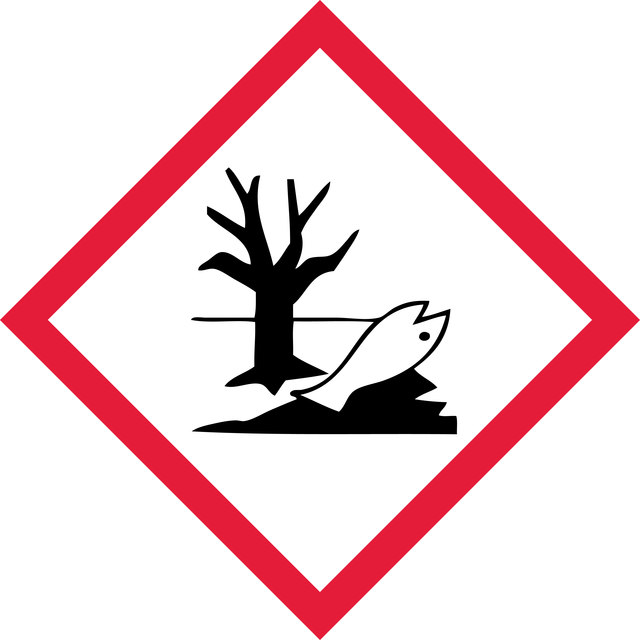
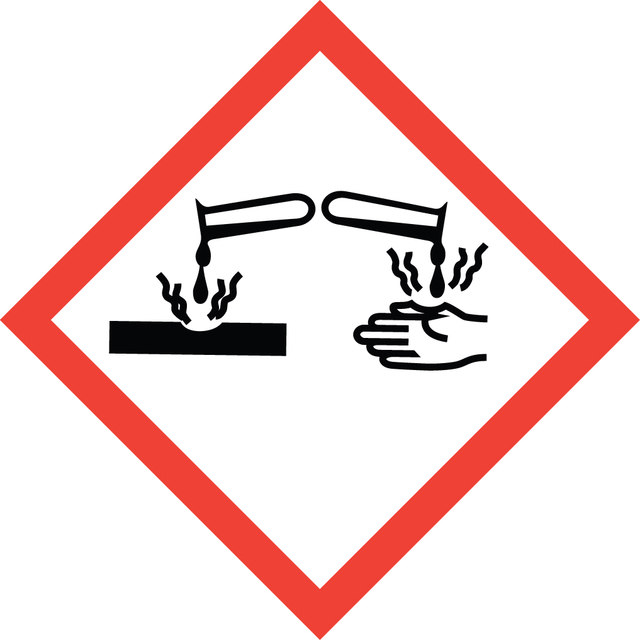
Acute Tox. 4 Dermal - Acute Tox. 4 Oral - Aquatic Acute 1 - Aquatic Chronic 1 - Eye Dam. 1 - Skin Corr. 1B - Skin Sens. 1

Storage Class

8A - Combustible corrosive hazardous materials

wgk

WGK 3

flash_point_f

235.4 °F - closed cup

flash_point_c

113 °C - closed cup

ppe

Eyeshields, Faceshields, Gloves, type P3 (EN 143) respirator cartridges


Choose from one of the most recent versions:

Certificates of Analysis (COA)

Lot/Batch Number

Don't see the Right Version?

If you require a particular version, you can look up a specific certificate by the Lot or Batch number.

Already Own This Product?

Find documentation for the products that you have recently purchased in the Document Library.

Visit the Document Library


Electrochemical study of 3, 4-dihydroxybenzoic acid and 4-tert-butylcatechol in the presence of 4-hydroxycoumarin application to the electro-organic synthesis of coumestan derivatives.
Golabi SM and Nematollahi D.
Journal of Electroanalytical Chemistry, 430(1), 141-146 (1997)
Mechanistic study of electrochemical oxidation of 4-tert-butylcatechol: A facile electrochemical method for the synthesis of new trimer of 4-tert-butylcatechol.
Nematollahi D, et al.
Electrochimica Acta, 49(15), 2495-2502 (2004)
J N Rodriguez-López et al.
Analytical biochemistry, 202(2), 356-360 (1992-05-01)
A procedure for calibrating a Clark-type oxygen electrode is described. This method is based on the oxidation of 4-tert-butylcatechol (TBC) by O2 catalyzed by tyrosinase, to yield 4-tert-butyl-o-benzoquinone (TBCQ). This reaction consumes known amounts of oxygen in accordance with the


Global Trade Item Number

SKUGTIN
19671-100G04061838762207