
165212

Adipoyl chloride
98%
Synonym(s):
Adipyl chloride
Sign In to View Organizational & Contract Pricing.
Select a Size
Change View
About This Item
Linear Formula:
ClCO(CH2)4COCl
CAS Number:
Molecular Weight:
183.03
UNSPSC Code:
12162002
NACRES:
NA.23
PubChem Substance ID:
EC Number:
203-876-4
Beilstein/REAXYS Number:
507709
MDL number:
Quality Level
assay
98%
form
liquid
refractive index
n20/D 1.471 (lit.)
bp
105-107 °C/2 mmHg (lit.)
density
1.259 g/mL at 25 °C (lit.)
SMILES string
ClC(=O)CCCCC(Cl)=O
InChI
1S/C6H8Cl2O2/c7-5(9)3-1-2-4-6(8)10/h1-4H2
InChI key
PWAXUOGZOSVGBO-UHFFFAOYSA-N
General description
Adipoyl chloride belongs to the class of monomers known as acid chlorides. It is commonly used in the synthesis of Nylon 66, a type of polyamide that exhibits excellent mechanical strength, chemical resistance, and heat resistance. It is widely used in the production of fibers, textiles, carpets, and engineering plastics. It can also be utilized in the synthesis of biocompatible and biodegradable polymers, such as polyesters. These polymers find applications in drug delivery systems, tissue engineering, reverse osmosis membranes, thin films, and medical implants.
Application
Adipoyl chloride can be used as:
- A coupling agent in the synthesis of PEG-PLA-PEG triblock copolymers, enabling the formation of unique polymer structures with potential applications in drug delivery systems, tissue engineering, and controlled release systems.
- A cross-linking agent in the synthesis of biodegradable aromatic-aliphatic poly(ester-amides) from monolignol-based ester dimers. These polymers possess favorable characteristics like exceptional mechanical strength, biodegradability, and thermal stability, making them suitable for a range of applications including, controlled drug delivery systems, and environmentally-friendly packaging materials.
- Used in the preparation of biphenyl end-capped liquid crystals.
Other Notes
Material may darken in storage
Still not finding the right product?
Explore all of our products under Adipoyl chloride
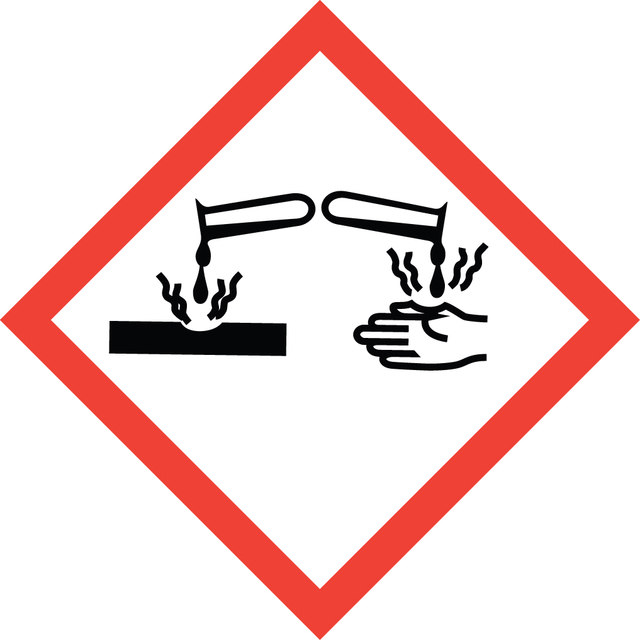
signalword
Danger
hcodes
Hazard Classifications
Skin Corr. 1B
Storage Class
8A - Combustible corrosive hazardous materials
wgk
WGK 3
flash_point_f
233.6 °F - closed cup
flash_point_c
112 °C - closed cup
ppe
Faceshields, Gloves, Goggles, type ABEK (EN14387) respirator filter
Choose from one of the most recent versions:
Already Own This Product?
Find documentation for the products that you have recently purchased in the Document Library.
Articles
Atomic layer deposition meets various needs including semiconductor device miniaturization and nanoparticle coating.
Tetrahedron Letters, 47, 5569-5569 (2006)
Nicolò Maccaferri et al.
Nature communications, 6, 6150-6150 (2015-02-03)
Systems allowing label-free molecular detection are expected to have enormous impact on biochemical sciences. Research focuses on materials and technologies based on exploiting localized surface plasmon resonances in metallic nanostructures. The reason for this focused attention is their suitability for
Jungeun Bae et al.
The AAPS journal, 17(6), 1357-1368 (2015-07-01)
A novel redox-responsive amphiphilic polymer was synthesized with bioreductive trimethyl-locked quinone propionic acid for a potential triggered drug delivery application. The aim of this study was to synthesize and characterize the redox-responsive amphiphilic block copolymer micelles containing pendant bioreductive quinone
Global Trade Item Number
| SKU | GTIN |
|---|---|
| 76153-1G | 04061826654354 |
| 165212-25G | 04061838748607 |
| 165212-100G | 04061838748591 |
| 165212-5G | 04061838748614 |