Skip to Content
MilliporeSigma

120871

Terephthaloyl chloride

≥99%, flakes

Synonym(s):

Terephthalic acid chloride, Terephthaloyl dichloride

Sign In to View Organizational & Contract Pricing.

Select a Size

Change View

About This Item

Linear Formula:
C6H4-1,4-(COCl)2
CAS Number:
Molecular Weight:
203.02
NACRES:
NA.22
PubChem Substance ID:
eCl@ss:
39050525
UNSPSC Code:
12352100
EC Number:
202-829-5
MDL number:
Beilstein/REAXYS Number:
607796
Assay:
≥99%
Form:
flakes
Technical Service
Need help? Our team of experienced scientists is here for you.
Let Us Assist


vapor density

7 (vs air)

Quality Level

vapor pressure

0.02 mmHg ( 25 °C)

assay

≥99%

form

flakes

bp

266 °C (lit.)

mp

79-81 °C (lit.)

solubility

ethanol: soluble 100 mg/mL, clear, colorless

functional group

acyl chloride

SMILES string

ClC(=O)c1ccc(cc1)C(Cl)=O

InChI

1S/C8H4Cl2O2/c9-7(11)5-1-2-6(4-3-5)8(10)12/h1-4H

InChI key

LXEJRKJRKIFVNY-UHFFFAOYSA-N

General description

Terephthaloyl chloride is a highly reactive acid chloride derived from terephthalic acid. It is used as a cross-linking agent in polymer synthesis. Terephthaloyl chloride undergoes condensation reaction with difunctional α,ω-diaminopolystyrene to yield chain-extended polystyrene containing amide bonds along the polymer backbone. It undergoes interfacial reaction with bovine serum albumin to form thin cross-linked films.

Application

Terephthaloyl chloride was used in the synthesis of liquid crystalline thermosets by thermal cyclotrimerization of dicyanate compounds of ring substituted bis(4-hydroxyphenyl) terepthalates.

Legal Information

DuPont product


pictograms

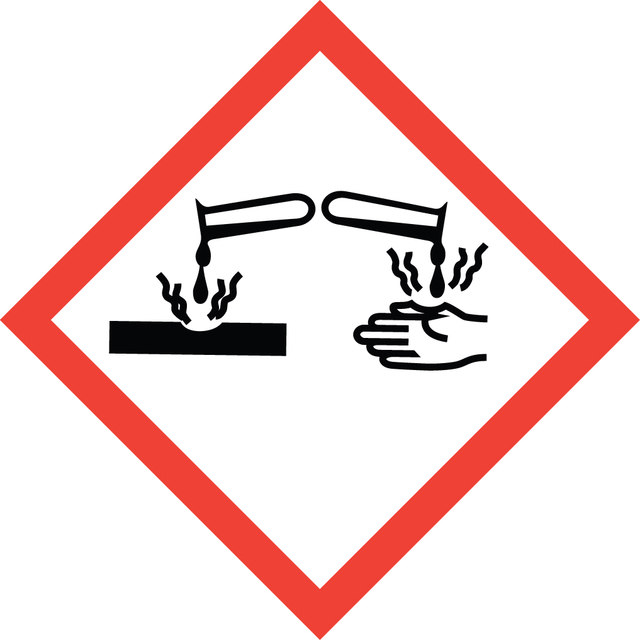
Skull and crossbonesCorrosion

signalword

Danger

Hazard Classifications

Acute Tox. 3 Inhalation - Eye Dam. 1 - Skin Corr. 1A - STOT SE 3

target_organs

Respiratory system

Storage Class

6.1A - Combustible acute toxic Cat. 1 and 2 / very toxic hazardous materials

wgk

WGK 1

flash_point_f

356.0 °F - closed cup

flash_point_c

180 °C - closed cup

ppe

Eyeshields, Faceshields, Gloves, type P3 (EN 143) respirator cartridges


Choose from one of the most recent versions:

Certificates of Analysis (COA)

Lot/Batch Number

Don't see the Right Version?

If you require a particular version, you can look up a specific certificate by the Lot or Batch number.

Already Own This Product?

Find documentation for the products that you have recently purchased in the Document Library.

Visit the Document Library


Articles

Atomic layer deposition meets various needs including semiconductor device miniaturization and nanoparticle coating.


N V Larionova et al.
International journal of pharmaceutics, 189(2), 171-178 (1999-10-28)
The objective of this study is to demonstrate the feasibility of microcapsules containing a protein and a proteinase inhibitor in order to allow the oral administration of proteic or peptidic drug. Starch/bovine serum albumin mixed-walled microcapsules were prepared using interfacial
D Hettler et al.
Journal of microencapsulation, 11(2), 213-224 (1994-03-01)
Microcapsules were prepared from three proteins, namely human serum albumin (HSA), bovine fibrinogen and ovalbumin, by an interfacial crosslinking process using terephthaloylchloride. They were further treated with alkaline hydroxylamine in order to disrupt ester and anhydride bonds in the walls.
N Pariot et al.
International journal of pharmaceutics, 211(1-2), 19-27 (2001-01-04)
Microcapsules were prepared by interfacial cross-linking of beta-cyclodextrins (beta-CD) with terephthaloyl chloride (TC). Batches were prepared from beta-CD solutions in 1 M NaOH, using 5% TC and a 30 min reaction time. Microcapsules were studied with respect to morphology (microscopy)


Global Trade Item Number

SKUGTIN
120871-1KG04061825590967
120871-250G04061838716651
120871-5G04061831828214