
451649

Iron(III) chloride

anhydrous, powder, ≥99.99% trace metals basis
Synonym(s):
Ferric chloride, Iron trichloride, Molysite
Select a Size
About This Item
grade
anhydrous
vapor density
5.61 (vs air)
vapor pressure
1 mmHg ( 194 °C)
assay
≥99.99% trace metals basis
form
powder
reaction suitability
core: iron, reagent type: catalyst
greener alternative product characteristics
Catalysis
Learn more about the Principles of Green Chemistry.
sustainability
Greener Alternative Product
impurities
≤100.0 ppm Trace Metal Analysis
mp
304 °C (lit.)
greener alternative category
, Aligned
SMILES string
Cl[Fe](Cl)Cl
InChI
1S/3ClH.Fe/h3*1H;/q;;;+3/p-3
InChI key
RBTARNINKXHZNM-UHFFFAOYSA-K
General description
Application
- As a precursor to fabricate nano-sized Fe-N-C catalysts for proton exchange membrane(PEM) fuel cells. FeCl3 iron precursor, helps to achieve the lowest charge transfer resistance and high peak power density.
- As an oxidant to prepare FeOCl@PPy cathode materials for Li-ion batteries with good cycling stability.
- As a precursor to fabricate amorphous multifunctional am-Fe–Bi/NF electrode for rechargeable Zinc-air batteries.
- To synthesize Fe3O4@nanocellulose/TiCl nano fillers for dye-sensitized solar cells to reduce the crystallinity of the polymer.
Still not finding the right product?
Explore all of our products under Iron(III) chloride

signalword
Danger
hcodes
Hazard Classifications
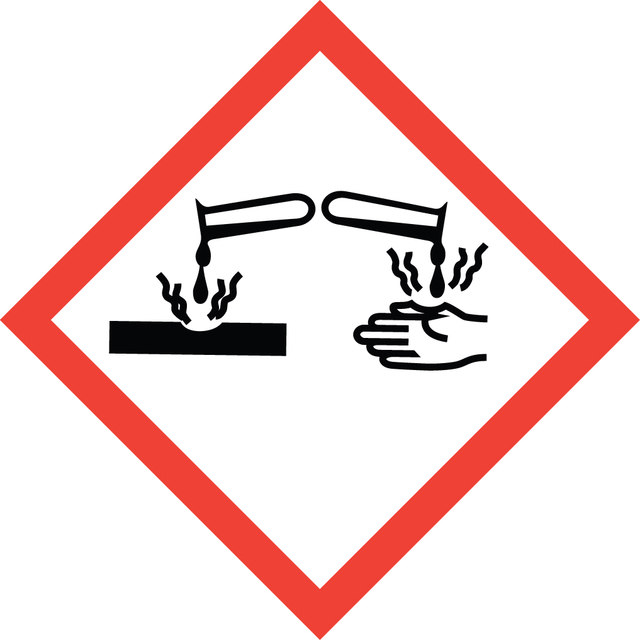
Acute Tox. 4 Oral - Eye Dam. 1 - Met. Corr. 1 - Skin Irrit. 2
flash_point_f
Not applicable
flash_point_c
Not applicable
ppe
dust mask type N95 (US), Eyeshields, Faceshields, Gloves
Storage Class
13 - Non Combustible Solids
Choose from one of the most recent versions:
Already Own This Product?
Find documentation for the products that you have recently purchased in the Document Library.
Protocols
We present an article about RAFT, or Reversible Addition/Fragmentation Chain Transfer, which is a form of living radical polymerization.
Polymerization via ATRP procedures demonstrated by Prof. Dave Haddleton's research group at the University of Warwick.
We presents an article featuring procedures that describe polymerization of methyl methacrylate and vinyl acetate homopolymers and a block copolymer as performed by researchers at CSIRO.
Articles
Oxidation and reduction reactions are some of the most common transformations encountered in organic synthesis, and are some of the organic chemist’s most powerful tools for creating novel products. Below is a list of the most commonly used oxidizing and reducing agents currently available in our catalog.
We presents an article about Copper(I)-mediated Living Radical Polymerization in the Presence of Pyridylmethanimine Ligands, and the emergence of living radical polymerization mediated by transition metal catalysts in 1995, which was a seminal piece of work in the field of synthetic polymer chemistry.
Oxidation and reduction reactions are some of the most common transformations encountered in organic synthesis
Global Trade Item Number
| SKU | GTIN |
|---|---|
| 451649-5G | 04061832324258 |
| 451649-1G | 04061832324241 |