Sign In to View Organizational & Contract Pricing.
Select a Size
Change View
About This Item
Empirical Formula (Hill Notation):
C12F4N4
CAS Number:
Molecular Weight:
276.15
UNSPSC Code:
12352103
NACRES:
NA.23
PubChem Substance ID:
MDL number:
Beilstein/REAXYS Number:
2157887
Quality Level
assay
97%
form
solid
mp
285-290 °C (lit.)
SMILES string
FC1=C(F)C(\C(F)=C(F)/C1=C(\C#N)C#N)=C(\C#N)C#N
InChI
1S/C12F4N4/c13-9-7(5(1-17)2-18)10(14)12(16)8(11(9)15)6(3-19)4-20
InChI key
IXHWGNYCZPISET-UHFFFAOYSA-N
General description
2,3,5,6-Tetrafluoro-7,7,8,8-tetracyanoquinodimethane (F4-TCNQ) is a dopant used in the fabrication of organic semiconductors. It can tune the electronic properties as its lowest unoccupied molecular orbital is at a desirable energy level required to oxidize a wide range of semiconductors.
2,3,5,6-tetrafluoro-7,7,8,8-tetracyanoquinodimethane (F4-TCNQ) are p-type molecules, used as a strong acceptor dopant , it generates free holes.
Application
F4-TCNQ can be doped with poly[bis(4-phenyl)(2,4,6-trimethylphenyl)amine] (PTAA) to form a hole transport material (HTL), which can be used to achieve an energy efficiency of 16% for a semi-transparent perovskite solar cell. It can be used as a p-type dopant to form a blended composite film with poly(3-hexylthiophene) (P3HT) having enhanced charge mobility, which can be potentially useful in organic photovoltaics.
F4-TCNQ is the p-type dopant for hole-only devices and field effect transistors with organic hole transport layers (HTL). It is used in the preparation of a bilayer structure of F4-TCNQ and pentacene to study improved thermoelectric performance of organic thin films.
signalword
Danger
hcodes
Hazard Classifications
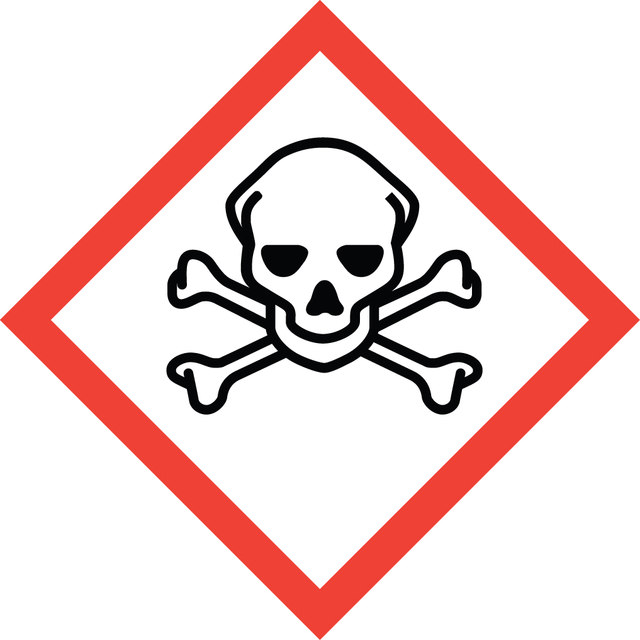
Acute Tox. 3 Dermal - Acute Tox. 3 Inhalation - Acute Tox. 3 Oral
Storage Class
6.1C - Combustible acute toxic Cat.3 / toxic compounds or compounds which causing chronic effects
wgk
WGK 3
flash_point_f
Not applicable
flash_point_c
Not applicable
ppe
Eyeshields, Faceshields, Gloves, type P2 (EN 143) respirator cartridges
Choose from one of the most recent versions:
Already Own This Product?
Find documentation for the products that you have recently purchased in the Document Library.
Articles
Highly reducing or oxidizing species enhance organic semiconductor conductivity by reducing charge-carrier injection barriers.
The chemical and structural origin of efficient p-type doping in P3HT
Duong DT, et al.
Organic Electronics, 14(5), 1330-1336 (2013)
David Kiefer et al.
Nature materials, 18(2), 149-155 (2019-01-16)
Molecular doping is a crucial tool for controlling the charge-carrier concentration in organic semiconductors. Each dopant molecule is commonly thought to give rise to only one polaron, leading to a maximum of one donor:acceptor charge-transfer complex and hence an ionization
Shrawan Roy et al.
Nano letters, 18(7), 4523-4530 (2018-06-21)
Chemical treatment using bis(trifluoromethane) sulfonimide (TFSI) was shown to be particularly effective for increasing the photoluminescence (PL) of monolayer (1L) MoS2, suggesting a convenient method for overcoming the intrinsically low quantum yield of this material. However, the underlying atomic mechanism
Global Trade Item Number
| SKU | GTIN |
|---|---|
| 376779-100MG | 04061831835304 |
| 376779-25MG | 04061831835311 |