
V800412

Sulfuric acid
AR, ≥98%
Sign In to View Organizational & Contract Pricing.
Select a Size
Change View
About This Item
Linear Formula:
H2SO4
CAS Number:
Molecular Weight:
98.08
EC Number:
231-639-5
UNSPSC Code:
12352106
PubChem Substance ID:
Beilstein/REAXYS Number:
2037554
MDL number:
Assay:
≥98%
Form:
liquid
Grade:
AR
grade
AR
vapor density
<0.3 (25 °C, vs air)
vapor pressure
1 mmHg ( 146 °C)
description
Nominally 95-98% H2SO4
product line
Vetec™
assay
≥98%
form
liquid
pH
1.2 (5 g/L)
bp
~290 °C (lit.)
density
1.840 g/mL at 25 °C (lit.)
SMILES string
OS(O)(=O)=O
InChI
1S/H2O4S/c1-5(2,3)4/h(H2,1,2,3,4)
InChI key
QAOWNCQODCNURD-UHFFFAOYSA-N
Legal Information
Vetec is a trademark of Merck KGaA, Darmstadt, Germany
Still not finding the right product?
Explore all of our products under Sulfuric acid
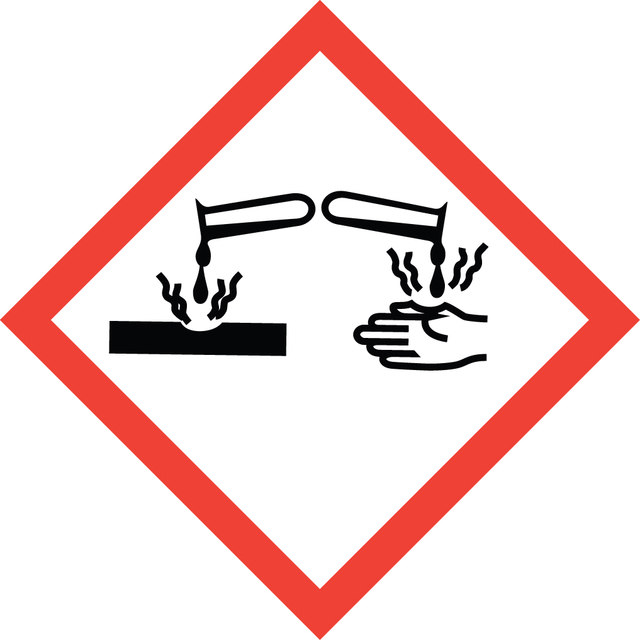
signalword
Danger
hcodes
Hazard Classifications
Eye Dam. 1 - Met. Corr. 1 - Skin Corr. 1A
Storage Class
8B - Non-combustible corrosive hazardous materials
wgk
WGK 1
flash_point_f
Not applicable
flash_point_c
Not applicable
Choose from one of the most recent versions:
Already Own This Product?
Find documentation for the products that you have recently purchased in the Document Library.
Ying Gu et al.
Cell research, 25(5), 604-620 (2015-03-21)
Hepatitis E virus (HEV), a non-enveloped, positive-sense, single-stranded RNA virus, is a major cause of enteric hepatitis. Classified into the family Hepeviridae, HEV comprises four genotypes (genotypes 1-4), which belong to a single serotype. We describe a monoclonal antibody (mAb)
Francesco Riccobono et al.
Science (New York, N.Y.), 344(6185), 717-721 (2014-05-17)
Atmospheric new-particle formation affects climate and is one of the least understood atmospheric aerosol processes. The complexity and variability of the atmosphere has hindered elucidation of the fundamental mechanism of new-particle formation from gaseous precursors. We show, in experiments performed
João Almeida et al.
Nature, 502(7471), 359-363 (2013-10-08)
Nucleation of aerosol particles from trace atmospheric vapours is thought to provide up to half of global cloud condensation nuclei. Aerosols can cause a net cooling of climate by scattering sunlight and by leading to smaller but more numerous cloud
Global Trade Item Number
| SKU | GTIN |
|---|---|
| V800412-4X2.5L | 04061838158086 |
| V800412-8X500ML | 04061838158093 |