
V800003

1,4-Dioxane
AR, ≥99.5%
Synonym(s):
Diethylene oxide, Dioxane
Sign In to View Organizational & Contract Pricing.
Select a Size
Change View
About This Item
Empirical Formula (Hill Notation):
C4H8O2
CAS Number:
Molecular Weight:
88.11
EC Number:
204-661-8
UNSPSC Code:
12352005
PubChem Substance ID:
Beilstein/REAXYS Number:
102551
MDL number:
Assay:
≥99.5%
Grade:
AR
Bp:
100-102 °C (lit.)
Vapor pressure:
27 mmHg ( 20 °C), 40 mmHg ( 25 °C)
grade
AR
vapor density
3 (vs air)
vapor pressure
27 mmHg ( 20 °C), 40 mmHg ( 25 °C)
product line
Vetec™
assay
≥99.5%
form
liquid
autoignition temp.
356 °F
expl. lim.
22 %
dilution
(for analytical testing)
refractive index
n20/D 1.422 (lit.)
pH
6-8 (20 °C, 500 g/L)
bp
100-102 °C (lit.)
mp
10-12 °C (lit.)
density
1.034 g/mL at 25 °C (lit.)
SMILES string
C1COCCO1
InChI
1S/C4H8O2/c1-2-6-4-3-5-1/h1-4H2
InChI key
RYHBNJHYFVUHQT-UHFFFAOYSA-N
Legal Information
Vetec is a trademark of Merck KGaA, Darmstadt, Germany
Still not finding the right product?
Explore all of our products under 1,4-Dioxane
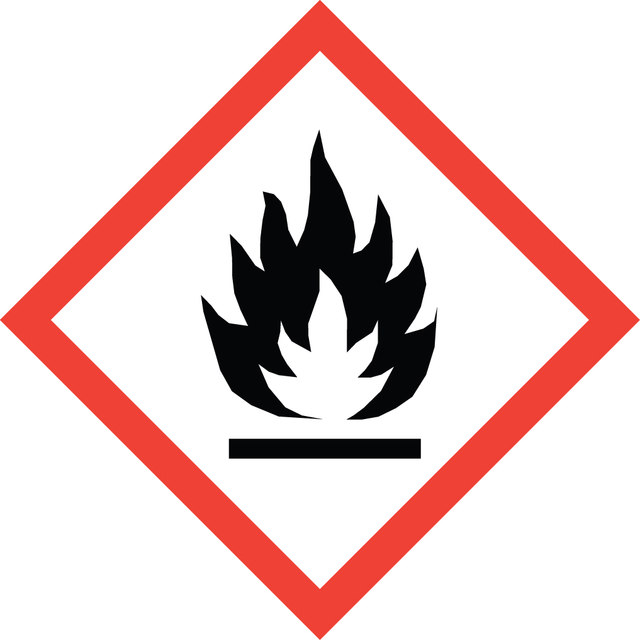


signalword
Danger
hcodes
Hazard Classifications
Carc. 1B - Eye Irrit. 2 - Flam. Liq. 2 - STOT SE 3
target_organs
Respiratory system
supp_hazards
Storage Class
3 - Flammable liquids
wgk
WGK 3
flash_point_f
51.8 °F - closed cup
flash_point_c
11 °C - closed cup
Choose from one of the most recent versions:
Already Own This Product?
Find documentation for the products that you have recently purchased in the Document Library.
Huijiao Wang et al.
Journal of hazardous materials, 294, 90-98 (2015-04-12)
Degradation of 1,4-dioxane by ozonation, electrolysis, and their combined electro-peroxone (E-peroxone) process was investigated. The E-peroxone process used a carbon-polytetrafluorethylene cathode to electrocatalytically convert O2 in the sparged ozone generator effluent (O2 and O3 gas mixture) to H2O2. The electro-generated
Joshua J Pacheco et al.
Proceedings of the National Academy of Sciences of the United States of America, 111(23), 8363-8367 (2014-06-10)
Terephthalic acid (PTA), a monomer in the synthesis of polyethylene terephthalate (PET), is obtained by the oxidation of petroleum-derived p-xylene. There is significant interest in the synthesis of renewable, biomass-derived PTA. Here, routes to PTA starting from oxidized products of
Daniel Gerrity et al.
Water research, 46(19), 6257-6272 (2012-10-16)
The performance of ozonation in wastewater depends on water quality and the ability to form hydroxyl radicals (·OH) to meet disinfection or contaminant transformation objectives. Since there are no on-line methods to assess ozone and ·OH exposure in wastewater, many
Global Trade Item Number
| SKU | GTIN |
|---|---|
| V800003-6X500ML | 04061837702099 |
| V800003-4X2.5L | 04061837702082 |