
499811

Lithium
granular, 99% trace metals basis
Synonym(s):
Lithium atom, Lithium element
Sign In to View Organizational & Contract Pricing.
Select a Size
Change View
About This Item
Linear Formula:
Li
CAS Number:
Molecular Weight:
6.94
NACRES:
NA.23
PubChem Substance ID:
UNSPSC Code:
12141803
EC Number:
231-102-5
MDL number:
Quality Level
assay
99% trace metals basis
form
granular
reaction suitability
core: lithium, reagent type: reductant
resistivity
9.446 μΩ-cm, 20°C
bp
1342 °C (lit.)
mp
180 °C (lit.)
density
0.534 g/mL at 25 °C (lit.)
SMILES string
[Li]
InChI
1S/Li
InChI key
WHXSMMKQMYFTQS-UHFFFAOYSA-N
General description
Granular lithium is a form of lithium metal that has been ground into small granules. Lithium is a soft, silver-white metal that is highly reactive and flammable. Lithium has a low density of 0.534 g/cm3, which makes it one of the lightest metals. Like the other alkali metals, lithium has a low melting point (180 °C) and is a good conductor of electricity and heat. Granular lithium is highly reactive and behaves as a strong reducing agent. It must be handled with caution due to its potential to ignite or explode. Lithium reacts readily with water and oxygen to form lithium hydroxide and lithium oxide, respectively, and even reacts with nitrogen gas at room temperature, forming lithium nitride. Typically, lithium is stored in an argon glovebox and airtight containers to prevent exposure to moisture, air, and nitrogen. To make granular lithium, the metal is first extracted from ores such as spodumene or lepidolite using a process called lithium carbonate conversion. After the lithium has been purified to a high degree of purity, it is milled into granules by rotating blades.
Lithium is a low-density alkali metal that is widely used as an anode material in rechargeable and non-rechargeable batteries. It is also used to alloy with aluminum and magnesium to make them stronger and lighter.
Application
Lithium can be used as:
- A precursor to synthesize Li-based alloys such as LiAl and LiSi alloys, which are applicable as anode materials in the field of energy conversion and storage.
- A reducing agent in the reduction of zirconium oxide compounds in molten LiCl salt.
- As starting material to synthesize a reducing agent(1,4-bis(trimethylgermyl)-1.4-dihydropyrazine), for the fabrication of nickel metal films.
Still not finding the right product?
Explore all of our products under Lithium
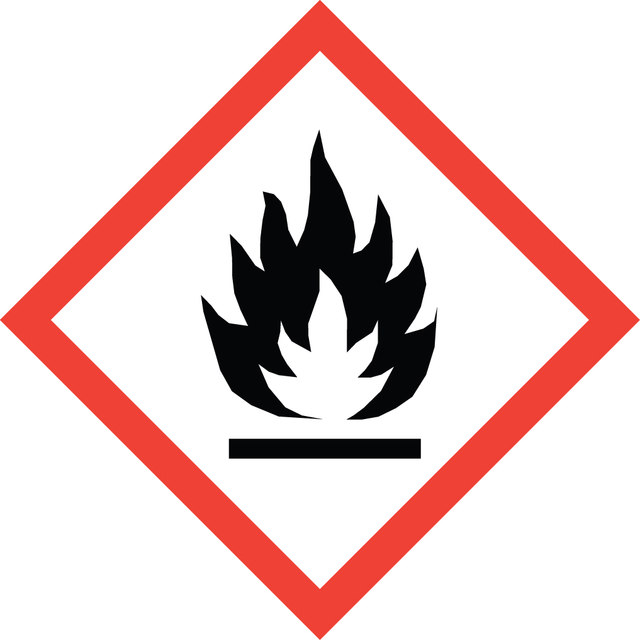
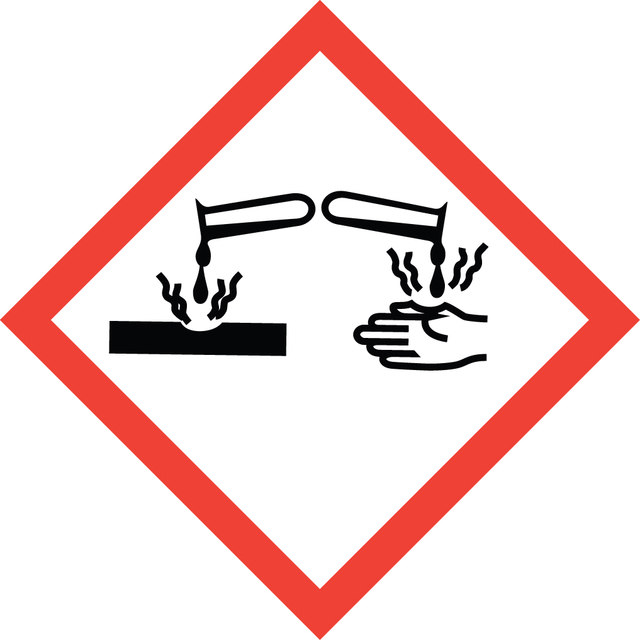
signalword
Danger
hcodes
Hazard Classifications
Skin Corr. 1B - Water-react. 1
supp_hazards
Storage Class
4.3 - Hazardous materials which set free flammable gases upon contact with water
wgk
WGK 1
flash_point_f
Not applicable
flash_point_c
Not applicable
ppe
Eyeshields, Faceshields, Gloves, type P3 (EN 143) respirator cartridges
Choose from one of the most recent versions:
Already Own This Product?
Find documentation for the products that you have recently purchased in the Document Library.
A low-temperature thermal ALD process for nickel utilizing dichlorobis(triethylphosphine)nickel(ii) and 1{,}4-bis(trimethylgermyl)-1{,}4-dihydropyrazine"
Anton Vihervaara,
Dalton Transactions, 51, 10898-10908 (2022)
U Eismann et al.
Optics express, 21(7), 9091-9102 (2013-04-11)
We present an all-solid-state laser source emitting up to 2.1 W of single-frequency light at 671 nm developed for laser cooling of lithium atoms. It is based on a diode-pumped, neodymium-doped orthovanadate (Nd:YVO(4)) ring laser operating at 1342 nm. Optimization
M Sathiya et al.
Nature materials, 12(9), 827-835 (2013-07-16)
Li-ion batteries have contributed to the commercial success of portable electronics and may soon dominate the electric transportation market provided that major scientific advances including new materials and concepts are developed. Classical positive electrodes for Li-ion technology operate mainly through
Global Trade Item Number
| SKU | GTIN |
|---|---|
| 499811-25G | 04061832422176 |
| 499811-100G | 04061832422169 |