
106526

Formic acid
95-97%
Sign In to View Organizational & Contract Pricing.
Select a Size
Change View
About This Item
Linear Formula:
HCOOH
CAS Number:
Molecular Weight:
46.03
EC Number:
200-579-1
UNSPSC Code:
12352106
PubChem Substance ID:
Beilstein/REAXYS Number:
1209246
MDL number:
Assay:
95-97%
Form:
liquid
vapor density
1.6 (vs air)
vapor pressure
44.8 mmHg ( 20 °C)
assay
95-97%
form
liquid
autoignition temp.
1004 °F
contains
water as stabilizer (remainder)
expl. lim.
57 %
refractive index
n20/D 1.370 (lit.)
bp
100-101 °C (lit.), 100.8 °C
mp
8.2-8.4 °C (lit.)
density
1.22 g/mL at 25 °C (lit.)
SMILES string
OC=O
InChI
1S/CH2O2/c2-1-3/h1H,(H,2,3)
InChI key
BDAGIHXWWSANSR-UHFFFAOYSA-N
Still not finding the right product?
Explore all of our products under Formic acid
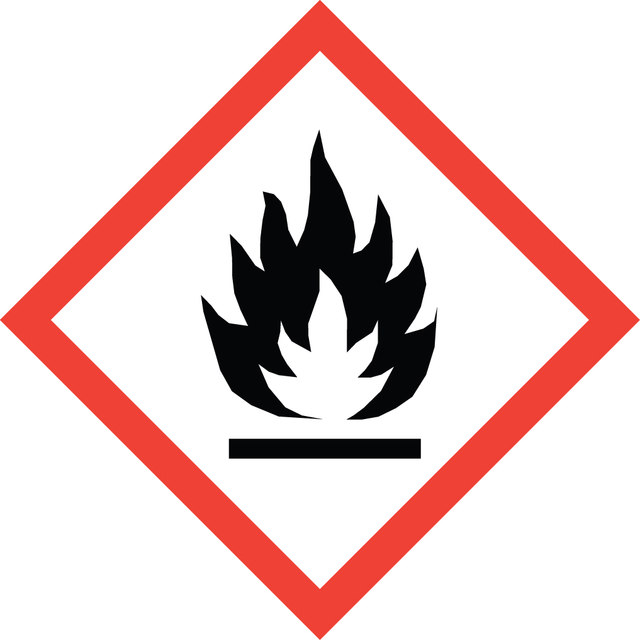
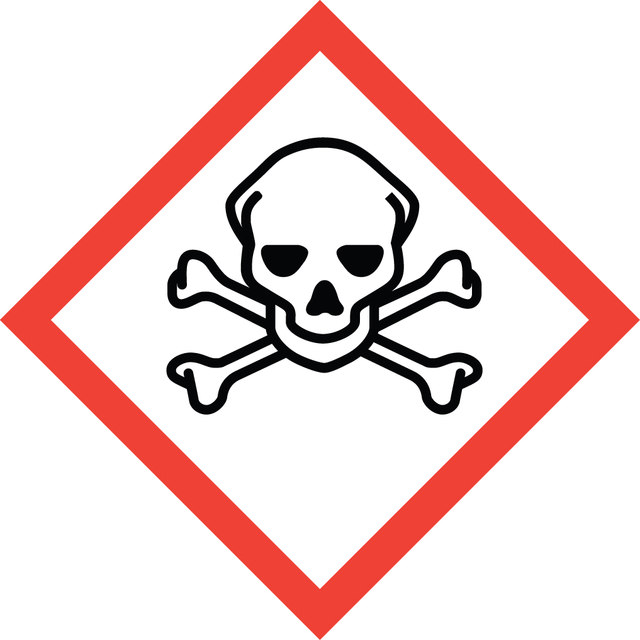
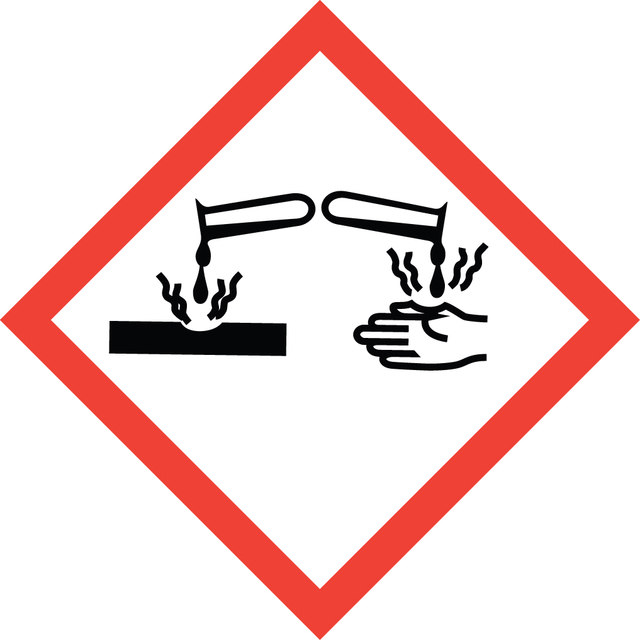
signalword
Danger
hcodes
Hazard Classifications
Acute Tox. 3 Inhalation - Acute Tox. 4 Oral - Eye Dam. 1 - Flam. Liq. 3 - Skin Corr. 1A
supp_hazards
Storage Class
3 - Flammable liquids
wgk
WGK 1
flash_point_f
121.1 °F - closed cup
flash_point_c
49.5 °C - closed cup
Choose from one of the most recent versions:
Already Own This Product?
Find documentation for the products that you have recently purchased in the Document Library.
Emma Granqvist et al.
The New phytologist, 207(3), 551-558 (2015-05-27)
Plants that form root-nodule symbioses are within a monophyletic 'nitrogen-fixing' clade and associated signalling processes are shared with the arbuscular mycorrhizal symbiosis. Central to symbiotic signalling are nuclear-associated oscillations in calcium ions (Ca(2+) ), occurring in the root hairs of
Joachim Schessl et al.
The Journal of clinical investigation, 118(3), 904-912 (2008-02-16)
Reducing body myopathy (RBM) is a rare disorder causing progressive muscular weakness characterized by aggresome-like inclusions in the myofibrils. Identification of genes responsible for RBM by traditional genetic approaches has been impossible due to the frequently sporadic occurrence in affected
Tasqiah Julianti et al.
Journal of ethnopharmacology, 155(1), 426-434 (2014-06-04)
Leaf decoctions of Carica papaya have been traditionally used in some parts of Indonesia to treat and prevent malaria. Leaf extracts and fraction have been previously shown to possess antiplasmodial activity in vitro and in vivo. Antiplasmodial activity of extracts