콘텐츠로 건너뛰기
Merck

32211-M

Chloroform

puriss. p.a., reag. ISO, reag. Ph. Eur., 99.0-99.4% (GC)

동의어(들):

Methylidyne trichloride, Trichloromethane

조직 및 계약 가격을 보려면 로그인를 클릭합니다.

크기 선택

보기 변경

제품정보 (DICE 배송 시 비용 별도)

실험식(Hill 표기법):
CHCl3
CAS 번호:
Molecular Weight:
119.38
UNSPSC Code:
12191502
NACRES:
NA.21
PubChem Substance ID:
EC Number:
200-663-8
Beilstein/REAXYS Number:
1731042
MDL number:
Assay:
99.0-99.4% (GC)
Technique(s):
RNA extraction: suitable
Bp:
60.5-61.5 °C (lit.)
Vapor pressure:
160 mmHg ( 20 °C)
기술 서비스
도움이 필요하신가요? 저희 숙련된 과학자 팀이 도와드리겠습니다.
도움 문의


agency

USP/NF, reag. ISO, reag. Ph. Eur.

vapor density

4.1 (vs air)

vapor pressure

160 mmHg ( 20 °C)

grade

puriss. p.a.

assay

99.0-99.4% (GC)

form

liquid

contains

~1% ethanol as stabilizer

technique(s)

RNA extraction: suitable

impurities

≤0.00001% free chlorine (Cl), ≤0.00005% free acid (as HCl), ≤0.0005% non-volatile matter, ≤0.005% aldehydes and ketones (as CH3COCH3), ≤0.005% carbonyl compounds (as CO), ≤0.01% tetrachloroethene (GC), ≤0.01% tetrachloromethane (GC), ≤0.01% trichloroethene (GC), ≤0.01% water (Karl Fischer), ≤0.03% dichloromethane (GC), 0.6-1.0% ethanol (GC)

refractive index

n20/D 1.445 (lit.)

bp

60.5-61.5 °C (lit.)

mp

−63 °C (lit.)

density

1.476-1.483 g/mL at 20 °C, 1.492 g/mL at 25 °C (lit.)

anion traces

chloride (Cl-): ≤0.0001%

SMILES string

ClC(Cl)Cl

cation traces

Al: ≤0.50 ppm, B: ≤0.02 ppm, Ba: ≤0.10 ppm, Ca: ≤0.50 ppm, Cd: ≤0.05 ppm, Co: ≤0.02 ppm, Cr: ≤0.02 ppm, Cu: ≤0.02 ppm, Fe: ≤0.10 ppm, Mg: ≤0.10 ppm, Mn: ≤0.02 ppm, Ni: ≤0.02 ppm, Pb: ≤0.05 ppm, Sn: ≤0.10 ppm, Zn: ≤0.10 ppm

suitability

complies for appearance, complies for reaction against H2SO4, complies for suitability of determ. w. dithizone

InChI

1S/CHCl3/c2-1(3)4/h1H

InChI key

HEDRZPFGACZZDS-UHFFFAOYSA-N

General description

Chloroform, a halogenated hydrocarbon, is widely employed as a solvent. Its photochemical degradation has been investigated in the presence of TiO2 aqueous suspensions (wavelength range of 310-380nm).

Application

Chloroform may be employed as a solvent for the following studies:
  • Extraction of RNA from plant cells.
  • Preparation of dioleoylphosphatidylcholine (DOPC) solution.
  • Dissolution of 1,2-distearoyl-sn-glycero-3-phosphocholine (DSPC).
It may be employed in a rapid quantitative method for the release of periplasmic proteins from bacterial strains.
Chloroform may be used as a solvent to enhance the enantioselectivity of secondary alcohols formed by the borohydride reduction of carbonyl compounds in the presence of optically active ketoiminatocobalt complexes.

Other Notes

For information on chloroform miscibility, please visit the following link:
Chloroform Miscibility/Immiscibility Table


Still not finding the right product?

Explore all of our products under


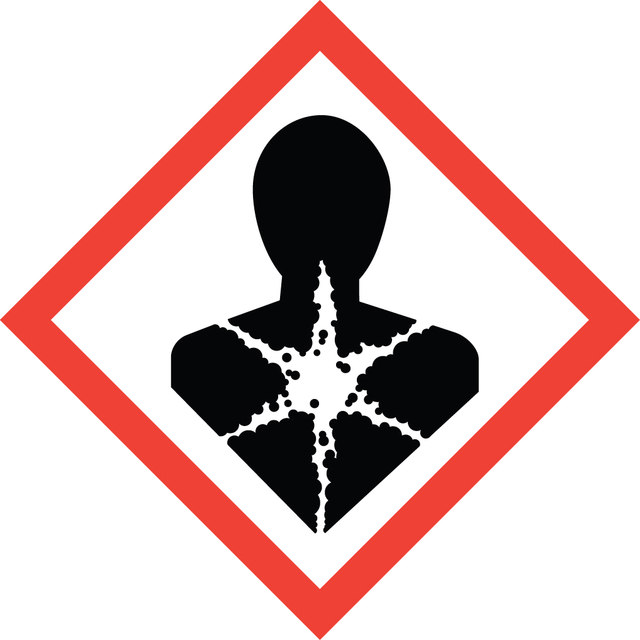
pictograms

Skull and crossbonesHealth hazard

signalword

Danger

Hazard Classifications

Acute Tox. 3 Inhalation - Acute Tox. 4 Oral - Carc. 2 - Eye Irrit. 2 - Repr. 2 - Skin Irrit. 2 - STOT RE 1 Oral - STOT SE 3

target_organs

Central nervous system, Liver,Kidney

저장 등급

6.1D - Non-combustible acute toxic Cat.3 / toxic hazardous materials or hazardous materials causing chronic effects

wgk

WGK 3

flash_point_f

does not flash

flash_point_c

does not flash


가장 최신 버전 중 하나를 선택하세요:

시험 성적서(COA)

Lot/Batch Number

적합한 버전을 찾을 수 없으신가요?

특정 버전이 필요한 경우 로트 번호나 배치 번호로 특정 인증서를 찾을 수 있습니다.

이 제품을 이미 가지고 계십니까?

문서 라이브러리에서 최근에 구매한 제품에 대한 문서를 찾아보세요.

문서 라이브러리 방문


G F Ames et al.
Journal of bacteriology, 160(3), 1181-1183 (1984-12-01)
We introduce a method by which periplasmic proteins can be released rapidly, simply, and quantitatively by treating cells with chloroform. All the amino acid-binding proteins tested maintained their activity during chloroform treatment. This method makes practical the analysis of the
Jameel A Feshitan et al.
Journal of colloid and interface science, 329(2), 316-324 (2008-10-28)
Microbubbles used as contrast agents for ultrasound imaging, vectors for targeted drug delivery and vehicles for metabolic gas transport require better size control for improved performance. Mechanical agitation is the only method currently available to produce microbubbles in sufficient yields
Z V Leonenko et al.
Biochimica et biophysica acta, 1509(1-2), 131-147 (2000-12-19)
We have used magnetic alternating current mode atomic force microscopy (MAC-AFM) to investigate the formation of supported phospholipid bilayers (SPB) by the method of vesicle fusion. The systems studied were dioleoylphosphatidylcholine (DOPC) on mica and mica modified with 3-aminopropyl-triethoxy-silane (APTES)