
362808

Reagent Alcohol

≥89% (GC), reagent grade, contains 5% isopropyl alcohol and 5% methyl alcohol as denaturant
동의어(들):
Denatured ethanol, Ethyl alcohol, Reagent alcohol, Ethanol, RGA, denatured alcohol
조직 및 계약 가격을 보려면 로그인를 클릭합니다.
크기 선택
보기 변경
제품정보 (DICE 배송 시 비용 별도)
Assay:
≥89% (GC)
Grade:
reagent grade
Bp:
78 °C (lit.)
제품 이름
Reagent Alcohol, reagent grade
grade
reagent grade
Quality Level
vapor density
1.59 (vs air)
assay
≥89% (GC)
form
liquid
contains
5% isopropyl alcohol as denaturant, 5% methyl alcohol as denaturant
expl. lim.
3.1-27.7 % (lit.)
greener alternative product characteristics
Safer Solvents and Auxiliaries
Learn more about the Principles of Green Chemistry.
sustainability
Greener Alternative Product
concentration
100%
dilution
(for analytical testing)
impurities
≤0.1% water
evapn. residue
<0.0005%
bp
78 °C (lit.)
mp
-114 °C (lit.)
application(s)
sample preparation
greener alternative category
SMILES string
OCC
InChI
1S/C2H6O/c1-2-3/h3H,2H2,1H3
InChI key
LFQSCWFLJHTTHZ-UHFFFAOYSA-N
General description
Ethanol, also known as Ethyl alcohol, is a primary alcohol. It is a colorless liquid that has low viscosity and is widely used as a solvent and intermediate in organic syntheses. It is miscible in solvents such as water, ketones, ethers, and other alcohols.
Our premium ACS solvents are ideal for routine chemical synthesis, drying, purification, and critical labware cleaning. They meet or exceed the rigorous standards of the American Chemical Society (ACS), ensuring high-quality results for your research needs.
Premium ACS Solvents: Our solvents meet or exceed the stringent standards set by the American Chemical Society, ensuring high quality and reliability for your laboratory applications.
Replicable and Publishable Results: Designed for consistency, our solvents deliver results that can be reliably reproduced, making them ideal for research that requires publication.
Versatile Applications: Suitable for routine chemical synthesis, drying, purification, and critical labware cleaning, our solvents cater to a wide range of research needs in the laboratory.
Premium ACS Solvents: Our solvents meet or exceed the stringent standards set by the American Chemical Society, ensuring high quality and reliability for your laboratory applications.
Replicable and Publishable Results: Designed for consistency, our solvents deliver results that can be reliably reproduced, making them ideal for research that requires publication.
Versatile Applications: Suitable for routine chemical synthesis, drying, purification, and critical labware cleaning, our solvents cater to a wide range of research needs in the laboratory.
Application
Ethanol may be used as solvent in the following application:
- Solvent in organic synthesis (Ex. Esterification reaction)
- Solvent for cytofluorimetric analysis
- Cleaning
- Purification
- General Chemical Syntheses
Features and Benefits
Reagent Grade solvents are the perfect choice for very general lab applications. Its specification is defined by assay and offering ≥95% purity.
We are committed to bringing you Greener Alternative Products, which adhere to one or more of The 12 Principles of Greener Chemistry. Ethanol is environmentally preferable green solvent and thus it aligns with "Safer Solvents and Auxiliaries". Click here for more information.
Other Notes
95 parts of specially denatured ethyl alcohol 3A, 200 proof, with 5 parts of isopropyl alcohol. Final concentrations are ~ 90% ethanol, ~ 5% methanol and ~ 5% isopropanol.
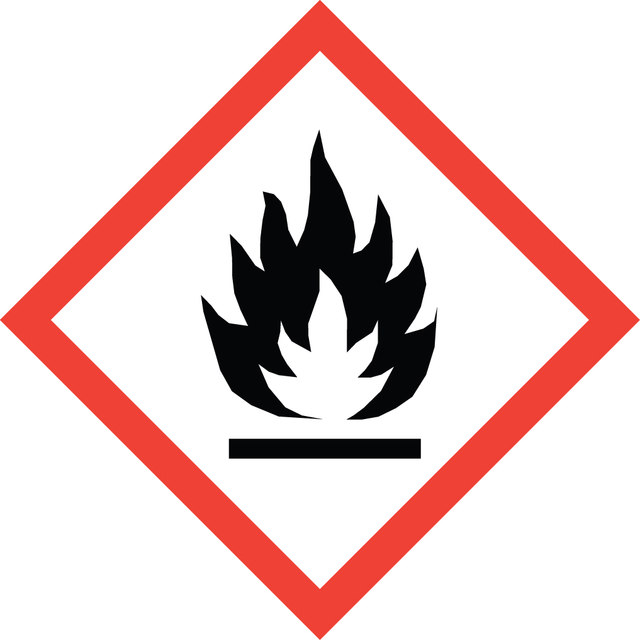


signalword
Danger
hcodes
Hazard Classifications
Eye Irrit. 2 - Flam. Liq. 2 - STOT SE 2
target_organs
Eyes,Central nervous system
저장 등급
3 - Flammable liquids
wgk
WGK 2
flash_point_f
48.2 °F - closed cup
flash_point_c
9 °C - closed cup
ppe
Eyeshields, Faceshields, Gloves, type ABEK (EN14387) respirator filter
Lorenzo Di Cesare Mannelli et al.
PloS one, 10(6), e0128080-e0128080 (2015-06-04)
Neurotoxicity is a main side effect of the anticancer drug oxaliplatin. The development of a neuropathic syndrome impairs quality of life and potentially results in chemotherapy dose reductions and/or early discontinuation. In the complex pattern of molecular and morphological alterations
Rocio Gómez-Cansino et al.
Evidence-based complementary and alternative medicine : eCAM, 2015, 183036-183036 (2015-05-20)
The extracts of 14 Julianaceae and 5 Clusiaceae species growing in Mexico were tested in vitro (50 µg/mL) against Mycobacterium tuberculosis H37Rv and HIV reverse transcriptase (HIV-RT). The Julianaceae bark and leaf extracts inhibited M. tuberculosis (>84.67%) and HIV-RT (<49.89%). The
Zeljka Korade et al.
Biological psychiatry, 75(3), 215-222 (2013-07-31)
Smith-Lemli-Opitz syndrome (SLOS) is an inborn error of cholesterol biosynthesis characterized by diminished cholesterol and increased 7-dehydrocholesterol (7-DHC) levels. 7-Dehydrocholesterol is highly reactive, giving rise to biologically active oxysterols. 7-DHC-derived oxysterols were measured in fibroblasts from SLOS patients and an
국제 무역 품목 번호
| SKU | GTIN |
|---|---|
| 362808-1L | 04061831824865 |
| 362808-200L-P1 | 04061838161574 |
| 362808-4L | 04061831824872 |