Sign In to View Organizational & Contract Pricing.
Select a Size
Change View
About This Item
Empirical Formula (Hill Notation):
C4H8O
CAS Number:
Molecular Weight:
72.11
NACRES:
NA.21
PubChem Substance ID:
UNSPSC Code:
12191501
EC Number:
203-726-8
MDL number:
Beilstein/REAXYS Number:
102391
Assay:
≥99.0%
Grade:
reagent grade
Bp:
65-67 °C (lit.)
Vapor pressure:
114 mmHg ( 15 °C), 143 mmHg ( 20 °C)
Product Name
Tetrahydrofuran, reagent grade, ≥99.0%, contains 250 ppm BHT as inhibitor
grade
reagent grade
vapor density
2.5 (vs air)
vapor pressure
114 mmHg ( 15 °C), 143 mmHg ( 20 °C)
assay
≥99.0%
form
liquid
autoignition temp.
610 °F
contains
250 ppm BHT as inhibitor
expl. lim.
1.8-11.8 %
dilution
(for analytical testing)
refractive index
n20/D 1.407 (lit.)
pH
~7
bp
65-67 °C (lit.)
mp
−108 °C (lit.)
density
0.889 g/mL at 25 °C (lit.)
SMILES string
C1CCOC1
InChI
1S/C4H8O/c1-2-4-5-3-1/h1-4H2
InChI key
WYURNTSHIVDZCO-UHFFFAOYSA-N
General description
Tetrahydrofuran (THF) is a saturated cyclic ether mainly used as an organic solvent. On long term storage it forms organic peroxides. This process can be suppressed by adding butylated hydroxytoluene (BHT) as a stabilizer. BHT removes the free radicals required for the peroxide formation. THF constitutes the key fragment of various natural products (polyether antibiotics). THF can form a double hydrate with hydrogen sulfide. Crystal structure of this double hydrate has been investigated by three-dimensional single-crystal studies. Butane-1,4-diol is formed as an intermediate during the synthesis of THF. Hot THF is useful for the dissolution of polyvinylidene chloride (PVDV).
Application
Tetrahydrofuran may be used for the dissolution of poly-ε-caprolactone (PCL) and 1,3-diaminopentane, during the preparation of poly-ε-caprolactone (PCL)-hydroxyapatite (HA) scaffolds and acrylate-terminated poly(5-amino-1-pentanol-co-1,4-butanediol diacrylate) (C32)- 1,3-diaminopentane (117) polymer, respectively.
Other Notes
For information on tetrahydrofuran miscibility, please visit the following link:
Tetrahydrofuran Miscibility/Immiscibility Table
Still not finding the right product?
Explore all of our products under Tetrahydrofuran
signalword
Danger
supp_hazards
Storage Class
3 - Flammable liquids
flash_point_f
1.4 °F - closed cup
flash_point_c
-17.00 °C - closed cup
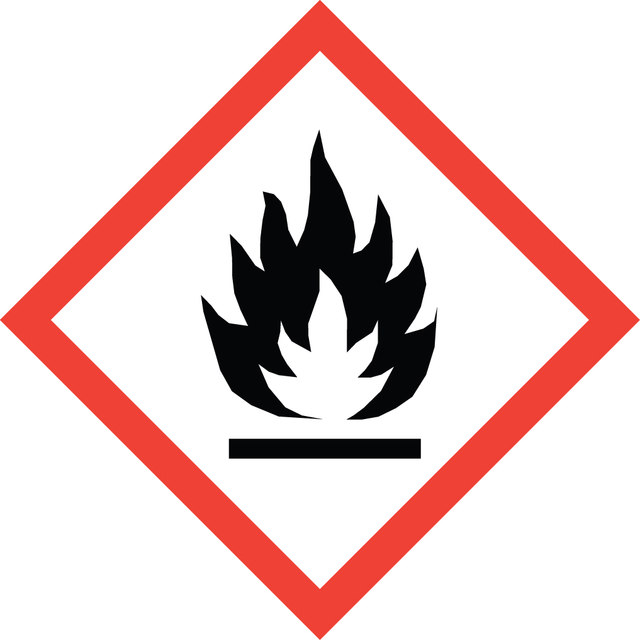
Hazard Classifications
Acute Tox. 4 Oral - Carc. 2 - Eye Dam. 1 - Flam. Liq. 2 - STOT SE 3
target_organs
Central nervous system, Respiratory system
Choose from one of the most recent versions:
Already Own This Product?
Find documentation for the products that you have recently purchased in the Document Library.
Todd J Harris et al.
Biomaterials, 31(5), 998-1006 (2009-10-24)
The use of biomaterials for gene delivery can potentially avoid many of the safety concerns with viral gene delivery. However, the efficacy of polymeric gene delivery methods is low, particularly in vivo. One significant concern is that the interior and