
695092

Acetic acid
glacial, ACS reagent, ≥99.7%
Synonym(s):
Glacial acetic acid
Select a Size
About This Item
grade
ACS reagent
Quality Level
vapor density
2.07 (vs air)
vapor pressure
11.4 mmHg ( 20 °C)
assay
≥99.7%
form
liquid
autoignition temp.
800 °F
expl. lim.
16 %, 92 °F, 4 %, 59 °F
technique(s)
mass spectrometry (MS): suitable
impurities
Cr2O72- reducers, passes test, MnO4- reducers, passes test, ≤0.0004 meq/g Titr. base, ≤0.01% acetic anhydride
evapn. residue
≤0.001%
color
APHA: ≤10
refractive index
n20/D 1.371 (lit.)
pH
2.5 (20 °C, 50 g/L)
bp
117-118 °C (lit.)
mp
16.2 °C (lit.)
solubility
water: soluble (602.9 g/l at 25 °C)
density
1.04 g/mL at 25 °C (lit.)
anion traces
chloride (Cl-): ≤1 ppm, sulfate (SO42-): ≤1 ppm
cation traces
Fe: ≤0.2 ppm, heavy metals: ≤0.5 ppm (by ICP)
SMILES string
[F2C(F2C)13F3C]C(O)=O
InChI
1S/C2H4O2/c1-2(3)4/h1H3,(H,3,4)
InChI key
QTBSBXVTEAMEQO-UHFFFAOYSA-N
General description
Application
Other Notes
Still not finding the right product?
Explore all of our products under Acetic acid
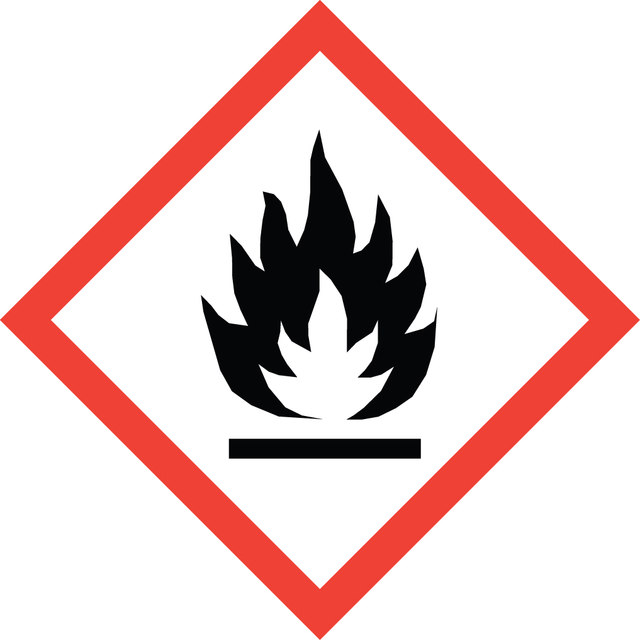

signalword
Danger
hcodes
Hazard Classifications
Eye Dam. 1 - Flam. Liq. 3 - Skin Corr. 1A
Storage Class
3 - Flammable liquids
wgk
WGK 1
flash_point_f
102.2 °F - closed cup
flash_point_c
39 °C - closed cup
Choose from one of the most recent versions:
Already Own This Product?
Find documentation for the products that you have recently purchased in the Document Library.
Protocols
A step-by-step protocol for released N-linked glycan analysis of the monoclonal antibody adalimumab, based on UHPLC-FLR-MS and procainamide labeling.
Articles
Learn to separate and quantify B vitamins and preservatives in capsules with HPLC-UV and Purospher® STAR RP-8 column. Validated for precision.
High-Performance Thin-Layer chromatography (HPTLC) quantification of methylglyoxal (MGO) in complex and matrix rich manuka honey offering quick sample preparation, high-matrix tolerance, and high-throughput.
Learn about the impact of filtration on hematopoietic cell culture media containing vital T cell factors and other media components.
Related Content
FAS, auch „Forever Chemicals“ (oder ewige Chemikalien) genannt, verbleiben in der Umwelt und stellen ein Gesundheitsrisiko dar. Entdecken Sie unsere Tools für die Umweltüberwachung zur Quantifizierung von PFAS, die Forscher, Aufsichtsbehörden und Labore bei der Prüfung auf PFAS unterstützen.
Les FAS, ou "substances chimiques éternelles", persistent dans l'environnement et présentent des risques pour la santé humaine. Découvrez nos outils de surveillance environnementale pour la quantification des PFAS, qui peuvent aider les chercheurs, les organismes de réglementation et les laboratoires à tester les PFAS.
I FAS, o 'sostanze chimiche permanenti', persistono nell'ambiente e costituiscono un rischio per la salute umana. Scoprite le nostre soluzioni di monitoraggio ambientale per le determinazioni quantitative dei PFAS, un valido ausilio nelle analisi dei PFAS per ricercatori, enti di regolamentazione e laboratori.
Global Trade Item Number
| SKU | GTIN |
|---|---|
| 695092-100ML | 04061837737183 |
| 695092-2.5L-GL | 04061832779324 |
| 695092-4L | 04061832779331 |
| 695092-6X2.5L-GL | 04061837737282 |
| 695092-2.5L | 04061837737206 |
| 695092-4X100ML | 04061832779348 |
| 695092-4X4L | 04061832779355 |
| 695092-500ML-GL | 04061832779423 |
| 695092-6X2.5L | 04061837737275 |
| 695092-6X500ML | 04061832779430 |
| 695092-6X500ML-GL | 04061832779454 |
| 695092-500ML | 04061837737244 |