
09582

Adipic acid
BioXtra, ≥99.5% (HPLC)
Synonyme(s) :
Hexanedioic acid
Se connecter pour consulter les tarifs organisationnels et contractuels.
Sélectionner une taille de conditionnement
Changer de vue
A propos de cet article
Formule linéaire :
HOOC(CH2)4COOH
Numéro CAS:
Poids moléculaire :
146.14
PubChem Substance ID:
eCl@ss:
39021711
UNSPSC Code:
12352106
NACRES:
NA.21
EC Number:
204-673-3
MDL number:
Beilstein/REAXYS Number:
1209788
Assay:
≥99.5% (HPLC)
Service technique
Besoin d'aide ? Notre équipe de scientifiques expérimentés est là pour vous.
Laissez-nous vous aidervapor density
5 (vs air)
Quality Level
vapor pressure
1 mmHg ( 159.5 °C)
product line
BioXtra
assay
≥99.5% (HPLC)
autoignition temp.
788 °F
ign. residue
≤0.05% (as SO4)
loss
≤1% loss on drying, 110 °C
bp
265 °C/100 mmHg (lit.)
mp
151-154 °C
solubility
H2O: soluble 23 g/L at 25 °C
anion traces
chloride (Cl-): ≤50 mg/kg, nitrate (NO3-): ≤30 mg/kg, sulfate (SO42-): ≤500 mg/kg
cation traces
As: ≤3 mg/kg, Cu: ≤10 mg/kg, Fe: ≤5 mg/kg, Pb: ≤10 mg/kg, Zn: ≤10 mg/kg
SMILES string
OC(=O)CCCCC(O)=O
InChI
1S/C6H10O4/c7-5(8)3-1-2-4-6(9)10/h1-4H2,(H,7,8)(H,9,10)
InChI key
WNLRTRBMVRJNCN-UHFFFAOYSA-N
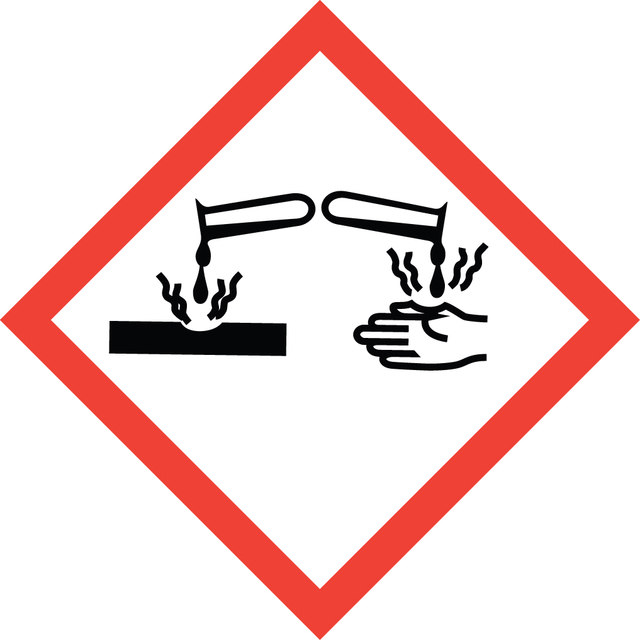
signalword
Danger
hcodes
Hazard Classifications
Eye Dam. 1
Classe de stockage
11 - Combustible Solids
flash_point_f
384.8 °F - closed cup
flash_point_c
196 °C - closed cup
ppe
dust mask type N95 (US), Eyeshields, Gloves
Faites votre choix parmi les versions les plus récentes :
Déjà en possession de ce produit ?
Retrouvez la documentation relative aux produits que vous avez récemment achetés dans la Bibliothèque de documents.
J B J H van Duuren et al.
Biotechnology and bioengineering, 108(6), 1298-1306 (2011-02-18)
A limited life cycle assessment (LCA) was performed on a combined biological and chemical process for the production of adipic acid, which was compared to the traditional petrochemical process. The LCA comprises the biological conversion of the aromatic feedstocks benzoic
Holger Noack et al.
Inorganic chemistry, 50(4), 1194-1202 (2011-01-28)
Adipic acid is a key compound in the chemical industry, where it is mainly used in the production of polymers. The conventional process of its generation requires vast amounts of energy and, moreover, produces environmentally deleterious substances. Thus, there is
H V Pawar et al.
Colloids and surfaces. B, Biointerfaces, 102, 102-110 (2012-09-26)
Streptomycin (STP) and diclofenac (DLF) loaded film dressings were prepared by blending Polyox(®) (POL) with four hydrophilic polymers [hydroxypropylmethylcellulose (HPMC), carrageenan (CAR), sodium alginate (SA) or chitosan (CS)] using glycerol (GLY) as plasticiser. The films were characterised by scanning electron
Numéro d'article de commerce international
| Référence | GTIN |
|---|---|
| 311286-2G | 04061831810509 |
| 09582-50G | 04061838657022 |
| 09582-250G | 04061838657015 |