
X1040

o-xylène
reagent grade, ≥98.0%
Synonyme(s) :
1,2-diméthylbenzène
Se connecter pour consulter les tarifs organisationnels et contractuels.
Sélectionner une taille de conditionnement
Changer de vue
A propos de cet article
Formule linéaire :
C6H4(CH3)2
Numéro CAS:
Poids moléculaire :
106.17
UNSPSC Code:
12352005
NACRES:
NA.21
PubChem Substance ID:
EC Number:
202-422-2
Beilstein/REAXYS Number:
1815558
MDL number:
Assay:
≥98.0%
Grade:
reagent grade
Vapor pressure:
<0.1 atm ( 21.1 °C), 16 mmHg ( 37.7 °C), 7 mmHg ( 20 °C)
Service technique
Besoin d'aide ? Notre équipe de scientifiques expérimentés est là pour vous.
Laissez-nous vous aidergrade
reagent grade
Quality Level
vapor density
3.7 (vs air)
vapor pressure
<0.1 atm ( 21.1 °C), 16 mmHg ( 37.7 °C), 7 mmHg ( 20 °C)
assay
≥98.0%
form
liquid
autoignition temp.
867 °F
expl. lim.
7 %
dilution
(for analytical testing)
mp
-26--23 °C (lit.)
density
0.879 g/mL at 20 °C (lit.)
SMILES string
Cc1ccccc1C
InChI
1S/C8H10/c1-7-5-3-4-6-8(7)2/h3-6H,1-2H3
InChI key
CTQNGGLPUBDAKN-UHFFFAOYSA-N
General description
O-Xylene is an aromatic hydrocarbon that is commonly used as a solvent in the pharmaceutical, printing, rubber, cleaning agent, paint thinner, varnish, synthetic fiber, and leather industries.
Application
O-Xylene can be used as a reactant to synthesize:
- Phthalic anhydride by oxidation using various catalysts.
- 4-Nitro-o-xylene using fuming nitric acid and polyphosphoric acid in the presence of an acid catalyst.
Still not finding the right product?
Explore all of our products under o-xylène
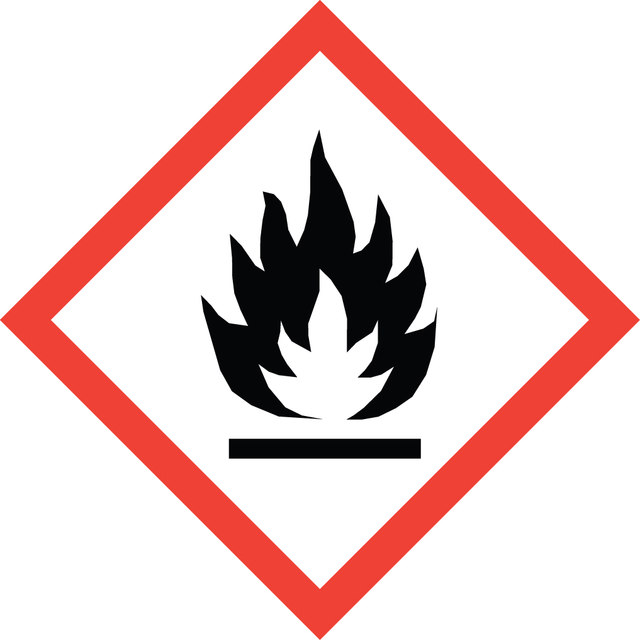


signalword
Danger
Hazard Classifications
Acute Tox. 4 Dermal - Acute Tox. 4 Inhalation - Aquatic Chronic 3 - Asp. Tox. 1 - Eye Irrit. 2 - Flam. Liq. 3 - Skin Irrit. 2 - STOT SE 3
target_organs
Respiratory system
Classe de stockage
3 - Flammable liquids
wgk
WGK 2
flash_point_f
89.6 °F - closed cup
flash_point_c
32.0 °C - closed cup
Faites votre choix parmi les versions les plus récentes :
Déjà en possession de ce produit ?
Retrouvez la documentation relative aux produits que vous avez récemment achetés dans la Bibliothèque de documents.
Casper Bindzus Foldager et al.
Cartilage, 5(2), 123-132 (2014-04-01)
The objective of the present study was to investigate the presence and distribution of 2 basement membrane (BM) molecules, laminin and collagen type IV, in healthy and degenerative cartilage tissues. Normal and degenerated tissues were obtained from goats and humans
Olivier Alluin et al.
PloS one, 9(10), e111072-e111072 (2014-10-29)
While several cellular and pharmacological treatments have been evaluated following spinal cord injury (SCI) in animal models, it is increasingly recognized that approaches to address the glial scar, including the use of chondroitinase ABC (ChABC), can facilitate neuroanatomical plasticity. Moreover
Pawaree Saisawat et al.
Kidney international, 85(6), 1310-1317 (2013-10-25)
Congenital abnormalities of the kidney and urinary tract (CAKUT) account for approximately half of children with chronic kidney disease and they are the most frequent cause of end-stage renal disease in children in the US. However, its genetic etiology remains
Numéro d'article de commerce international
| Référence | GTIN |
|---|---|
| X1040-1L | 04061837544422 |
| X1040-4L | 04061837544477 |