Accéder au contenu
MilliporeSigma

676918

Sulfure de carbone

ACS reagent, ≥99.9%

Se connecter pour consulter les tarifs organisationnels et contractuels.

Sélectionner une taille de conditionnement

Changer de vue

A propos de cet article

Formule empirique (notation de Hill) :
CS2
Numéro CAS:
Poids moléculaire :
76.14
UNSPSC Code:
12352100
NACRES:
NA.21
PubChem Substance ID:
EC Number:
200-843-6
Beilstein/REAXYS Number:
1098293
MDL number:
Assay:
≥99.9%
Grade:
ACS reagent
Bp:
46 °C (lit.)
Vapor pressure:
5.83 psi
Service technique
Besoin d'aide ? Notre équipe de scientifiques expérimentés est là pour vous.
Laissez-nous vous aider


grade

ACS reagent

Quality Level

vapor density

2.67 (vs air)

vapor pressure

5.83 psi

assay

≥99.9%

form

liquid

autoignition temp.

212 °F

expl. lim.

50 %

dilution

(for analytical testing)

impurities

H2S, passes test (lim. ~1.5 ppm), SO2, passes test (lim. ~2.5 ppm), ≤0.05% water

evapn. residue

≤0.002%

color

APHA: ≤10

refractive index

n20/D 1.627 (lit.)

bp

46 °C (lit.)

mp

−112-−111 °C (lit.)

density

1.266 g/mL at 25 °C (lit.)

SMILES string

S=C=S

InChI

1S/CS2/c2-1-3

InChI key

QGJOPFRUJISHPQ-UHFFFAOYSA-N

General description

Carbon disulfide is a widely used solvent in the production of rayon fibers, carbon tetrachloride, pesticides, vulcanizers, cellophane, adhesives, and other chemicals. It is also used as a starting material in the synthesis of various sulfur-containing derivatives.
Our premium ACS solvents are ideal for routine chemical synthesis, drying, purification, and critical labware cleaning. They meet or exceed the rigorous standards of the American Chemical Society (ACS), ensuring high-quality results for your research needs.

Premium ACS Solvents: Our solvents meet or exceed the stringent standards set by the American Chemical Society, ensuring high quality and reliability for your laboratory applications.

Replicable and Publishable Results: Designed for consistency, our solvents deliver results that can be reliably reproduced, making them ideal for research that requires publication.

Versatile Applications: Suitable for routine chemical synthesis, drying, purification, and critical labware cleaning, our solvents cater to a wide range of research needs in the laboratory.

Application

Carbon disulfide can be used as a solvent:
  • To synthesize hydroxynaphthyl ketones via Friedel-Crafts acylation and demethylation.
  • In the regioselective bromination of binaphthols.


Still not finding the right product?

Explore all of our products under Sulfure de carbone
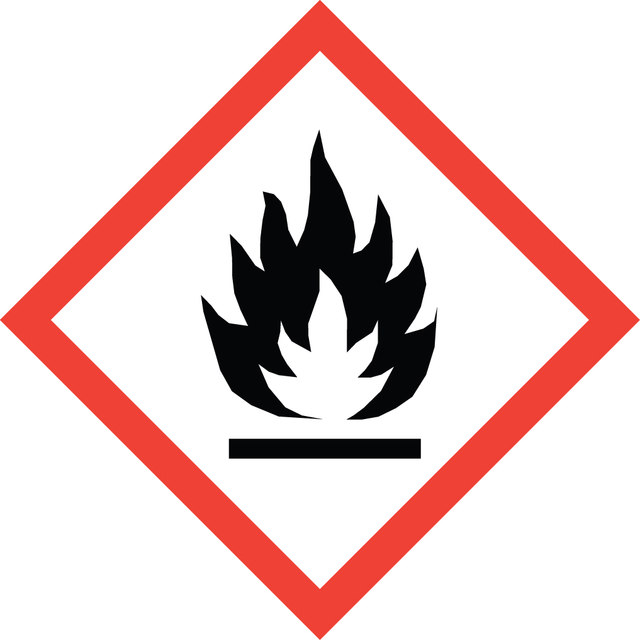

signalword

Danger

Hazard Classifications

Acute Tox. 4 Inhalation - Eye Irrit. 2 - Flam. Liq. 2 - Repr. 2 - Skin Irrit. 2 - STOT RE 1

target_organs

Peripheral nervous system,Central nervous system,Cardio-vascular system,Eyes

Classe de stockage

3 - Flammable liquids

wgk

WGK 2

flash_point_f

-22.0 °F - closed cup

flash_point_c

-30 °C - closed cup


Faites votre choix parmi les versions les plus récentes :

Certificats d'analyse (COA)

Lot/Batch Number

It looks like we've run into a problem, but you can still download Certificates of Analysis from our Documents section.

Si vous avez besoin d'assistance, veuillez contacter Service Clients

Déjà en possession de ce produit ?

Retrouvez la documentation relative aux produits que vous avez récemment achetés dans la Bibliothèque de documents.

Consulter la Bibliothèque de documents


Mark B van Eldijk et al.
Chemical communications (Cambridge, England), 49(71), 7770-7772 (2013-06-19)
CS2 hydrolase, a zinc-dependent enzyme that converts carbon disulfide to carbon dioxide and hydrogen sulfide, exists as a mixture of octameric ring and hexadecameric catenane forms in solution. A combination of size exclusion chromatography, multi-angle laser light scattering, and mass
Huan Liu et al.
Journal of hazardous materials, 235-236, 298-306 (2012-08-21)
Chemical conditioners are often used to enhance sewage sludge dewaterability through altering sludge properties and flocs structure, both affect odorous compounds emissions not only during sludge conditioning but also in subsequent sludge disposal. This study was to investigate emission characteristics
Continuous direct spinning of fibers of single-walled carbon nanotubes with metallic chirality.
Rajyashree M Sundaram et al.
Advanced materials (Deerfield Beach, Fla.), 23(43), 5064-5068 (2011-10-11)


Numéro d'article de commerce international

RéférenceGTIN
676918-1L04061832748245
676918-4L04061837567445