
563935

2-Propanol

70% in H2O
Synonyme(s) :
Isopropanol, Propane-2-ol, Alcool isopropylique, IPA, Propane-2-ol solution
Se connecter pour consulter les tarifs organisationnels et contractuels.
Sélectionner une taille de conditionnement
Changer de vue
A propos de cet article
Numéro CAS:
UNSPSC Code:
12352001
PubChem Substance ID:
NACRES:
NA.05
MDL number:
Bp:
80.9-83.2 °C
Vapor pressure:
33 mmHg
Service technique
Besoin d'aide ? Notre équipe de scientifiques expérimentés est là pour vous.
Laissez-nous vous aiderNom du produit
Isopropanol, 70% in H2O
vapor density
2.1 (vs air)
Quality Level
vapor pressure
33 mmHg
form
liquid
expl. lim.
2-13.4 %
greener alternative product characteristics
Safer Solvents and Auxiliaries
Learn more about the Principles of Green Chemistry.
sustainability
Greener Alternative Product
concentration
69-71 wt. % (2-propanol via KFB method), 70% in H2O
bp
80.9-83.2 °C
mp
-89.5 °C
density
0.858 g/mL at 25 °C
greener alternative category
SMILES string
CC(C)O
InChI
1S/C3H8O/c1-3(2)4/h3-4H,1-2H3
InChI key
KFZMGEQAYNKOFK-UHFFFAOYSA-N
General description
L'isopropanol (i-PrOH), également connu sous le nom de propan-2-ol ou d'alcool isopropylique, est une solution à 70 % dans de l'eau. C'est un alcool secondaire sous forme de liquide incolore qui est très utilisé comme solvant et comme intermédiaire en synthèse organique. Il est miscible avec des solvants tels que l'eau, l'éthanol, l'éther, l'acétate d'éthyle, le tétrahydrofurane et le chloroforme.
Application
Grâce à ses propriétés, l'isopropanol peut être utilisé dans un grand nombre d'applications différentes :
- Solvant en synthèse organique
- Intermédiaire chimique
- Agent désinfectant
- Agent nettoyant
- Agent de conservation d'échantillons
Features and Benefits
We are committed to bringing you Greener Alternative Products, which adhere to one or more of The 12 Principles of Greener Chemistry. This solvent is safe to use and thus aligns with "Safer Solvents and Auxiliaries". Click here for more information.
Disclaimer
The product is not intended for use as a biocide under global biocide regulations, including but not limited to US EPA′s Federal Insecticide Fungicide and Rodenticide Act, European Biocidal Products Regulation, Canada’s Pest Management Regulatory Agency, Turkey’s Biocidal Products Regulation, Korea’s Consumer Chemical Products and Biocide Safety Management Act (K-BPR) and others.
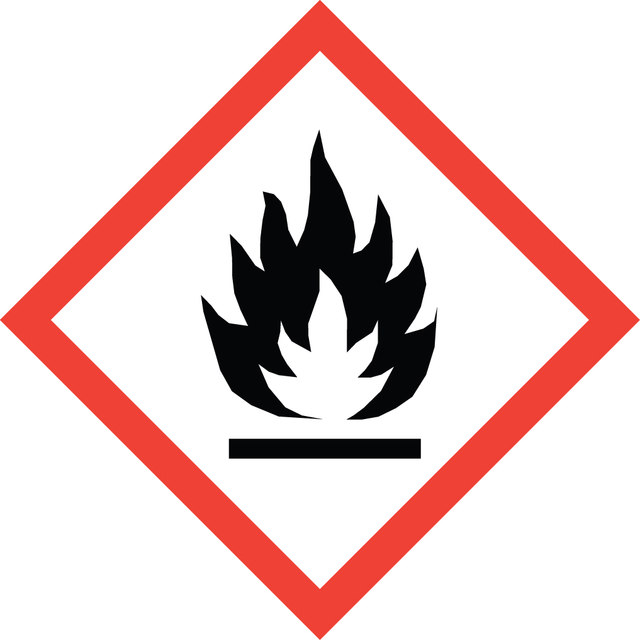
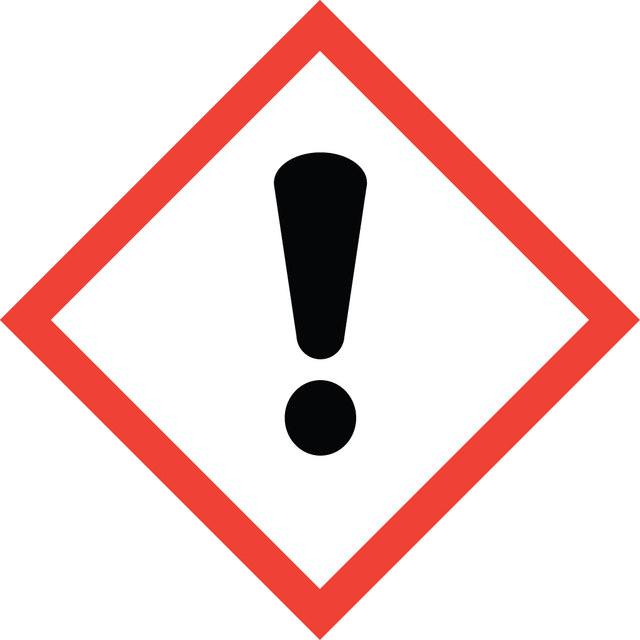
signalword
Danger
hcodes
Hazard Classifications
Eye Irrit. 2 - Flam. Liq. 2 - STOT SE 3
target_organs
Central nervous system
Classe de stockage
3 - Flammable liquids
wgk
WGK 1
flash_point_f
72.0 °F - closed cup
flash_point_c
22.2 °C - closed cup
Faites votre choix parmi les versions les plus récentes :
Déjà en possession de ce produit ?
Retrouvez la documentation relative aux produits que vous avez récemment achetés dans la Bibliothèque de documents.
Marisol Zuluaga Tamayo et al.
Marine drugs, 17(6) (2019-06-19)
(1) Background: Reperfusion injury refers to the cell and tissue damage induced, when blood flow is restored after an ischemic period. While reperfusion reestablishes oxygen supply, it generates a high concentration of radicals, resulting in tissue dysfunction and damage. Here
Photocatalytic degradation of 2-propanol under irradiation of visible light by nanocrystalline titanium (IV) oxide modified with rhodium ion using adsorption method.
Kitano S, et al.
Chemistry Letters (Jpn), 39(6), 627-629 (2010)
Photocatalytic degradation of 2-propanol and phenol using Au loaded MnWO4 nanorod under visible light irradiation.
Chakraborty AK, et al.
Journal of Cluster Science, 23(2), 437-448 (2012)
Numéro d'article de commerce international
| Référence | GTIN |
|---|---|
| 563935-18L | 04061832583952 |
| 563935-2.5L | 04061832583969 |
| 563935-4L | 04061832583976 |
| 563935-4X4L | 04061832583983 |
| 563935-1L | 04061837224928 |