
33209

Acide acétique
glacial, puriss. p.a., ACS reagent, reag. ISO, reag. Ph. Eur., ≥99.8%
Synonyme(s) :
Acide acétique glacial
Sélectionner une taille de conditionnement
A propos de cet article
Quality Level
agency
USP/NF, reag. ISO, reag. Ph. Eur.
vapor density
2.07 (vs air)
grade
ACS reagent, puriss. p.a.
assay
≥99.8%
form
liquid
autoignition temp.
800 °F
expl. lim.
16 %, 92 °F, 4 %, 59 °F
technique(s)
mass spectrometry (MS): suitable
impurities
≤0.0002% acetaldehyde, ≤0.0005% non-volatile matter, ≤0.002% KMnO4 red. matter (as HCOOH), ≤0.01% acetic anhydride (GC), ≤0.2% water (Karl Fischer)
color
APHA: ≤10
refractive index
n20/D 1.371 (lit.)
pH
2.5 (20 °C, 50 g/L)
bp
117-118 °C (lit.)
mp
16.2 °C (lit.)
transition temp
freezing point ≥16.3 °C
density
1.04 g/mL at 25 °C (lit.)
anion traces
chloride (Cl-): ≤0.5 mg/kg, phosphate (PO43-): ≤0.5 mg/kg, sulfate (SO42-): ≤0.5 mg/kg
SMILES string
[F2C(F2C)13F3C]C(O)=O
cation traces
Ag: ≤0.01 mg/kg, Al: ≤0.05 mg/kg, As: ≤0.01 mg/kg, Ba: ≤0.01 mg/kg, Be: ≤0.01 mg/kg, Bi: ≤0.1 mg/kg, Ca: ≤0.2 mg/kg, Cd: ≤0.02 mg/kg, Co: ≤0.01 mg/kg, Cr: ≤0.05 mg/kg, Cu: ≤0.01 mg/kg, Fe: ≤0.2 mg/kg, Ge: ≤0.05 mg/kg, K: ≤0.1 mg/kg, Li: ≤0.01 mg/kg, Mg: ≤0.1 mg/kg, Mn: ≤0.01 mg/kg, Mo: ≤0.02 mg/kg, Na: ≤0.5 mg/kg, Ni: ≤0.05 mg/kg, Pb: ≤0.02 mg/kg, Sr: ≤0.01 mg/kg, Ti: ≤0.01 mg/kg, Tl: ≤0.05 mg/kg, V: ≤0.01 mg/kg, Zn: ≤0.05 mg/kg, Zr: ≤0.1 mg/kg
suitability
passes test for indifference to chromic acid
storage temp.
room temp
InChI
1S/C2H4O2/c1-2(3)4/h1H3,(H,3,4)
InChI key
QTBSBXVTEAMEQO-UHFFFAOYSA-N
General description
Application
Packaging
Other Notes
The article number 33209-4X2.5L-M will be discontinued. Please order the single bottle 33209-2.5L-M which is physically identical with the same exact specifications.
The article number 33209-6X1L-M will be discontinued. Please order the single bottle 33209-1L-M which is physically identical with the same exact specifications.
Still not finding the right product?
Explore all of our products under Acide acétique
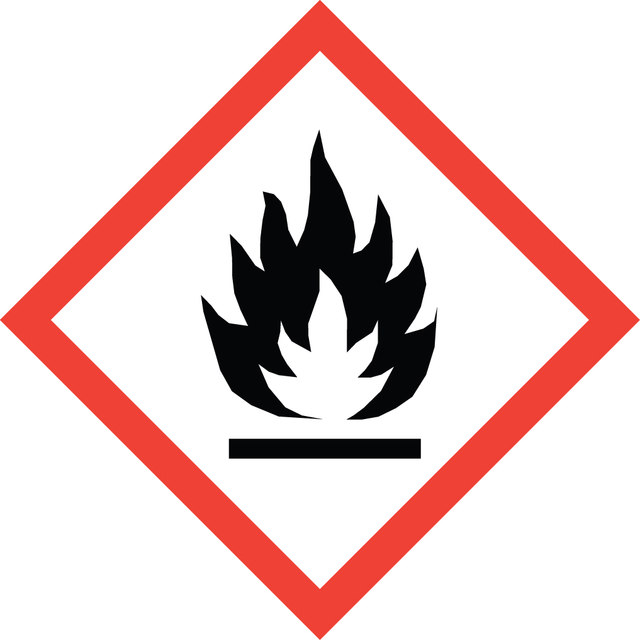

signalword
Danger
hcodes
Hazard Classifications
Eye Dam. 1 - Flam. Liq. 3 - Skin Corr. 1A
Classe de stockage
3 - Flammable liquids
wgk
WGK 1
flash_point_f
102.2 °F - closed cup
flash_point_c
39 °C - closed cup
Faites votre choix parmi les versions les plus récentes :
Déjà en possession de ce produit ?
Retrouvez la documentation relative aux produits que vous avez récemment achetés dans la Bibliothèque de documents.
Articles
Analyze Shuanghuang Lian oral liquid using Discovery® HS C18 HPLC column per Chinese Pharmacopeia 2020. Quantify baicalin, chlorogenic acid, and forsythin with high accuracy.
Contenu apparenté
Les FAS, ou "substances chimiques éternelles", persistent dans l'environnement et présentent des risques pour la santé humaine. Découvrez nos outils de surveillance environnementale pour la quantification des PFAS, qui peuvent aider les chercheurs, les organismes de réglementation et les laboratoires à tester les PFAS.
Numéro d'article de commerce international
| Référence | GTIN |
|---|---|
| 33209S-2.5L | 04061838224095 |
| 33209-1L | 04061838253323 |
| 33209-2.5L | 04061838253330 |
| 33209-4X2.5L | 04061838253354 |
| 33209S-6X1L | 04061838227201 |