Accéder au contenu
MilliporeSigma

207802

Potassium dichromate

ACS reagent, ≥99.0%

Synonyme(s) :

Potassium bichromate

Se connecter pour consulter les tarifs organisationnels et contractuels.

Sélectionner une taille de conditionnement

Changer de vue

A propos de cet article

Formule linéaire :
K2Cr2O7
Numéro CAS:
Poids moléculaire :
294.18
NACRES:
NB.24
PubChem Substance ID:
UNSPSC Code:
12352302
EC Number:
231-906-6
MDL number:
Assay:
≥99.0%
Grade:
ACS reagent
Form:
crystals
Solubility:
water: soluble (ca.29.4 g/l at 20 °C (68 °F))
Service technique
Besoin d'aide ? Notre équipe de scientifiques expérimentés est là pour vous.
Laissez-nous vous aider


grade

ACS reagent

Quality Level

assay

≥99.0%

form

crystals

reaction suitability

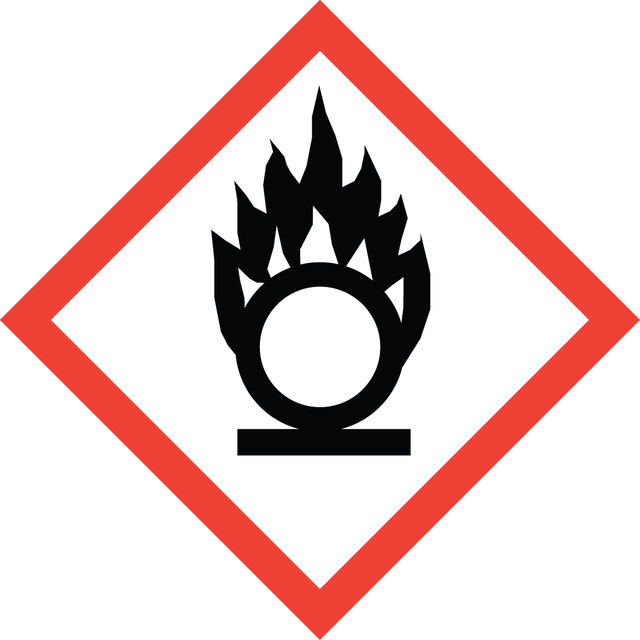
reagent type: oxidant

impurities

≤0.005% insolubles

loss

≤0.05% loss on drying

pH

3.5-5.0 (25 °C, 29.4 g/L)

mp

398 °C (lit.)

solubility

water: soluble (ca.29.4 g/l at 20 °C (68 °F))

anion traces

chloride (Cl-): ≤0.001%, sulfate (SO42-): ≤0.005%

cation traces

Ca: ≤0.003%, Na: ≤0.001%, Na: ≤0.02%, heavy metals (as Pb): ≤5 ppm

SMILES string

[K+].[K+].[O-][Cr](=O)(=O)O[Cr]([O-])(=O)=O

InChI

1S/2Cr.2K.7O/q;;2*+1;;;;;;2*-1

InChI key

KMUONIBRACKNSN-UHFFFAOYSA-N

General description

Potassium dichromate is a red-orange colored solid. Its crystals belong to the triclinic crystal system. On heating above 600°C, it decomposes to give oxygen, potassium chromate and chromium(III) oxide. It acts as a strong oxidizing agent in acidic media. It can be synthesized by the fusion of chromium(III) oxide with potassium carbonate and nitrate or oxygen.

Application

Potassium dichromate may be used in the preparation of hybride polymer-clay nanocomposite supported dichromate reagents. It may also be used as an oxidant for the selective oxidation of primary and secondary alcohol to corresponding aldehydes and ketones, respectively.


Still not finding the right product?

Explore all of our products under


signalword

Danger

Hazard Classifications

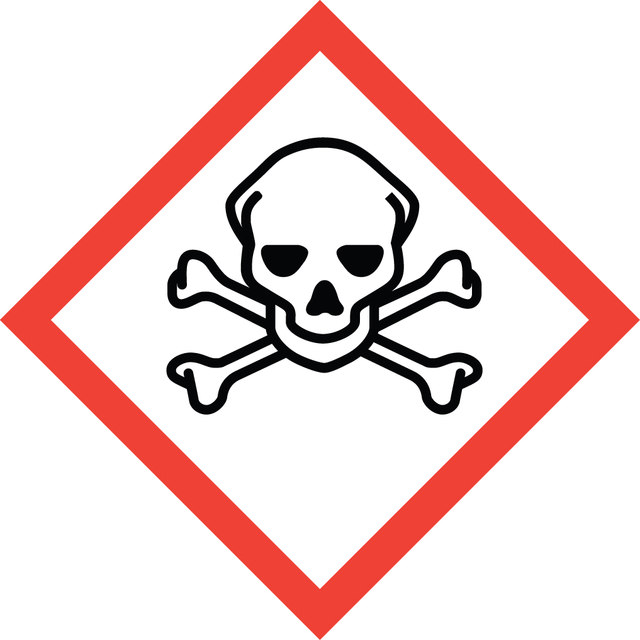
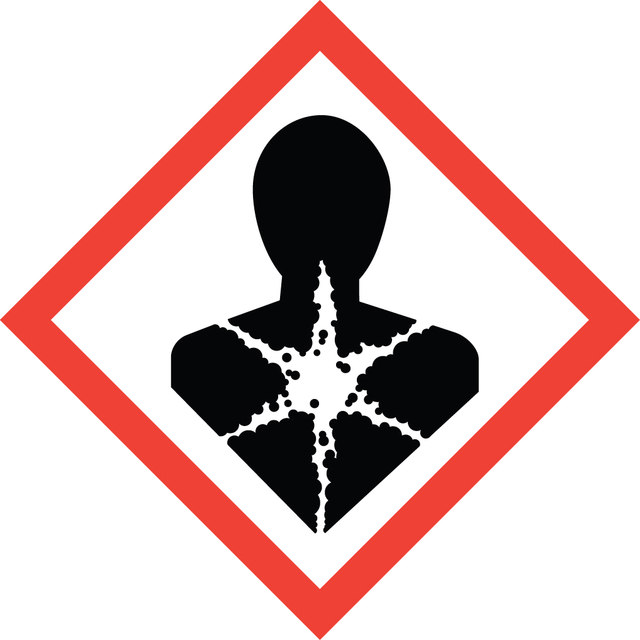
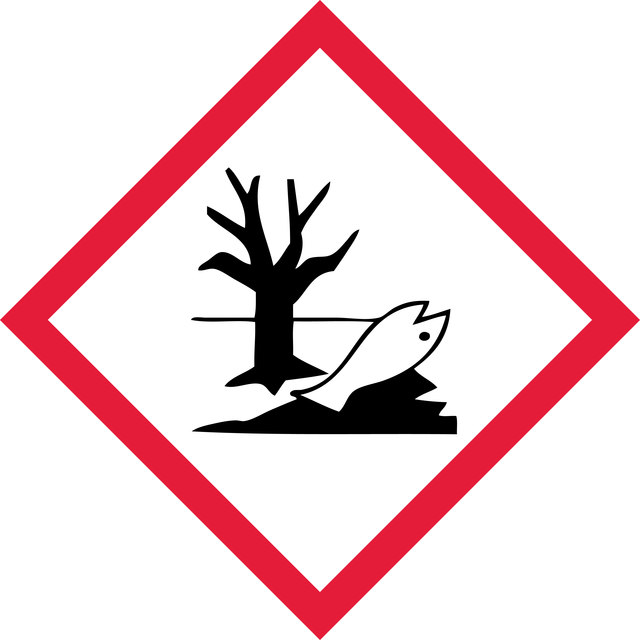
Acute Tox. 2 Inhalation - Acute Tox. 3 Oral - Acute Tox. 4 Dermal - Aquatic Acute 1 - Aquatic Chronic 1 - Carc. 1B - Eye Dam. 1 - Muta. 1B - Ox. Sol. 2 - Repr. 1B - Resp. Sens. 1 - Skin Corr. 1B - Skin Sens. 1 - STOT RE 1 Inhalation - STOT SE 3

target_organs

Cardio-vascular system, Respiratory system

Classe de stockage

5.1B - Oxidizing hazardous materials

wgk

WGK 3

flash_point_f

Not applicable

flash_point_c

Not applicable


Faites votre choix parmi les versions les plus récentes :

Certificats d'analyse (COA)

Lot/Batch Number

Vous ne trouvez pas la bonne version ?

Si vous avez besoin d'une version particulière, vous pouvez rechercher un certificat spécifique par le numéro de lot.

Déjà en possession de ce produit ?

Retrouvez la documentation relative aux produits que vous avez récemment achetés dans la Bibliothèque de documents.

Consulter la Bibliothèque de documents


Selective solvent-free oxidation of alcohols with potassium dichromate
Lou J-D and Xu Z-N
Tetrahedron Letters, 43(49), 8843-8844 (2002)
Nicholas James Strausfeld et al.
eLife, 9 (2020-03-04)
Descriptions of crustacean brains have focused mainly on three highly derived lineages of malacostracans: the reptantian infraorders represented by spiny lobsters, lobsters, and crayfish. Those descriptions advocate the view that dome- or cap-like neuropils, referred to as 'hemiellipsoid bodies,' are
Marcel E Sayre et al.
The Journal of comparative neurology, 527(14), 2371-2387 (2019-03-13)
Paired centers in the forebrain of insects, called the mushroom bodies, have become the most investigated brain region of any invertebrate due to novel genetic strategies that relate unique morphological attributes of these centers to their functional roles in learning


Numéro d'article de commerce international

RéférenceGTIN
207802-500G04061837768361
207802-100G04061837768354