Accéder au contenu
MilliporeSigma

179957

Méthanol

≥99.6%, Laboratory Reagent grade

Synonyme(s) :

Alcool méthylique

Se connecter pour consulter les tarifs organisationnels et contractuels.

Sélectionner une taille de conditionnement

Changer de vue

A propos de cet article

Formule linéaire :
CH3OH
Numéro CAS:
Poids moléculaire :
32.04
NACRES:
NA.05
PubChem Substance ID:
eCl@ss:
39020101
UNSPSC Code:
12352104
EC Number:
200-659-6
MDL number:
Beilstein/REAXYS Number:
1098229
Assay:
≥99.6%
Grade:
Laboratory Reagent
Bp:
64.7 °C (lit.)
Vapor pressure:
410 mmHg ( 50 °C), 97.68 mmHg ( 20 °C)
Service technique
Besoin d'aide ? Notre équipe de scientifiques expérimentés est là pour vous.
Laissez-nous vous aider


Nom du produit

Méthanol, Laboratory Reagent, ≥99.6%

grade

Laboratory Reagent

Quality Level

vapor density

1.11 (vs air)

vapor pressure

410 mmHg ( 50 °C), 97.68 mmHg ( 20 °C)

assay

≥99.6%

form

liquid

autoignition temp.

725 °F

expl. lim.

36 %

dilution

(for analytical testing)

impurities

≤0.01% alkalinity (as NH3), ≤0.03% acidity (as HCOOH), ≤0.1% water

evapn. residue

≤0.01%

refractive index

n20/D 1.329 (lit.)

bp

64.7 °C (lit.)

mp

−98 °C (lit.)

density

0.791 g/mL at 25 °C (lit.)

format

neat

storage temp.

room temp

SMILES string

CO

InChI

1S/CH4O/c1-2/h2H,1H3

InChI key

OKKJLVBELUTLKV-UHFFFAOYSA-N

General description

Methanol is an industrially important alcohol. Its thermochemical conversion to C2-C10 hydrocarbons in the presence of shape-selective zeolites has been reported. Its oxidation on Ru-Pt catalyst system by ruthenium ad-atoms has been proposed. It participates in the purification step during the synthesis of pyocyanin, a toxic compound found in Pseudomonas aeruginosa.
Methanol is an organic solvent that can be synthesized from syngas in the presence of CuO/ZnO/Al2O3 catalysts. It is an ideal candidate as a hydrogen source in fuel cell technology due to its high H/C ratio, low propensity for soot generation, relatively low reforming temperature and as it exists in liquid state at room temperature. In a direct methanol fuel cell (DMFC), methanol undergoes oxidation with air to generate electricity. The olefins (ethylene or propylene) formed from methanol via MTO (methanol-to-olefins) process, can be an alternative to oil and gas to produce hydrocarbon fuels.

Application

Methanol may be used to compose the binary mixtures with acetonitrile in a study. Experimental evaluation of the values of dielectric constant and dielectric loss of these binary mixtures at microwave frequencies at 300°C has been reported.


Still not finding the right product?

Explore all of our products under Méthanol
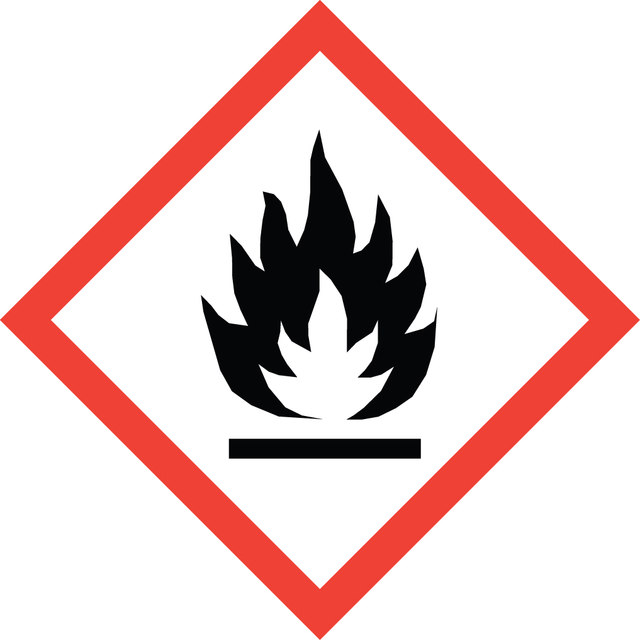

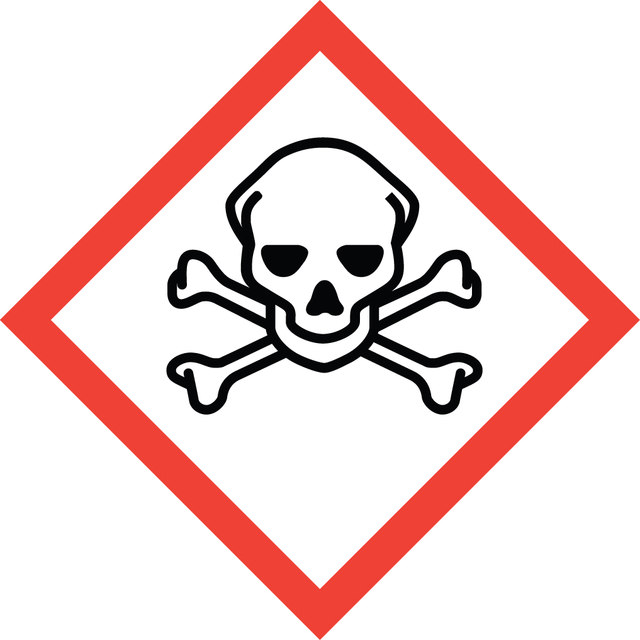
signalword

Danger

Hazard Classifications

Acute Tox. 3 Dermal - Acute Tox. 3 Inhalation - Acute Tox. 3 Oral - Flam. Liq. 2 - STOT SE 1

target_organs

Eyes,Central nervous system

Classe de stockage

3 - Flammable liquids

wgk

WGK 2

flash_point_f

49.5 °F - closed cup

flash_point_c

9.7 °C - closed cup


Faites votre choix parmi les versions les plus récentes :

Certificats d'analyse (COA)

Lot/Batch Number

It looks like we've run into a problem, but you can still download Certificates of Analysis from our Documents section.

Si vous avez besoin d'assistance, veuillez contacter Service Clients

Déjà en possession de ce produit ?

Retrouvez la documentation relative aux produits que vous avez récemment achetés dans la Bibliothèque de documents.

Consulter la Bibliothèque de documents


Contenu apparenté

The 4L M-Bottle provides safe handling of solvents due to an innovative solvent bottle design with sealing technology to eliminate leaks and reduce risks in solvent dispensing.


Dielectric behavior of acetonitrile+ methanol binary mixtures at microwave frequency.
Jogdand AP and Kadam PL.
IOSR Journal of Applied Physics, 2278-4861 (2014)
Standardized chemical synthesis of Pseudomonas aeruginosa pyocyanin.
Cheluvappa R.
Gastroenterologia y hepatologia, 22, 1350-1351 (2007)
Beyond oil and gas: the methanol economy.
Olah GA.
Angewandte Chemie (International Edition in English), 44(18), 2636-2639 (2005)


Numéro d'article de commerce international

RéférenceGTIN
179957-18L-CS04061837713538
179957-4L04061838754561
179957-5L04061837224133
179957-1L04061838754554
179957-4X4L04061837224126