Accéder au contenu
MilliporeSigma

178810

Tétrahydrofurane

≥99.0%, contains 200-400 ppm BHT as inhibitor, ReagentPlus®

Synonyme(s) :

Oxolane, Oxyde de butylène, Oxyde de tétraméthylène

Se connecter pour consulter les tarifs organisationnels et contractuels.

Sélectionner une taille de conditionnement

Changer de vue

A propos de cet article

Formule empirique (notation de Hill) :
C4H8O
Numéro CAS:
Poids moléculaire :
72.11
UNSPSC Code:
12191501
NACRES:
NA.21
PubChem Substance ID:
EC Number:
203-726-8
Beilstein/REAXYS Number:
102391
MDL number:
Assay:
≥99.0%
Bp:
65-67 °C (lit.)
Vapor pressure:
114 mmHg ( 15 °C), 143 mmHg ( 20 °C)
Service technique
Besoin d'aide ? Notre équipe de scientifiques expérimentés est là pour vous.
Laissez-nous vous aider


vapor density

2.5 (vs air)

Quality Level

vapor pressure

114 mmHg ( 15 °C), 143 mmHg ( 20 °C)

product line

ReagentPlus®

assay

≥99.0%

form

liquid

autoignition temp.

610 °F

contains

200-400 ppm BHT as inhibitor

expl. lim.

1.8-11.8 %

dilution

(for general lab use)

refractive index

n20/D 1.407 (lit.)

pH

~7

bp

65-67 °C (lit.)

mp

−108 °C (lit.)

density

0.889 g/mL at 25 °C (lit.)

SMILES string

C1CCOC1

InChI

1S/C4H8O/c1-2-4-5-3-1/h1-4H2

InChI key

WYURNTSHIVDZCO-UHFFFAOYSA-N

General description

Tetrahydrofuran (THF) is a saturated cyclic ether mainly used as an organic solvent. On long term storage it forms organic peroxides. This process can be suppressed by adding butylated hydroxytoluene (BHT) as a stabilizer. BHT removes the free radicals required for the peroxide formation. THF constitutes the key fragment of various natural products (polyether antibiotics). THF can form a double hydrate with hydrogen sulfide. Crystal structure of this double hydrate has been investigated by three-dimensional single-crystal studies. Butane-1,4-diol is formed as an intermediate during the synthesis of THF. Hot THF is useful for the dissolution of polyvinylidene chloride (PVDV).

Application

Tetrahydrofuran may be used for the dissolution of poly-ε-caprolactone (PCL) and 1,3-diaminopentane, during the preparation of poly-ε-caprolactone (PCL)-hydroxyapatite (HA) scaffolds and acrylate-terminated poly(5-amino-1-pentanol-co-1,4-butanediol diacrylate) (C32)- 1,3-diaminopentane (117) polymer, respectively.

Other Notes

For information on tetrahydrofuran miscibility, please visit the following link:
Tetrahydrofuran Miscibility/Immiscibility Table

Greener alternatives are available for many THF applications, 2-Methyltetrahydrofuran (155810) and Cyclopentyl methyl ether (675989)

Read more about THF alternatives:
2-Methyltetrahydroun (2-MeTHF): A biomass-Derived solvent with Broad Applications in Organic Chemistry

The toxicological assessment of cyclopentyl methyl ether (CPME) as a green solvent

Legal Information

ReagentPlus is a registered trademark of Merck KGaA, Darmstadt, Germany


Still not finding the right product?

Explore all of our products under Tétrahydrofurane


signalword

Danger

target_organs

Central nervous system, Respiratory system

supp_hazards

Classe de stockage

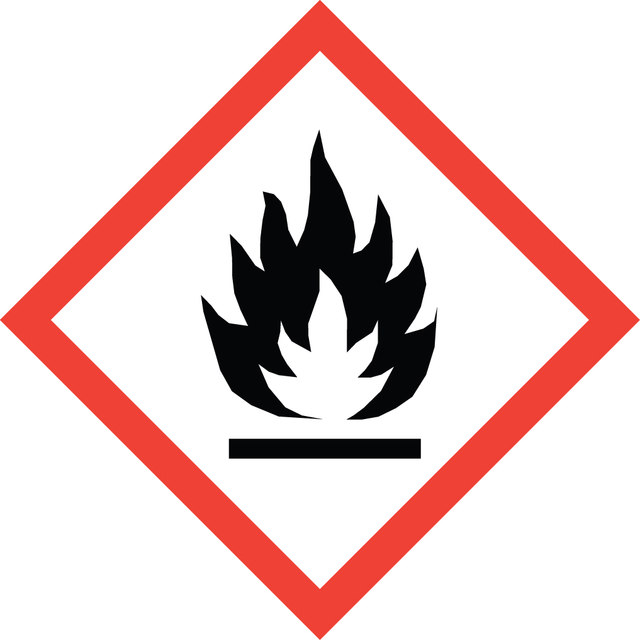
3 - Flammable liquids

flash_point_f

-6.2 °F - closed cup

flash_point_c

-21.2 °C - closed cup
Hazard Classifications

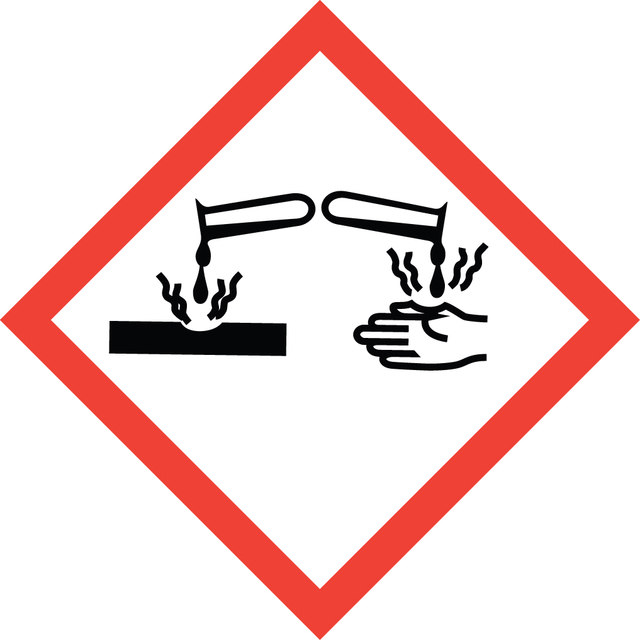
Acute Tox. 4 Oral - Carc. 2 - Eye Dam. 1 - Flam. Liq. 2 - STOT SE 3


Faites votre choix parmi les versions les plus récentes :

Certificats d'analyse (COA)

Lot/Batch Number

It looks like we've run into a problem, but you can still download Certificates of Analysis from our Documents section.

Si vous avez besoin d'assistance, veuillez contacter Service Clients

Déjà en possession de ce produit ?

Retrouvez la documentation relative aux produits que vous avez récemment achetés dans la Bibliothèque de documents.

Consulter la Bibliothèque de documents


Articles

Discover AdQPhos and its Pd pre-catalysts for selective α-arylation of diverse nucleophiles under mild aqueous conditions without hazardous solvents.

Contenu apparenté

The 4L M-Bottle provides safe handling of solvents due to an innovative solvent bottle design with sealing technology to eliminate leaks and reduce risks in solvent dispensing.


Vittorio Pace et al.
ChemSusChem, 5(8), 1369-1379 (2012-08-14)
2-Methyl-tetrahydrofuran (2-MeTHF) can be derived from renewable resources (e.g., furfural or levulinic acid) and is a promising alternative solvent in the search for environmentally benign synthesis strategies. Its physical and chemical properties, such as its low miscibility with water, boiling
Kiyoshi Watanabe
Molecules (Basel, Switzerland), 18(3), 3183-3194 (2013-03-13)
Cyclopentyl methyl ether (CPME) has been used in chemical synthesis as an alternative to hazardous solvents. According to some earlier investigation by others, CPME has low acute or subchronic toxicity with moderate irritation and negative mutagenicity and negative skin sensitization
Haiying Yu et al.
Biomaterials, 30(4), 508-517 (2008-11-01)
Natural bone growth greatly depends on the precedent vascular network that supplies oxygen and essential nutrients and removes metabolites. Likewise, it is crucial for tissue-engineered bone to establish a vascular network that temporally precedes new bone formation, and spatially originates


Numéro d'article de commerce international

RéférenceGTIN
178810-1L04061837224089
178810-4L04061838753960
178810-18L-CS04061837713491
178810-20L04061838753953