Accéder au contenu
MilliporeSigma

76887

1,4-Dioxane

analytical standard

Synonyme(s) :

Dioxane, Oxyde de diéthylène

Se connecter pour consulter les tarifs organisationnels et contractuels.

Sélectionner une taille de conditionnement

Changer de vue

A propos de cet article

Formule empirique (notation de Hill) :
C4H8O2
Numéro CAS:
Poids moléculaire :
88.11
UNSPSC Code:
41116107
NACRES:
NA.24
PubChem Substance ID:
EC Number:
204-661-8
Beilstein/REAXYS Number:
102551
MDL number:
Service technique
Besoin d'aide ? Notre équipe de scientifiques expérimentés est là pour vous.
Laissez-nous vous aider


grade

analytical standard

Quality Level

vapor density

3 (vs air)

vapor pressure

27 mmHg ( 20 °C), 40 mmHg ( 25 °C)

assay

≥99.5% (GC)

autoignition temp.

356 °F

shelf life

limited shelf life, expiry date on the label

expl. lim.

22 %

technique(s)

HPLC: suitable, gas chromatography (GC): suitable

refractive index

n20/D 1.422

bp

100-102 °C (lit.)

mp

10-12 °C (lit.)

density

1.034 g/mL at 25 °C (lit.)

application(s)

cleaning products
cosmetics
environmental
food and beverages
personal care

format

neat

SMILES string

C1COCCO1

InChI

1S/C4H8O2/c1-2-6-4-3-5-1/h1-4H2

InChI key

RYHBNJHYFVUHQT-UHFFFAOYSA-N

General description

1,4-Dioxane is an organic compound and an environmental contaminant, generally found in industrial waste streams and by-products. It is commonly used as an industrial solvent, in cosmetic products and household products such as lotions, soap, shampoos, bath foams.
This compound is listed in the SVHC (Substances of very high concern) candidate list of ECHA (European Chemicals Agency)

Application

1,4-Dioxane may be used as an analytical reference standard for the quantification of the analyte in water samples using different chromatography techniques.
Refer to the product′s Certificate of Analysis for more information on a suitable instrument technique. Contact Technical Service for further support.

Other Notes

Find a digital Reference Material for this product available on our online platform ChemisTwin® for NMR. You can use this digital equivalent on ChemisTwin® for your sample identity confirmation and compound quantification (with digital external standard). An NMR spectrum of this substance can be viewed and an online comparison against your sample can be performed with a few mouseclicks. Learn more here and start your free trial.


Still not finding the right product?

Explore all of our products under 1,4-Dioxane
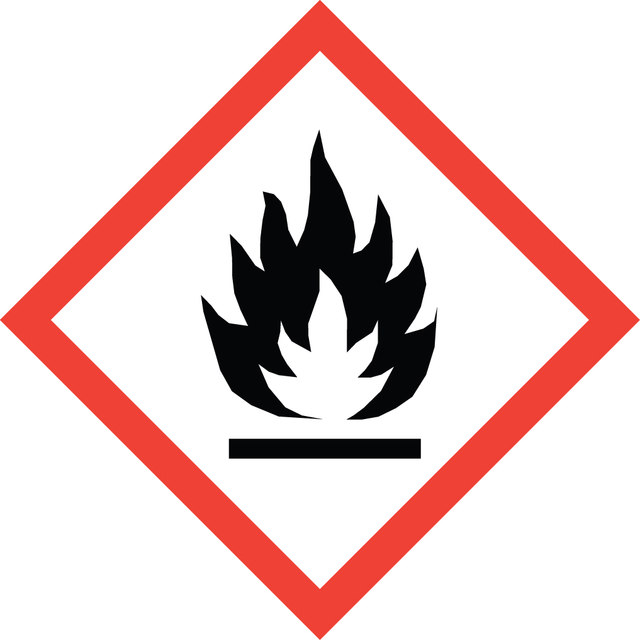

signalword

Danger

Hazard Classifications

Carc. 1B - Eye Irrit. 2 - Flam. Liq. 2 - STOT SE 3

target_organs

Respiratory system

supp_hazards

Classe de stockage

3 - Flammable liquids

wgk

WGK 3

flash_point_f

51.8 °F - closed cup

flash_point_c

11 °C - closed cup

ppe

Eyeshields, Faceshields, Gloves, type ABEK (EN14387) respirator filter


Faites votre choix parmi les versions les plus récentes :

Certificats d'analyse (COA)

Lot/Batch Number

It looks like we've run into a problem, but you can still download Certificates of Analysis from our Documents section.

Si vous avez besoin d'assistance, veuillez contacter Service Clients

Déjà en possession de ce produit ?

Retrouvez la documentation relative aux produits que vous avez récemment achetés dans la Bibliothèque de documents.

Consulter la Bibliothèque de documents


Articles

Learn about analyzing organic volatile impurities (OVIs) in pharmaceuticals using SH-GC, focusing on suitable solvents and ensuring compliance.


Trace-level determination of 1, 4-dioxane in water by isotopic dilution GC and GC-MS
Draper.MW, et al.
Analyst, 125(8), 1403-1408 (2008)
Simultaneous determination of 22 volatile organic compounds, methyl-tert-butyl ether, 1, 4-dioxane, 2-methylisoborneol and geosmin in water by headspace solid phase microextraction-gas chromatography-mass spectrometry
Nakamura S and Daishima S
Analytica Chimica Acta, 548(1-2), 79-85 (2005)
Xiaohua Liu et al.
Biomaterials, 31(2), 259-269 (2009-09-29)
It remains a challenge to synthesize functional materials that can develop advanced scaffolding architectures for tissue engineering. In this study, a series of biodegradable amphiphilic poly(hydroxyalkyl (meth)acrylate)-graft-poly(l-lactic acid) (PHAA-g-PLLA) copolymers have been synthesized and fabricated into nano-fibrous scaffolds. These copolymers


Numéro d'article de commerce international

RéférenceGTIN
76887-10ML-F04061832924755
76887-5ML-F04061832924793