Accéder au contenu
MilliporeSigma

900801

1-Ethyl-3-methylimidazolium bis(trifluoromethylsulfonyl)imide

≥99%, H2O ≤500 ppm

Synonyme(s) :

1-Ethyl-3-methyl-1-H-imidazolium bis(trifluoromethansulfonyl)imide, EMIM BTI, EMIM TFSI, EMIMIm

Se connecter pour consulter les tarifs organisationnels et contractuels.

Sélectionner une taille de conditionnement

Changer de vue

A propos de cet article

Formule empirique (notation de Hill) :
C8H11F6N3O4S2
Numéro CAS:
Poids moléculaire :
391.31
UNSPSC Code:
12352111
NACRES:
NA.23
MDL number:
Service technique
Besoin d'aide ? Notre équipe de scientifiques expérimentés est là pour vous.
Laissez-nous vous aider


Quality Level

assay

≥99%

form

liquid

composition

H2O, ≤500 ppm

impurities

≤500 ppm H2O

mp

≥−15 °C (lit.)

density

1.5236 g/cm3

application(s)

battery manufacturing

SMILES string

CCn1cc[n+](C)c1.FC(F)(F)S(=O)(=O)[N-]S(=O)(=O)C(F)(F)F

InChI

1S/C6H11N2.C2F6NO4S2/c1-3-8-5-4-7(2)6-8;3-1(4,5)14(10,11)9-15(12,13)2(6,7)8/h4-6H,3H2,1-2H3;/q+1;-1

InChI key

LRESCJAINPKJTO-UHFFFAOYSA-N

General description

1-Ethyl-3-methylimidazolium bis(trifluoromethylsulfonyl)imide is a class of electrolytic materials that can be used in the fabrication of lithium-ion batteries. Lithium-ion batteries consist of anode, cathode, and electrolyte with a charge-discharge cycle. These materials enable the formation of greener and sustainable batteries for electrical energy storage.

Application

Ionic liquids (ILs) are molten salts with melting points lower than 100 °C. They usually consist of pair of organic cation and anion. ILs exhibit unique properties such as non-volatility, high thermal stability, and high ionic conductivity and find applications as electrolytes in lithium/sodium ion batteries and dye-sensitized solar cells. They are also used as media for synthesis of conducting polymers and intercalation electrode materials.


Still not finding the right product?

Explore all of our products under


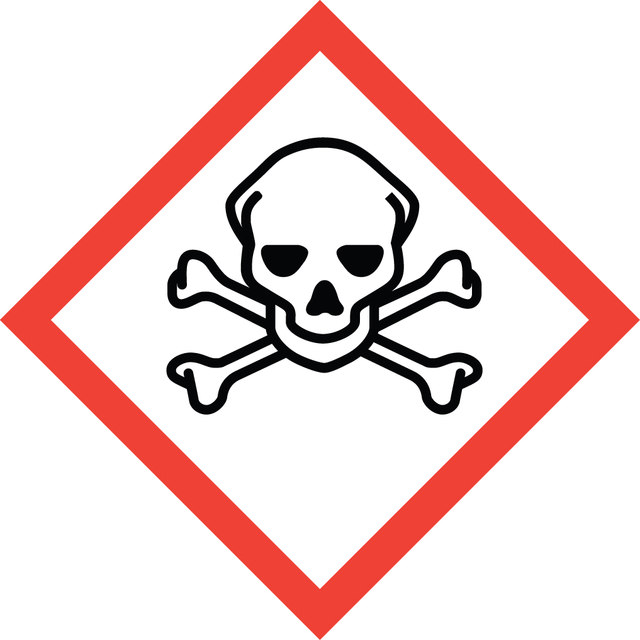
pictograms

Skull and crossbones

signalword

Danger

hcodes

Hazard Classifications

Acute Tox. 3 Oral

Classe de stockage

6.1C - Combustible acute toxic Cat.3 / toxic compounds or compounds which causing chronic effects

wgk

WGK 1


Faites votre choix parmi les versions les plus récentes :

Certificats d'analyse (COA)

Lot/Batch Number

It looks like we've run into a problem, but you can still download Certificates of Analysis from our Documents section.

Si vous avez besoin d'assistance, veuillez contacter Service Clients

Déjà en possession de ce produit ?

Retrouvez la documentation relative aux produits que vous avez récemment achetés dans la Bibliothèque de documents.

Consulter la Bibliothèque de documents


Articles

Ionic liquid electrolytes explored for rechargeable batteries' advancement; future IL development discussed.

Solid-state Li batteries: Review of solid electrolytes, ion conduction, structures, and electrochemical processes.


Ionic liquids and their solid-state analogues as materials for energy generation and storage.
MacFarlane DR, et al.
Nature Reviews. Materials, 1, 15005-15005 (2016)
Dandan Han et al.
Molecules (Basel, Switzerland), 15(4), 2405-2426 (2010-04-30)
Ionic liquids (ILs) have been applied in different areas of separation, such as ionic liquid supported membranes, as mobile phase additives and surface-bonded stationary phases in chromatography separations and as the extraction solvent in sample preparations, because they can be
Masayoshi Watanabe et al.
Chemical reviews, 117(10), 7190-7239 (2017-01-14)
Ionic liquids (ILs) are liquids consisting entirely of ions and can be further defined as molten salts having melting points lower than 100 °C. One of the most important research areas for IL utilization is undoubtedly their energy application, especially


Numéro d'article de commerce international

RéférenceGTIN
900801-25G04061834427544