
577928

Lithium bis(triméthylsilyl)amide solution
1 M in toluene
Synonyme(s) :
Hexaméthyldisilazane lithium salt
Sélectionner une taille de conditionnement
A propos de cet article
Quality Level
concentration
1 M in toluene
density
0.860 g/mL at 25 °C
SMILES string
[Li]N([Si](C)(C)C)[Si](C)(C)C
InChI
1S/C6H18NSi2.Li/c1-8(2,3)7-9(4,5)6;/h1-6H3;/q-1;+1
InChI key
YNESATAKKCNGOF-UHFFFAOYSA-N
General description
Application
- In the deprotonation and nucleophilic difluoromethylation reactions.
- To synthesize isoquinoline derivatives by the addition of N-iodosuccinimide (NIS) to the α-benzyl tosylmethyl isocyanides.
- To prepare arylboronic acid pinacol esters by the reaction of aryl fluorides with bis(pinacolato)diboron via palladium-catalyzed cross-coupling reaction.
Still not finding the right product?
Explore all of our products under Lithium bis(triméthylsilyl)amide solution
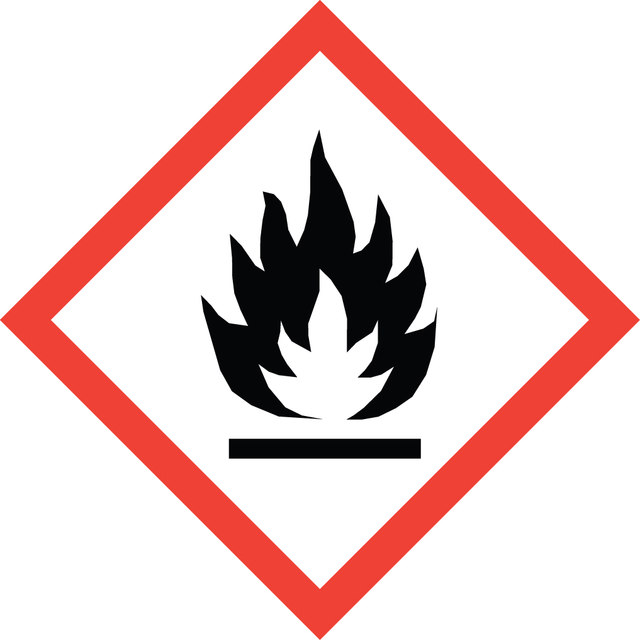



signalword
Danger
Hazard Classifications
Aquatic Chronic 3 - Asp. Tox. 1 - Eye Dam. 1 - Flam. Liq. 2 - Repr. 2 - Self-heat. 1 - Skin Corr. 1B - STOT RE 2 - STOT SE 3
target_organs
Central nervous system
supp_hazards
Classe de stockage
4.2 - Pyrophoric and self-heating hazardous materials
wgk
WGK 3
flash_point_f
48.0 °F - closed cup
flash_point_c
8.9 °C - closed cup
ppe
Faceshields, Gloves, Goggles, type ABEK (EN14387) respirator filter
Faites votre choix parmi les versions les plus récentes :
Déjà en possession de ce produit ?
Retrouvez la documentation relative aux produits que vous avez récemment achetés dans la Bibliothèque de documents.
Numéro d'article de commerce international
| Référence | GTIN |
|---|---|
| 577928-800ML | 04061837674167 |
| 577928-100ML | 04061837674150 |