Skip to Content
Merck

M27301

Methyl acrylate

99%, contains ≤100 ppm monomethyl ether hydroquinone as inhibitor

Synonym(s):

Methylacrylate

Sign In to View Organizational & Contract Pricing.

Select a Size

Change View

About This Item

Linear Formula:
CH2=CHCOOCH3
CAS Number:
Molecular Weight:
86.09
UNSPSC Code:
12162002
NACRES:
NA.23
PubChem Substance ID:
EC Number:
202-500-6
Beilstein/REAXYS Number:
605396
MDL number:
Technical Service
Need help? Our team of experienced scientists is here for you.
Let Us Assist


vapor density

3 (vs air)

Quality Level

vapor pressure

67.5 mmHg ( 20 °C)

assay

99%

form

liquid

autoignition temp.

874 °F

contains

≤100 ppm monomethyl ether hydroquinone as inhibitor

expl. lim.

14.5 %

refractive index

n20/D 1.402 (lit.)

bp

80 °C (lit.)

mp

−75 °C (lit.)

density

0.956 g/mL at 25 °C (lit.)

storage temp.

2-8°C

SMILES string

COC(=O)C=C

InChI

1S/C4H6O2/c1-3-4(5)6-2/h3H,1H2,2H3

InChI key

BAPJBEWLBFYGME-UHFFFAOYSA-N

General description

Methyl acrylate is an acrylic monomer. It is useful in the preparation of polymers having rigid, flexible, ionic, nonionic, hydrophobic, or hydrophilic properties. Mechanism of the copolymerization of ethylene and α-olefins with methyl acrylate has been studied. Heck reaction of iodobenzene with methyl acrylate in the presence of triethylamine and sodium carbonate has been reported. The reversible addition fragmentation chain transfer (RAFT) bulk polymerization of methyl acrylate using 1-phenylethyl dithiobenzoate and 2-(2-cyanopropyl) dithiobenzoate (RAFT agents) has been studied. Reactive intermediates formed during the Heck reaction of methyl acrylate have been characterized by NMR spectroscopy.

Application

Methyl acrylate was used in the preparation of poly(methyl acrylate) elastomers. It was also used in the synthesis of α,ω-dicarboxylic acid esters.


Still not finding the right product?

Explore all of our products under Methyl acrylate
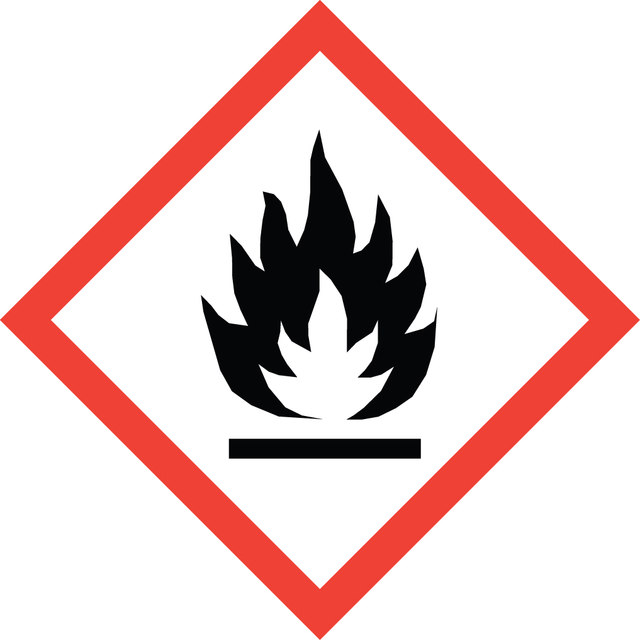

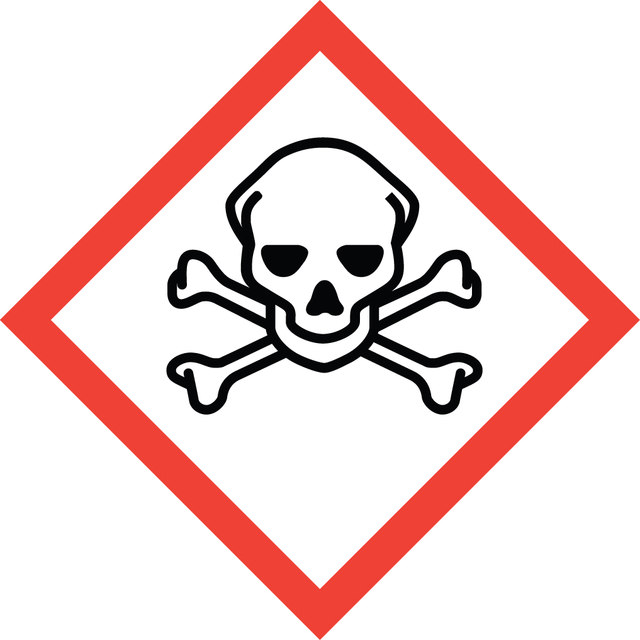
pictograms

FlameSkull and crossbones

signalword

Danger

Hazard Classifications

Acute Tox. 3 Inhalation - Acute Tox. 4 Dermal - Acute Tox. 4 Oral - Aquatic Chronic 3 - Eye Irrit. 2 - Flam. Liq. 2 - Skin Irrit. 2 - Skin Sens. 1 - STOT SE 3

target_organs

Respiratory system

Storage Class

3 - Flammable liquids

wgk

WGK 2

flash_point_f

27.0 °F - closed cup

flash_point_c

-2.8 °C - closed cup

ppe

Eyeshields, Faceshields, Gloves, type ABEK (EN14387) respirator filter


Choose from one of the most recent versions:

Certificates of Analysis (COA)

Lot/Batch Number

Don't see the Right Version?

If you require a particular version, you can look up a specific certificate by the Lot or Batch number.

Already Own This Product?

Find documentation for the products that you have recently purchased in the Document Library.

Visit the Document Library


Articles

RAFT(가역적 첨가 분해 연쇄 이동) 중합은 RDRP(가역 불활성 라디칼 중합)이며, 라디칼 중합에 리빙 특성을 제공하는 다목적 방법 중 하나입니다.

RAFT polymerization offers living characteristics to radical polymerization, contributing versatility to reversible deactivation radical polymerization methods.

Our strategy is to synthesize mesoporous carbonaceous materials (“Starbons”) using mesoporous expanded starch as the precursor without the need for a templating agent.


Mechanistic studies of the palladium-catalyzed copolymerization of ethylene and a-olefins with methyl acrylate.
Mecking S, et al.
Journal of the American Chemical Society, 120(5), 888-899 (1998)
Effects of dispersion and aggregation of silica in the reinforcement of poly (methyl acrylate) elastomers.
Pu Z, et al.
Chemistry of Materials, 9(11), 2442-2447 (1997)
Origin of inhibition effects in the reversible addition fragmentation chain transfer (RAFT) polymerization of methyl acrylate.
Perrier S, et al.
Macromolecules, 35(22), 8300-8306 (2002)


Global Trade Item Number

SKUGTIN
M27301-18L04061834045977
M27301-250ML04061837404115
M27301-1L04061834045984
M27301-2L04061834045991
M27301-5ML04061834046004