Accéder au contenu
MilliporeSigma

A3678

Ammonium persulfate

Molecular Biology, suitable for electrophoresis, ≥98%

Synonyme(s) :

AP, APS, Ammonium peroxodisulfate, Ammonium peroxydisulfate, PER

Se connecter pour consulter les tarifs organisationnels et contractuels.

Sélectionner une taille de conditionnement

Changer de vue

A propos de cet article

Formule linéaire :
(NH4)2S2O8
Numéro CAS:
Poids moléculaire :
228.20
PubChem Substance ID:
eCl@ss:
38030421
UNSPSC Code:
41105319
NACRES:
NB.22
EC Number:
231-786-5
MDL number:
Assay:
≥98%
Form:
powder
Service technique
Besoin d'aide ? Notre équipe de scientifiques expérimentés est là pour vous.
Laissez-nous vous aider


grade

Molecular Biology

Quality Level

vapor density

7.9 (vs air)

assay

≥98%

form

powder

reaction suitability

reagent type: oxidant

technique(s)

electrophoresis: suitable

anion traces

chloride (Cl-): <10 ppm

cation traces

Fe: <10 ppm, heavy metals (as Pb): <50 ppm

foreign activity

DNAse, none detected, Protease, none detected, RNAse, none detected

SMILES string

N.N.OS(=O)(=O)OOS(O)(=O)=O

InChI

1S/2H3N.H2O8S2/c;;1-9(2,3)7-8-10(4,5)6/h2*1H3;(H,1,2,3)(H,4,5,6)

InChI key

ROOXNKNUYICQNP-UHFFFAOYSA-N

General description

Ammonium persulfate (APS) is a widely used reagent in biochemistry and molecular biology for the preparation of polyacrylamide gels. APS forms oxygen free radicals in aqueous solution by a base-catalyzed mechanism. The bases, most commonly used as catalysts, are tertiary amines such as TEMED (N,N,N′,N′-tetramethylethylenediamine) or DMAPN (3-dimethylaminopropionitrile). The free radicals will cause the polymerization of acrylamide and bis-acrylamide to form a gel matrix, which can be used for separating macromolecules by size. APS has also been utilized to study protein-protein interactions via photoinitiated crosslinking chemistry.

Application

Catalyst for acrylamide gel polymerization.
Ammonium persulfate has been used for the preparation of polyacrylamide gels and acrylamide hydrogels.

Analysis Note

Tested for use in acrylamide polymerization.


Still not finding the right product?

Explore all of our products under


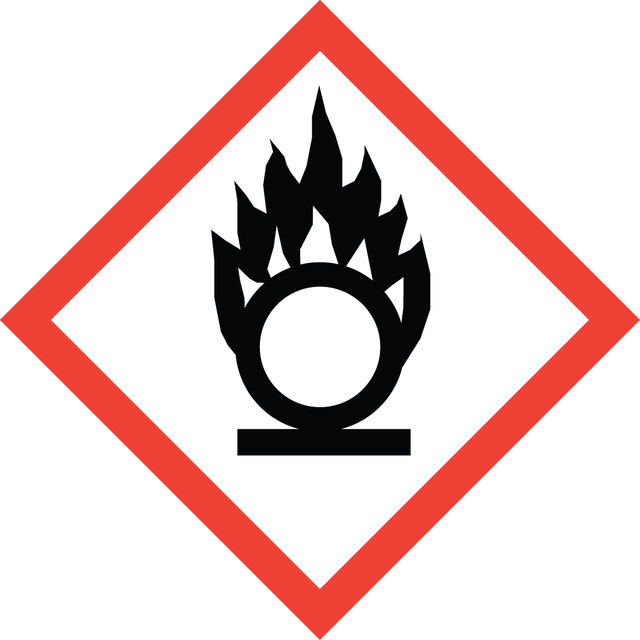
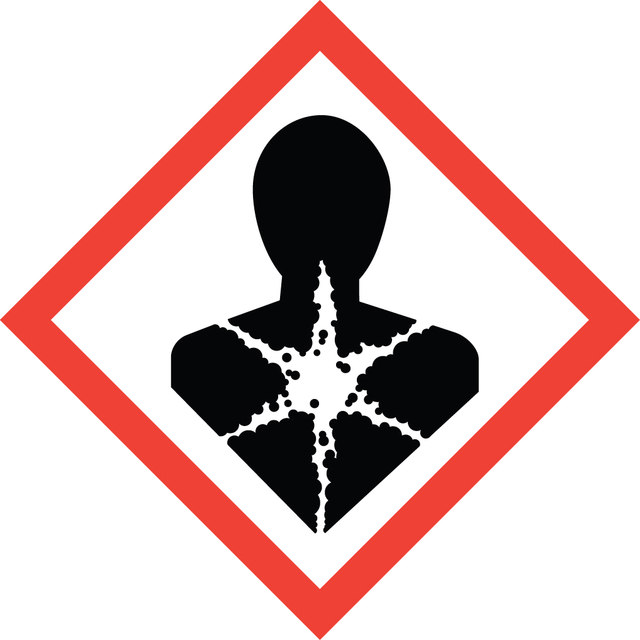
signalword

Danger

Hazard Classifications

Acute Tox. 4 Oral - Eye Irrit. 2 - Ox. Sol. 3 - Resp. Sens. 1 - Skin Irrit. 2 - Skin Sens. 1 - STOT SE 3

target_organs

Respiratory system

Classe de stockage

5.1B - Oxidizing hazardous materials

wgk

WGK 1

flash_point_f

Not applicable

flash_point_c

Not applicable

ppe

Eyeshields, Faceshields, Gloves, type P3 (EN 143) respirator cartridges


Faites votre choix parmi les versions les plus récentes :

Certificats d'analyse (COA)

Lot/Batch Number

Vous ne trouvez pas la bonne version ?

Si vous avez besoin d'une version particulière, vous pouvez rechercher un certificat spécifique par le numéro de lot.

Déjà en possession de ce produit ?

Retrouvez la documentation relative aux produits que vous avez récemment achetés dans la Bibliothèque de documents.

Consulter la Bibliothèque de documents


Protocoles

Simplify your SDS-PAGE gel preparation with our pre-mixed solutions and protocols to achieve precise protein separation.

Vue d'ensemble des propriétés chimiques des gels de polyacrylamide et détail des consignes à suivre pour les couler à l'aide des kits de coulage de gels Bis-Tri mPAGE® TurboMix.

Articles

Bis-Tris SDS-PAGE gel casting kits with mPAGE® TurboMix technology for rapid, reliable gel casting and protein separation.


Maurer HR
Disc Electrophoresis and Related Techniques of Polyacrylamide Gel Electrophoresis (1978)
Relationships among cell morphology, intrinsic cell stiffness and cell-substrate interactions.
Chiang MY et al.
Biomaterials, 34, 9754-9754 (2013)
Chemistry for the analysis of protein-protein interactions: rapid and efficient cross-linking triggered by long wavelength light.
Fancy DA and Kodadek T
Proceedings of the National Academy of Sciences of the USA, 96, 6020-6020 (1999)


Numéro d'article de commerce international

RéférenceGTIN
A3678-25G04061835515707
A3678-100G04061835521531